

BOI commits €85m facility to drive cocoa processing, lift farmers’ income
Abuja, July 2026 (TBLAfrica) The Bank of Industry (BoI) has pledged 85 million euros in affordable, long-term financing to move Nigeria’s cocoa sector away from raw bean export and into local processing.
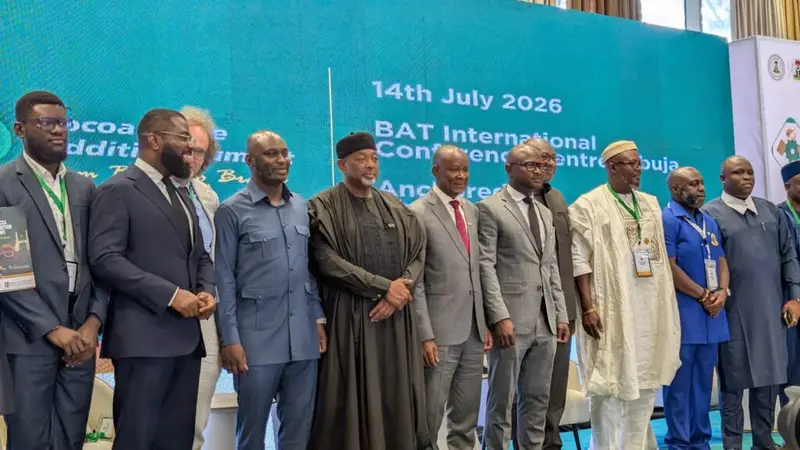
The Managing Director/CEO of BOI, Dr Olasupo Olusi, made the commitment on Tuesday at the Cocoa Value Addition Summit 2026 in Abuja.
Olusi at the conference with the theme ”From Bean to Brand” maintained that ”financing must follow value addition, not just production.”
“The 85 million euros European Investment Bank – The Bank of Industry (EIB-BOI) facility, backed by the European Union under the Global Gateway initiative, was designed specifically to strengthen Nigeria’s cocoa value chain.”
He stated that the bank would prioritise lending to processors, cooperatives and Micro, Small, and Medium Enterprises that add value locally, rather than only to traders exporting raw beans.
“We are particularly focused on cocoa value chains, which provide livelihoods for thousands of Nigerians.
“Through this initiative, we aim to enhance productivity, value addition, and market linkages that will directly improve the incomes of farmers and processors.”
He explained that at least 70 per cent of the facility would target cocoa and dairy, because those sectors hold the fastest path to jobs and forex retention.
The managing director said the era of celebrating volume of raw exports must end, stressing that Nigeria loses billions by shipping beans and importing finished chocolate.
He noted that, “financing alone is not enough, so BOI will pair the loans with technical assistance on compliance, climate standards, and access to the EU market.”
Olusi said the bank would also support farmers and processors to meet the EU Deforestation Regulation and other international environmental and social standards.
He emphasised inclusivity, adding that smallholder farmers organised in cooperatives would get dedicated windows to access the funds at concessionary rates.
According to him, the goal is to create factories around cocoa communities so that value, jobs and taxes remain in Nigeria.
“This agreement reinforces the Bank of Industry’s commitment to unlocking long-term, affordable finance for priority sectors that drive inclusive growth,” he said.
Olusi said that BOI’s role at the summit was to ensure that declarations translate into funded factories, and that Nigeria begins to earn 30,000 dollars per tonne from processed cocoa instead of 9,000 dollars from raw beans.
Dr Chris Isokpunwu, Permanent Secretary, Federal Ministry of Industry, Trade and Investment, said cocoa remained strategic to Nigeria’s industrialisation agenda.
Isokpunwu was represented by the Director of Industrial Development at the ministry, Mr Mohammed Bala.
He said more than 80 per cent of Nigeria’s cocoa was exported as raw beans despite the industry’s enormous processing potential.
Isokpunwu said local processing would generate higher export earnings, create jobs and stimulate downstream industries, including confectionery, cosmetics and pharmaceuticals.
Also speaking, Chief Executive of the Ghana Cocoa Board (COCOBOD), Dr Ransford Abbey, urged African cocoa-producing countries to deepen domestic processing.
“I am here to support the effort and commit to a joint effort towards increasing value for our hardworking cocoa farmers and our respective economies,” Abbey said.
He said Africa produced about 75 per cent of the world’s cocoa but earned less than 10 per cent of the global chocolate industry’s wealth.
“This system cannot continue. We must shift the paradigm from exporting raw poverty to creating refined wealth right here on the African continent,” he said.
Abbey said stronger regional collaboration, investment and technology transfer would help African countries capture greater value from the global cocoa economy.
On his part a representative of the EU, Mr Massino Deluko, reiterated the importance of value adition in the cocoa value chain.
While expressing the support of the EU, he called on governments of the various countries to ensure they play their part in ensuring the proper framework necessary for the success of the initiative was established and clarified.
