

Energy security critical to digital inclusion, industrialisation – Okwuosa
Abuja, Oct. 2026 (TBL Africa) Dr Emeka Okwuosa, Chairman of the Oilserv Group, says reliable energy security is critical to digital inclusion and industrialisation in Nigeria.
He also advocated for increased investment to address Nigeria’s energy challenges.
Okwuosa stated this on Thursday in a presentation at the 22nd International Conference and Exhibition on Power and Telecommunication (ICEPT 2026).
The paper was titled, “Energy Transition in a Digital Era: The Nexus, Challenges and Opportunities.”
The event was organised by the Nigerian Institute of Electrical and Electronic Engineers (NIEEE) in Port Harcourt, Rivers.
Okwuosa underscored the importance of increased investment in reliable energy supply, adding that replacing fossil fuels with renewable energy alone is not a practical solution to Nigeria’s energy security challenges.
He said that African countries, particularly Nigeria, needed to address energy transition challenges; unreliable power supply, grid limitations, energy storage concerns, financial constraints, cybersecurity risks, regulatory bottlenecks and inadequate skilled manpower.
Citing the International Energy Agency (IEA), Okwuosa said that achieving universal electricity access in sub-Saharan Africa by 2035 would require nearly 150 billion dollars in investment, about six times the current annual spending.
He said that the focus should not be solely on reducing carbon emissions but also on accelerating industrialisation, electrification and digitalisation while improving living standards.
“In areas like Europe, the energy transition may primarily be framed around decarbonisation but for places such as Nigeria, it must simultaneously address energy access; affordability, reliability, industrialisation, employment, energy security and decarbonisation.
“This is attributable to the different circumstances, systems, demographics, constraints and priorities peculiar to our beloved nation’s design and ambition,” he said.
Okwuosa explained that Nigeria’s Energy Transition Plan (ETP) provides a clear framework for achieving net-zero emissions by 2060, focusing on five priority sectors: power, cooking, oil and gas, transport, and industry.
“The plan recognises an important principle: energy transition must not be mistaken for energy abandonment,” he said.
According to Okwuosa, Nigeria’s oil and gas industry can increasingly deploy digital technologies to improve efficiency, safety, gas flaring management, and asset performance.
He highlighted that the abundant natural gas could strengthen electricity reliability and support industrialisation, while lower-carbon technologies expand access through mini-grids and distributed energy systems.
“At the same time, energy efficiency measures can ease demand pressure and make the overall system more resilient,” he said.
On the opportunities offered by the new era, Okwuosa said that for decades, the energy business was anchored primarily on molecules: oil, gas, Liquefied Natural Gas and refined products.
“Today, that business is expanding beyond molecules to include electrons and data. Solar and wind generate electrons; batteries store them, electric vehicles, data centers and digital platforms consume, manage and optimise them,” he said.
Okwuosa said the shift was creating investment opportunities in power generation; renewable energy, gas-to-power projects, mini-grids and data centre infrastructure.
Other opportunities, he said, included battery storage, electricity transmission and distribution, smart meters, grid management technology and electric vehicle charging infrastructure.
Okwuosa further identified opportunities in digital oilfield technologies; artificial intelligence-driven predictive maintenance, electric mobility, energy-as-a-service models, carbon and methane monitoring, energy efficiency and green hydrogen.
He said that energy transition should not be viewed merely as a threat to traditional energy companies but as one of the defining investment opportunities of the coming decades.
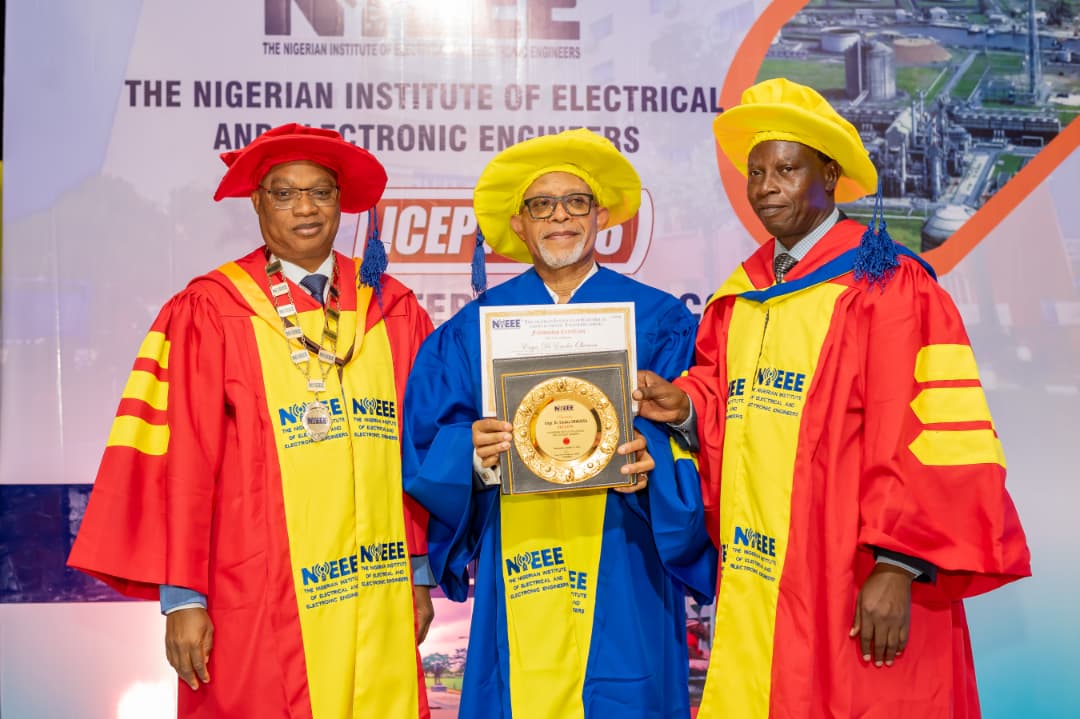
The event featured conferment of Fellow of the Institute to Okwuosa, alongside other engineers recognised for their contributions to national development.
