


REA pushes integrated rural energy-Agriculture system to boost food security
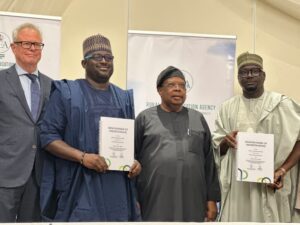
The Rural Electrification Agency (REA) has unveiled plans to develop an integrated energy-agriculture system to improve food security, increase rural productivity and drive economic growth across Nigeria.
Speaking at the Productive Use Equipment (PUE) Alignment Workshop, REA Managing Director and Chief Executive Officer, Abba Abubakar Aliyu, said the agency is moving away from isolated intervention projects to a coordinated approach that brings together government agencies, financial institutions, development partners and the private sector.
According to Aliyu, the new strategy is designed to create a sustainable system that will continue to support smallholder farmers and rural businesses beyond donor-funded programmes.
He said Nigeria’s smallholder farmers and rural enterprises play a critical role in the country’s food production and should be connected to reliable electricity, finance, technology and markets to improve productivity.
Highlighting the agency’s achievements, Aliyu said the African Development Bank-funded National Electrification Project disbursed nearly $20 million for productive-use equipment, benefiting more than one million Nigerians and supporting the deployment of over 22,000 energy-efficient agricultural technologies.
He added that the Energising Agriculture Programme identified more than 120 viable energy-agriculture project sites across the country, while the Africa Minigrids Programme provided renewable energy mini-grids to 23 rural communities.
Despite these successes, Aliyu said greater collaboration among key stakeholders would have produced even better outcomes.
He stressed the need to involve institutions such as NIRSAL, the Bank of Agriculture, commodity exchanges and private-sector operators from the planning stage to improve the sustainability and scalability of future projects.
“We had the energy. We needed the ecosystem. Today, we are building the ecosystem,” he said.
Aliyu also disclosed that the ongoing Distributed Access through Renewable Energy Scale-up (DARES) programme has earmarked $400 million for renewable energy projects. The fund includes $250 million for standalone solar systems, $100 million for Solar-as-a-Business initiatives and $50 million for productive-use equipment.
According to him, the $50 million allocation could finance more than 35,000 solar-powered irrigation pumps, 45,000 solar cold storage facilities or about 100,000 modular rice mills, significantly reducing post-harvest losses, increasing year-round farming and improving rural incomes.
“This is not just another programme. It is about transforming rural communities and strengthening Nigeria’s food security,” he said.
Aliyu called on government agencies, development partners, financial institutions and private-sector stakeholders to support the initiative through stronger collaboration on financing, technology standards, project implementation and institutional coordination to ensure sustainable rural electrification and agricultural development.
