

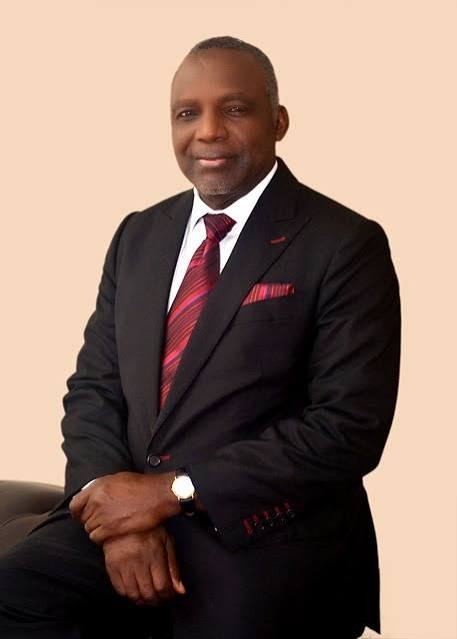
Nnaji prescribes urgent reforms to avert power sector collapse
Amid Nigeria’s deepening electricity crisis, renowned energy expert and former Minister of Power, Bart Nnaji, has outlined a sweeping set of urgent measures to stabilize the nation’s fragile power sector.
Delivering the combined 30th, 31st, and 32nd graduation lecture at Abia State University on Thursday, Nnaji warned that Nigeria risks prolonged energy stagnation unless decisive actions are taken immediately.
At the heart of his recommendations is the restoration of Power Purchase Agreements (PPAs) between electricity generation companies and the Federal Government—agreements suspended during the administration of former President Muhammadu Buhari.
He also called for the settlement of staggering debts in the sector, including ₦6.8 trillion owed to generation companies and over ₦200 billion owed to distribution companies (DisCos), alongside the urgent implementation of cost-reflective tariffs.
Nnaji further advocated the construction of a 765KV national super grid, coupled with decentralized operations to prevent system-wide collapses.
“A single fault should not plunge the entire nation into darkness,” he emphasized, stressing the need for a more resilient and segmented transmission architecture.
Highlighting Nigeria’s vast energy potential, he urged accelerated development of the country’s estimated 210 trillion cubic feet of natural gas reserves, noting that about 75 percent of Nigeria’s electricity is generated from thermal sources.
The former minister, who now chairs Geometric Power, also pushed for reforms within the distribution segment.
He proposed encouraging DisCos to establish embedded generation systems, improving regulatory attention to their operations, and reviewing their coverage areas to enhance efficiency and responsiveness.
Drawing comparisons with rapidly industrializing nations such as India, China, Brazil, Egypt, and the United States, Nnaji lamented Nigeria’s stagnation in power generation capacity.
He noted that, aside from the 451MW Azura-Edo Power Plant and the 188MW Geometric Power Plant in Aba, the country has not added any significant new power infrastructure in over a decade.
He underscored the critical role of financial guarantees in attracting investment, pointing to the importance of World Bank-backed Partial Risk Guarantees (PRGs).
“Power generation is capital intensive,” he said, estimating that constructing a gas-fired plant costs about $1.3 million per megawatt.
“Investors need assurance that they can recover their investments.”
Nnaji dismissed expectations that state governments could independently shoulder such guarantees under the Electricity Act 2023, citing their limited financial capacity.
Even with immediate policy reversals, he warned, Nigeria would require at least three years to bring a new power plant online—raising concerns that the country could go over 15 years without meaningful expansion in electricity capacity.
While commending the Federal Government under President Bola Tinubu for constituting a 19-member committee to recover 1,600MW of stranded capacity, Nnaji argued that far more ambitious targets are needed.
He projected that Nigeria would require at least 100,000MW of electricity by 2040 to achieve upper-middle-income status, dismissing the 30,000MW target set by the Nigeria Electricity Supply Industry for 2030 as inadequate.
In a global context, he noted how advanced economies are aggressively expanding power capacity to meet rising demand, including the resurgence of coal-fired plants in parts of Europe following the Russian invasion of Ukraine and increased energy demand driven by data-intensive technologies.
Nnaji also praised the revival of the 765KV super grid project originally approved under former President Goodluck Jonathan, advocating for its technical regionalization to prevent nationwide outages.
Despite acknowledging that his company does not benefit from federal subsidies, he strongly supported continued government intervention. “Without subsidies, the power sector risks total collapse,” he cautioned.
He further criticized the expansive and inefficient coverage areas of some DisCos, citing those in Ibadan, Benin, and Yola, while contrasting them with the more agile operations of Aba Power, which serves only nine local government areas in Abia State.
The lecture drew commendation from prominent attendees, including Governing Council Chairman Hon. Agwu A. Agwu, Vice Chancellor Professor Ndukwe J. Okeudo, and Dr. Emeka Enyeazu, Special Adviser to the Abia State Governor on Tertiary Education, all of whom described Nnaji’s presentation as insightful and transformative.
With Nigeria’s power sector at a critical crossroads, Nnaji’s intervention underscores a growing consensus: without urgent, coordinated reforms, the country’s economic aspirations may remain dimmed by persistent energy shortfalls.
