

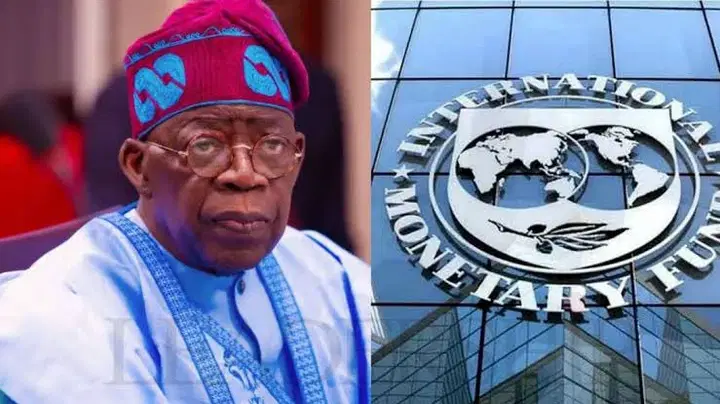
IMF warns of tough times for Nigerians as Tinubu economic policies crumbles
The International Monetary Fund (International Monetary Fund) has raised fresh concerns over Nigeria’s near-term economic outlook, warning that citizens may face even tougher living conditions as inflationary pressures, rising transportation costs, and persistent global shocks continue to strain household incomes across the country.
The warning comes at a time when Nigeria is experiencing a rare surge in crude oil prices, offering potential revenue relief for the government.
However, the Fund cautioned that the benefits of higher oil earnings may be offset by rising debt levels, structural weaknesses in public finances, and ongoing global uncertainties.
Speaking during the Economic Outlook for Sub-Saharan Africa at the ongoing World Bank–IMF Spring Meetings 2026 in Washington D.C., Director of the IMF’s African Department, Abebe Selassie, said the impact of global geopolitical tensions is already being felt across African economies, including Nigeria.
He noted that rising transport and food costs were driving significant economic pressure on households.
“The immediate effect will be quite a bit of pressure, including on food security… transportation costs have gone up, it’s going to raise the cost of food and so quite a bit of dislocation,” Selassie said.
According to him, higher transportation expenses are already feeding into inflation, especially in urban centres where costs are rising sharply, while rural communities are also feeling the impact due to supply chain constraints.
“We’re already seeing quite a lot of increase in transportation prices… Transportation costs are very high for people in urban areas, rural areas even more so,” he added, stressing that the situation is already placing visible strain on livelihoods.
Selassie further warned that households are “already seeing quite a bit of a pinch from the crisis,” describing the situation as one that is making daily life increasingly difficult for many Nigerians and others in the region
Reform momentum and fiscal challenges
While acknowledging the economic hardship, the IMF official also pointed out that several governments, including Nigeria’s, have implemented reforms aimed at stabilising their economies and strengthening fiscal positions.
He explained that these reforms—such as efforts to reduce fiscal deficits and stabilise debt—are now providing some buffer against external shocks.
“Steps have been taken to stabilise debt, to reduce fiscal deficits. So that stabilization… helps now when another shock like this comes,” he said.
However, Selassie cautioned that governments must not abandon ongoing reforms due to short-term pressures, warning that doing so could worsen long-term outcomes.
“What we are pleading is that these interventions are consistent with the medium-term objectives… and that they’re not thrown off course by this because that would be a double whammy for countries,” he warned.
On debt sustainability, he emphasised that the key issue is not necessarily whether countries borrow domestically or externally, but whether debt levels remain manageable relative to repayment capacity.
He praised Nigeria’s debt management framework, noting that the country has “a fantastic Debt Management Office,” while stressing that macroeconomic conditions remain decisive in shaping outcomes.
Selassie also urged governments to prioritise spending efficiency, protect critical sectors, and improve domestic revenue mobilisation through better tax policies and implementation systems.
Oil price surge offers relief amid global tensions
Nigeria is currently experiencing a sharp rise in crude oil prices, driven largely by geopolitical tensions in the Middle East and uncertainties surrounding diplomatic relations involving the United States and Iran.
At the moment, Nigerian crude grades such as Brass River and Qua Iboe are trading above $113 per barrel, significantly higher than the $60 benchmark set in the 2026 national budget. Brass River sold for $113.82, while Qua Iboe traded at $113.72 per barrel.
This represents a substantial gap of over $50 per barrel above budget projections, raising expectations of improved government revenue in the short term.
Prices, which began the year at around $64.85 per barrel and rose gradually through January, have surged sharply in recent weeks due to supply disruptions and geopolitical risks.
Analysts say Nigeria could benefit significantly from the oil price rally if production levels remain stable, particularly as global buyers increasingly shift demand away from unstable supply regions.
However, concerns remain that increased oil revenue may not translate into broad economic relief due to Nigeria’s rising debt obligations and structural inefficiencies in public spending.
Debt outlook and fiscal projections
Despite the oil windfall, the IMF has warned of increasing fiscal risks for Nigeria. In its latest Fiscal Monitor Report, the Fund projected that Nigeria’s debt-to-GDP ratio will rise to 33.1 percent by 2027, slightly lower than an earlier estimate of 35.3 percent but still above the projected 32.3 percent for 2026.
The report also noted that Nigeria’s total public debt rose to N159.27 trillion at the end of the fourth quarter of 2025, up from N153.29 trillion in the previous quarter.
The IMF further highlighted that global debt vulnerabilities are increasing, with “global debt-at-risk three years ahead now near 117 percent of GDP,” reflecting heightened risks from geopolitical instability, inflationary pressures, and tighter financial conditions.
IMF Director of Fiscal Affairs, Rodrigo Valdés, warned that governments must act decisively to rebuild fiscal buffers and avoid delaying difficult economic decisions.
He cautioned that postponing reforms often worsens crises and limits governments’ ability to respond effectively when shocks occur.
Valdés also warned against broad subsidy programmes, describing them as “fiscally costly, regressive, and hard to unwind,” while noting that such policies could complicate inflation control efforts by central banks.
Experts warn of debt trap risks
Economic analysts in Nigeria have expressed mixed reactions to the IMF projections and the impact of rising oil prices.
David Adonri, Analyst and Executive Vice Chairman of Highcap Securities Limited, said Nigeria’s debt-to-GDP ratio alone should not be the primary concern. Instead, he argued that the country’s ability to service debt is more important.
“Nigeria is in a debt trap. There may be no benefit from rising crude oil price as the windfall may go into foreign debt servicing or consumption,” he said, warning that revenue gains could be misallocated.
He added that unless oil windfalls are directed toward productive investments such as infrastructure and industrial capacity, the economy may continue to struggle with long-term sustainability.
Similarly, communications and economic expert Clifford Egbomeade noted that while Nigeria’s debt ratio appears moderate compared to global averages, the real concern lies in the country’s weak revenue base.
He explained that Nigeria’s GDP is heavily influenced by the informal sector, which contributes little to government revenue, thereby limiting fiscal flexibility.
He also warned that rising debt levels—already at N159.27 trillion—combined with plans for additional external borrowing, could further strain public finances, especially in the lead-up to the 2027 election cycle.
Oil sector opportunities and structural constraints
Despite the challenges, analysts agree that Nigeria stands to benefit significantly from high oil prices if production and operational efficiency improve.
With crude trading above $113 per barrel and production recovery targeting 1.8 million barrels per day, Nigeria could see a major boost in foreign exchange earnings.
However, experts caution that historical challenges—including pipeline vandalism, production losses, and operational inefficiencies—continue to limit Nigeria’s ability to fully benefit from favourable market conditions.
Inflation concerns and consumer impact
The National President of the Oil and Gas Services Providers Association of Nigeria (OGSPAN), Mazi Colman Obasi, warned that higher crude prices may also translate into increased fuel costs domestically.
He noted that refiners, including the Dangote Petroleum Refinery, could face higher production costs, which would likely be passed on to consumers.
“This will impact inflation and worsen poverty… the cost of transporting goods and people is also expected to rise,” he said.
Conclusion
Nigeria now finds itself at a delicate economic crossroads. On one hand, rising crude oil prices present a significant opportunity for increased government revenue. On the other, mounting debt levels, inflationary pressures, and structural inefficiencies threaten to erode any short-term gains.
The IMF’s latest warning underscores a central dilemma: while external shocks may offer temporary fiscal relief, long-term stability will depend on disciplined spending, sustained reforms, and effective debt management.
For millions of Nigerians already struggling with rising food and transportation costs, the coming months may determine whether current economic pressures ease—or deepen further into a more prolonged cost-of-living crisis.
