


Lighting up rural Nigeria: How REA’s solar projects are transforming communities
By Yunus Yusuf

For decades, lack of reliable electricity remained one of the greatest obstacles to development in Nigeria’s rural communities.
Millions of households depended on kerosene lanterns, firewood and noisy diesel generators for lighting and daily economic activities.
Businesses closed at sunset, healthcare facilities struggled to preserve medicines, while students studied under dim lamps, limiting productivity and opportunities for economic growth.
Today, that narrative is steadily changing.
Through solar mini-grids, solar home systems and other renewable energy interventions, the Rural Electrification Agency (REA) is extending reliable electricity to communities previously left outside the national grid, creating new opportunities for commerce, healthcare, education and rural industrialisation.
From Lagos to Kogi, Sokoto, Katsina, Ekiti, Gombe and Kano states, communities are beginning to experience the socio-economic benefits of clean and sustainable energy.
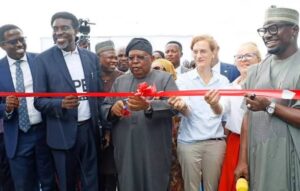
One of the agency’s latest milestones is the commissioning of the 505-kilowatt peak (kWp) interconnected solar mini-grid in Eredo, Epe Local Government Area of Lagos State, which now supplies electricity to Odogbawojo, Odoshiwola, Odoayan, Ora and Ibowon communities.
Implemented under the Rural Electrification Fund (REF) Interconnected Mini-Grid Acceleration Scheme (IMAS), the project provides electricity to homes, schools, health centres, markets and small businesses, while reducing dependence on petrol and diesel generators.
The project also reflects growing collaboration between the Federal Government, the Rural Electrification Agency, Eko Electricity Distribution Company, GIZ, private developers and other development partners in expanding access to underserved communities.
Government links rural electrification to economic growth
Minister of Power, Mr Joseph Tegbe, described the Epe mini-grid as evidence that the Federal Government’s commitment to expanding electricity access is yielding measurable results.
According to him, the REA has evolved into one of the country’s leading development agencies, delivering energy solutions capable of transforming rural economies.
He noted that more than 1,000 mini-grid projects are currently under development nationwide, while the World Bank-supported Distributed Access through Renewable Energy Scale-Up (DARES) programme has already connected nearly 3.9 million Nigerians through solar home systems.
Tegbe cited similar interventions, including the 704kW solar hybrid mini-grid in Offa, Kogi State, renewable energy projects supporting livelihoods in Sokoto, and climate-resilient energy infrastructure in Katsina.
He said Nigeria’s clean energy transition is no longer an aspiration but a process being implemented “community by community, kilowatt by kilowatt and life by life.”
Managing Director of the Rural Electrification Agency, Dr Abba Abubakar Aliyu, said the Epe project reflects the agency’s commitment to bridging Nigeria’s electricity access gap through innovative financing and public-private partnerships.
According to him, solar mini-grids are not just electricity projects but catalysts for enterprise development, improved healthcare, better education and rural economic transformation.
He said the agency’s interventions continue to support the Federal Government’s goal of inclusive growth while accelerating Nigeria’s transition to clean energy.
In Eredo, community leaders say access to electricity is already transforming daily life.
A community leader, Chief Oladele Oseni, described the project as a major innovation that would improve living standards and attract investment.
Traders who previously closed early now operate longer hours, while artisans such as welders, tailors, hairdressers, cold-room operators and barbers report increased productivity due to reduced reliance on generators.
Health workers say the electricity supply now enables health centres to refrigerate vaccines, preserve essential medicines, conduct night deliveries under adequate lighting and operate medical equipment more efficiently.
Teachers also report improved learning conditions, as pupils can study after dark while schools gradually adopt computers and digital learning tools powered by clean energy.
Traditional rulers in the beneficiary communities described the project as one of the most significant development interventions in recent years, noting that electricity represents dignity, inclusion and economic opportunity.
They urged government to replicate similar projects across thousands of rural communities still without reliable power.
Renewable energy experts say solar mini-grids offer one of Nigeria’s most practical solutions to electricity poverty.
Chief Executive Officer of Simtex Renewable Energy, Mr Adedeji Thompson, said decentralised solar systems provide faster and more affordable electricity than grid expansion to remote areas.
He said the technology reduces fuel costs, cuts greenhouse gas emissions, lowers air and noise pollution and requires relatively low maintenance.
Former Chairman of the Nigerian Electricity Regulatory Commission (NERC), Prof. Sam Amadi, said decentralised renewable energy remains the fastest route to universal electricity access due to lower infrastructure costs.
Energy economist, Dr Ayodele Oni, said solar mini-grids strengthen energy security while reducing long-term electricity costs for households and businesses.
Energy analyst, Dr Idris Alao, said reliable electricity supports agriculture, cold-chain storage, digital services, rural manufacturing and financial inclusion through electronic payments and Point-of-Sale systems.
Renewable Energy Specialist and Consultant, Matilda Obuh, said mini-grids are particularly impactful in communities with little or no access to grid electricity, improving livelihoods and reducing dependence on diesel generators.
Energy Specialist, Collins Obi, said decentralised energy systems represent the future of electricity supply in Nigeria by bringing power closer to consumers and supporting productive economic activities.
Energy Researcher, Emmanuel Taiwo, said mini-grids can transform rural economies by boosting agricultural productivity, reducing post-harvest losses and creating employment opportunities where grid expansion is not economically viable.
Development experts observe that women and young entrepreneurs stand to benefit significantly from improved electricity access, as lower energy costs allow them to expand businesses and create jobs.
Beyond electricity supply, analysts say solar mini-grids are becoming drivers of inclusive development by powering schools, health centres, markets, farms and small industries simultaneously.
The REA’s interventions, including the Rural Electrification Fund (REF), Nigeria Electrification Project (NEP), Distributed Access through Renewable Energy Scale-Up (DARES), Energising Education Programme (EEP) and Energising Economies Initiative (EEI), have already extended electricity to universities, hospitals, markets and rural communities across the country.
For many Nigerians in rural communities, electricity is no longer just about lighting homes.
It is increasingly linked to better healthcare, improved education, higher productivity, job creation and broader economic growth.
As the Rural Electrification Agency continues to expand renewable energy projects nationwide, the vision of reliable and sustainable electricity for all Nigerians is gradually becoming a reality, one community at a time.
