

Take NNPCL to Capital Market, Expert Urges FG
By Yunus Yusuf
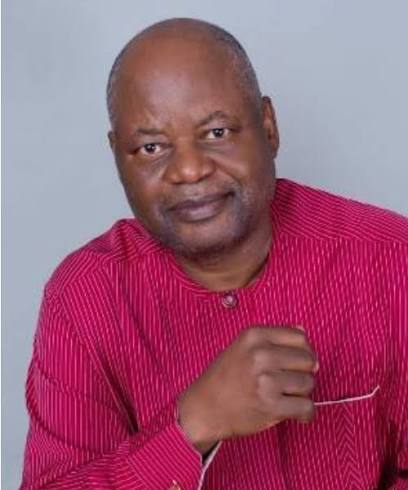
An energy development economist, Prof. Ken Ife, has called on President Bola Tinubu to take the Nigerian National Petroleum Company Ltd. (NNPCL) to the capital market.
Ife, a Development Economist and Lead Consultant, ECOWAS Commission (Industry and Private Sector Development) argued that greater public ownership and market discipline would improve transparency, accountability and efficiency in the oil company.
The expert made the call in an interview with The Business Lens Africa on Sunday in Lagos against the backdrop of the Federal Government’s plans to invest in the country’s refineries.
Ife said NNPCL had, for decades, contributed to Nigeria’s economic challenges, including fiscal pressures, import dependency, foreign exchange crises and environmental degradation in the Niger Delta.
President Tinubu, on Aug. 13, assured Nigerians that the country’s refineries would be revived.
The President said the Federal Government was undertaking a comprehensive reset, restructuring and technical assessment to ensure that the fsy.&acilities became productive and profitable.
However, Ife advised the President against further government intervention in the reconfiguration of NNPCL and its refineries, saying the market should determine the value and future of the company’s assets.
“Let the market allocate and reallocate NNPCL assets and rationalise its operations by simply taking NNPCL to the capital market,” Ife said.
According to him, offering substantial controlling shares of NNPCL to the public would help address long-standing concerns over transparency, accountability, prudent management, efficient utilisation of dormant assets and other deadweights, citizen participation, sustainability and professionalism.
Ife said the operations of Nigeria LNG Ltd. (NLNG) provided a useful comparison, adding that the company should also consider listing on the capital market.
He cited Saudi Aramco as an example of how capital-market participation could unlock value and improve efficiency.
He noted that Saudi Arabia valued Saudi Aramco at about $1.5 trillion in 2018 and subsequently sold five per cent of the company rather than relying entirely on additional borrowing.
He added that a further valuation in 2021 placed the company at about $2.3 trillion, making it one of the world’s most highly capitalised companies at the time.
Ife urged the Tinubu administration to raise funds through the capital market to finance major infrastructure projects, including the proposed Bonny-Port Harcourt-Maiduguri rail line, other critical rail projects, power infrastructure and highways.
He argued that such investments would stimulate economic growth and reduce the country’s dependence on borrowing.
The economist also advocated Nigeria’s exit from the Organisation of the Petroleum Exporting Countries (OPEC), arguing that this could encourage increased investment in the country’s upstream and midstream oil and gas sectors.
According to him, increased investment would help unlock NNPCL’s underutilised upstream assets and provide sufficient crude oil for Nigeria’s emerging refining capacity, which he said could reach three million barrels per day.
Ife further urged the President to assent to a bill on mandatory 30 per cent value addition to Nigerian raw materials before export, which he said had been on the President’s table for about a year.
He said the policy would encourage foreign and domestic investment in the country’s solid minerals, agro-industrial, upstream and midstream oil and gas sectors.
Ife warned that Nigeria’s current borrowing trajectory was unsustainable and could push the country deeper into fiscal stress, disinvestment and unacceptable levels of poverty.
He said a combination of market-driven reforms, infrastructure investment, increased domestic production and greater value addition to raw materials would provide a more sustainable path to economic growth.
