

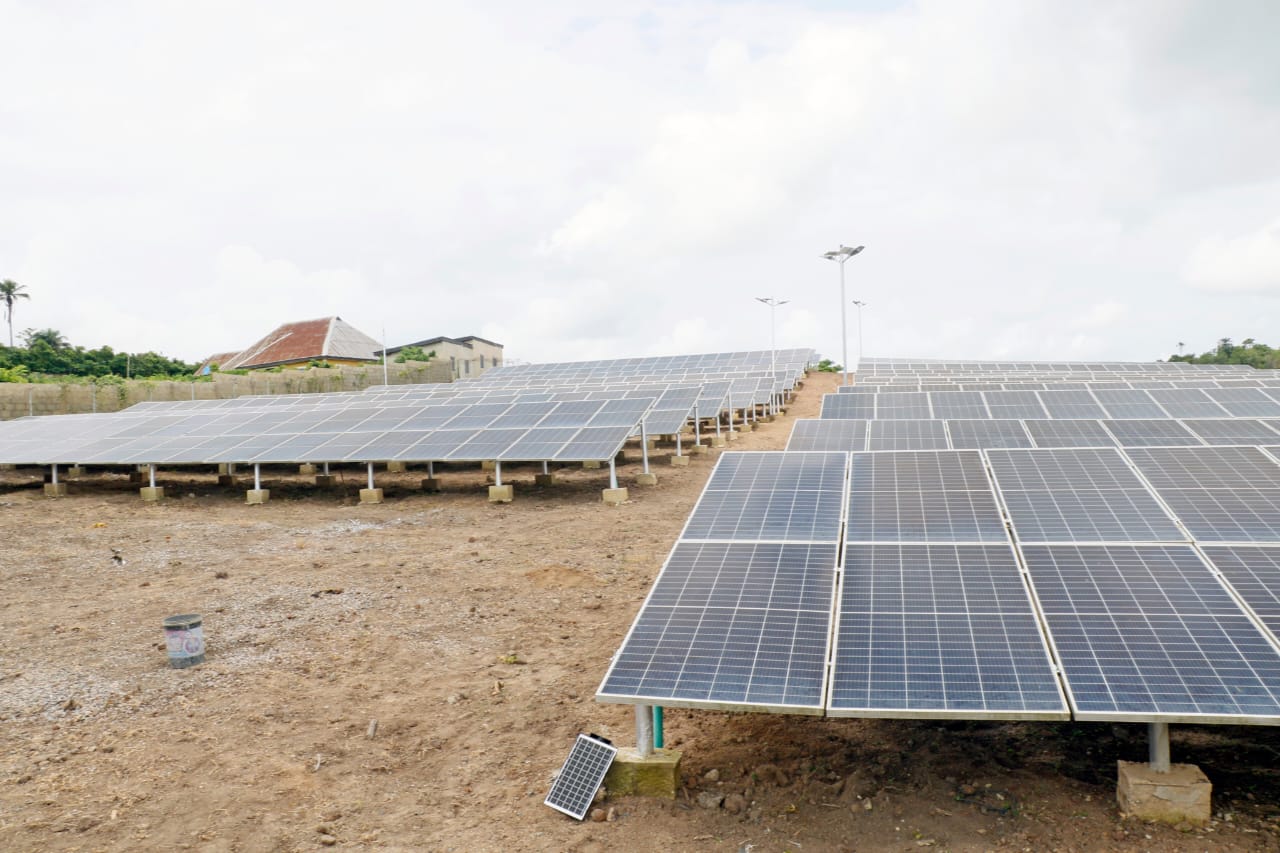
Solar firms support 100 MSMEs to drive energy transition
Abuja, Aug. 2026 (TBL Africa) No fewer than 100 Micro, Small and Medium Enterprises (MSMEs) in Nigeria have received training and financing support to adopt solar energy and reduce dependence on petrol and diesel generators.
Ms Chioma Ome, Country Director, Solar Sister Nigeria, disclosed this on Tuesday in Abuja during a three-day ZE-GEN MSME Solar Adoption Programme.
She said the initiative was designed to address energy challenges limiting the productivity and growth of small businesses.
The programme combines solar energy awareness, business capacity building and structured financing pathways to accelerate clean energy adoption among MSMEs.
Ome said the programme targeted at least 70 per cent solar adoption among participating MSMEs after the training.
She said the businesses would be linked with microfinance institutions and other financial providers to enable them acquire solar systems and repay through instalments.
“Participating businesses comprised fashion and tailoring enterprises, hair salons, cold-storage businesses, as well as agricultural enterprises involved in grinding, milling and processing.
“The training is being conducted in two batches, with 50 MSMEs in each batch, bringing the total number of participating businesses to 100.
“Solar energy provides a more reliable and less stressful alternative.
“The upfront cost can be a challenge, which is why we are connecting interested MSMEs with microfinance institutions and other credit facilities to enable them acquire solar systems at affordable rates and repay over 18 months to two years,” she said.
Ome said unreliable electricity supply remained a major factor limiting the productivity of MSMEs in the country.
She added that solar energy could provide a more reliable alternative while reducing the cost and stress associated with generator use.
The country director said the training was also exposing entrepreneurs to the actual cost of running businesses on fossil-fuel generators, including maintenance expenses and health risks associated with generator emissions.
Ome called for stronger collaboration among government, private-sector organisations and development partners to ensure that clean energy solutions reached MSMEs at the grassroots.
In her remarks, Ms Eessy Adjoring, Manager of Operations, Anfani Energy Ltd., said the ZE-GEN training project was being implemented in partnership with Solar Sister Nigeria.
She said the project was facilitated by the Carbon Trust, with support from the Small and Medium Enterprises Development Agency of Nigeria (SMEDAN).
Adjoring said the programme was not only about sensitising MSMEs to solar energy but also about creating financing pathways to make adoption possible.
“It is one thing to preach adoption and another to actually help businesses adopt these solutions.
“The main aim of this project is, therefore, to create financing pathways that will enable MSMEs to adopt solar energy,” she said.
Adjoring identified poor financial readiness as one of the major barriers preventing MSMEs from accessing available funding.
She said many businesses lacked proper documentation, bookkeeping records and evidence of healthy cash flow.
Adjoring urged entrepreneurs to register their businesses with the Corporate Affairs Commission (CAC), maintain proper financial records, comply with tax obligations and demonstrate profitability to improve their chances of accessing credit.
“Financiers want to see evidence that a business is profitable and capable of repaying the financing.
“They want to know that the solar solution will help the business improve its productivity and generate profit,” she said.
Also speaking, Dr Funto Babarude, Assistant Director, SMEDAN, urged MSMEs to “solarise” their businesses, saying the transition could reduce production costs, minimise losses and increase productivity.
Babarude said funding opportunities were available through SMEDAN’s growth fund, the Bank of Industry, microfinance banks and the Bank of Agriculture.
“Entrepreneurs must be able to account for funds received and provide evidence of turnover, cash flow, profitability and credible business plans.
“It is not enough to build their capacity or teach them how to operate their businesses and use solar technology.
“They must also be connected to financial institutions where they can access the funds required to implement what they have learnt,” she said.
A representative of LAPO Microfinance Bank, Mr Segun Williams, said the bank was ready to finance solar solutions for businesses across different sectors, including agriculture, tailoring and other SMEs.
Williams said financing could be structured according to the needs and capacity of individual businesses, with facilities ranging from smaller amounts to N100 million or N150 million, depending on the enterprise and its requirements.
He added that LAPO had branches across several states, enabling entrepreneurs outside Abuja to access its services, while special programmes were also available for young entrepreneurs.
One of the beneficiaries, Comrade Ali Paul, Chairman, National Union of Textile, Garment and Tailoring Workers of Nigeria, FCT Council, said the training was timely.
He said inadequate electricity supply had caused many businesses to lose opportunities and delay service delivery.
Paul said the rising cost of petrol, coupled with the cost of operating and maintaining generators, had made solar energy an increasingly attractive alternative.
“With the high cost of PMS in Nigeria, coupled with the cost of operating and maintaining generators, solar provides an opportunity for us to operate our businesses at a lower cost and deliver our services more efficiently,” he said.
He commended the organisers for the practical and interactive nature of the training.
