

Nigeria’s revised gas code targets investment, reliable power, regional trade
NMDPRA’s Revision 2 seeks to reduce gas transportation imbalances, improve transparency and boost investor confidence, but its success will depend on infrastructure, regulatory enforcement and reliable supplies.
Nigeria’s revision of its Gas Transportation Network Code is aimed at addressing key challenges limiting the efficient transportation of natural gas and its contribution to industrial growth, electricity generation and regional energy trade.
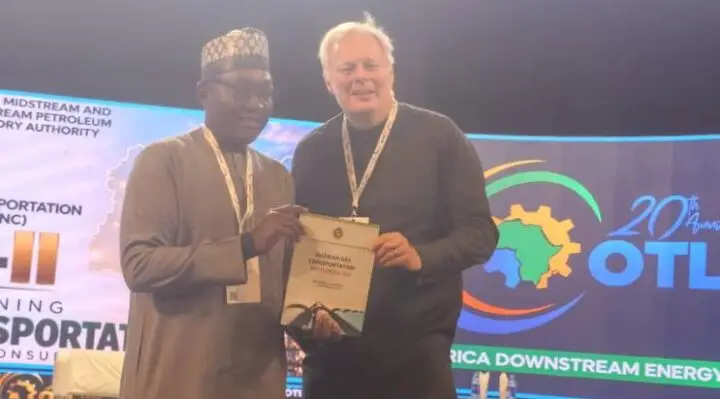
The Nigerian Midstream and Downstream Petroleum Regulatory Authority (NMDPRA) unveiled Revision 2 of the Nigerian Gas Transportation Network Code at the 20th edition of OTL Africa Downstream Energy Week 2026 in Lagos.
The revised code introduces updated provisions to improve gas measurement, transportation nominations, network coordination and operational transparency.
Mr Rabiu Umar, Chief Executive of NMDPRA, announced the revision on Monday, saying participation in the network had increased since the introduction of Revision 1, while imbalances on the western gas network had declined by 30 per cent.
The reported reduction highlights the potential benefits of clearer transportation rules and improved coordination. However, the wider impact will depend on whether the revised framework translates into more reliable gas deliveries, lower transaction costs and increased investment across the gas value chain.
For Nigeria, efficient gas transportation is critical to electricity generation, industrial productivity, manufacturing competitiveness and energy security. It could also strengthen the country’s position in regional gas markets.
Gas investment requires more than abundant reserves
Despite Nigeria’s substantial gas resources, inadequate infrastructure and transportation challenges have constrained the conversion of reserves into economic value.
Gas must be produced, processed and delivered at commercially viable prices to meet the needs of power plants, fertiliser manufacturers, petrochemical companies and other industrial consumers.
Uncertain pipeline access, transportation disputes and unreliable deliveries can undermine investment decisions, increase operating costs and discourage long-term supply agreements.
Revision 2 seeks to address some of these challenges by clarifying procedures for measuring gas volumes, submitting transportation nominations and coordinating deliveries across the network.
These measures could reduce disputes between shippers and network operators, improve capacity planning and strengthen accountability for differences between nominated and delivered volumes.
However, the reported 30 per cent reduction in western network imbalances does not, by itself, establish how much additional gas was delivered or the financial savings achieved.
For investors, the decisive factors will be improved supply reliability, commercially sustainable tariffs, transparent access arrangements and predictable regulatory enforcement.
Implications for electricity supply
The revised code could improve gas deliveries to power plants if its implementation strengthens coordination between suppliers, transportation operators and generators.
Gas-fired plants remain important to Nigeria’s electricity supply, but inadequate gas availability, pipeline constraints, equipment failures and payment difficulties have continued to affect generation.
A more transparent transportation framework could help generators plan deliveries, identify bottlenecks and reduce operational uncertainty.
Nevertheless, the revised code alone cannot resolve Nigeria’s electricity challenges.
Reliable generation also requires adequate gas production, functional pipelines, sufficient processing capacity, efficient transmission infrastructure and sustainable payment arrangements across the gas and electricity markets.
If these conditions improve alongside implementation of Revision 2, more dependable gas transportation could support electricity generation and improve supply to households and businesses.
Boosting manufacturing and industrial growth
Industries such as fertiliser, cement, steel, glass and petrochemicals depend on reliable gas supplies for fuel and production processes.
Supply disruptions can force manufacturers to reduce output, switch to more expensive fuels or operate below installed capacity, increasing production costs and weakening competitiveness.
A more predictable transportation system could help industrial consumers plan operations, negotiate supply agreements and assess investments in gas-dependent facilities.
It could also support the development of gas processing, compressed natural gas and other downstream infrastructure, subject to the availability of financing, demand and commercially viable prices.
For Nigeria, the broader objective is to use gas to stimulate domestic manufacturing, employment, import substitution and value addition rather than relying solely on hydrocarbon exports.
Regulatory certainty and investor confidence
Ms Olu Verheijen, Special Adviser to the President on Energy (Oil and Gas), underscored the importance of predictable regulation in attracting investment into gas infrastructure.
Represented by Mr Eriye Onagoruwa, Team Lead in the Office of the Special Adviser to the President on Energy, Verheijen highlighted the role of natural gas in electricity generation, industrial development and transportation.
Gas pipelines and processing facilities require substantial capital and long investment periods. Investors therefore need confidence in transportation tariffs, third-party access, capacity allocation, payment security and dispute-resolution mechanisms.
Revision 2 could reduce regulatory and operational uncertainty by clarifying the rules governing network participation.
However, the investment benefits will depend on consistent enforcement, adequate infrastructure and commercially sustainable arrangements.
The critical test is whether the revised rules translate into predictable market performance and stronger investment commitments.
NNPC calls for infrastructure investment
Mr Mumuni Dagazau, Executive Vice-President, Downstream, Nigerian National Petroleum Company Ltd. (NNPC Ltd.), called for increased investment in gas infrastructure, stronger industry coordination and deeper regional cooperation.
Pipelines, processing plants, compression facilities and distribution networks are essential to connecting gas-producing areas with domestic consumers and export markets.
Where these facilities are inadequate, increased production may not translate into greater deliveries or revenue.
Improved transportation arrangements could also create opportunities for independent producers, pipeline operators, gas marketers and industrial buyers, provided network access remains transparent and commercially viable.
Regional cooperation is equally important, as cross-border gas trade requires dependable supply contracts, compatible regulations, reliable payment arrangements and sufficient infrastructure.
Implications for African energy trade
Nigeria’s revised gas code could strengthen the foundations for regional energy trade, particularly within West Africa.
The West African Gas Pipeline already provides a framework for transporting Nigerian gas to neighbouring markets, including Benin, Togo and Ghana.
More efficient domestic transportation could improve the reliability of supplies available for regional customers and strengthen the commercial case for cross-border investments.
However, increased regional deliveries would depend on gas production, pipeline capacity, contractual commitments and demand in destination markets.
For importing countries, reliable Nigerian gas could support electricity generation and industrial development. For Nigerian producers, regional demand could broaden their customer base and create additional opportunities to monetise gas resources.
The revised code should therefore be viewed as a potential building block for regional integration, rather than proof that cross-border supplies will automatically increase.
Nigeria’s position in the global gas market
The reform also comes amid competition for energy investment and changing dynamics in international gas markets.
Nigeria participates in global gas trade through liquefied natural gas (LNG) exports. Improving domestic transportation could strengthen links between production, processing and consumption, making the wider gas value chain more attractive to investors.
However, Revision 2 does not automatically guarantee increased LNG exports or fresh foreign investment. Such outcomes require sufficient production, processing capacity, financing and competitive commercial arrangements.
Nigeria must also balance domestic demand with export opportunities. Reliable supplies to power plants and industries can support economic growth, while exports generate foreign exchange and government revenue.
Achieving both objectives will require efficient infrastructure, dependable supply arrangements and commercially sustainable pricing.
OTL Africa highlights energy security
The discussions at OTL Africa Downstream Energy Week 2026 reflected the importance of infrastructure, efficient logistics and commercial partnerships in strengthening energy security across the continent.
Mr Tunji Oyebanji, Chairman of the OTL Africa Downstream Advisory Board, highlighted the need for infrastructure development, efficient logistics and stronger commercial cooperation among African countries.
The 2026 event, themed “Secure Energy, Shared Prosperity,” brought together regulators, policymakers, operators and investors to examine developments and investment opportunities across Africa’s downstream energy industry.
For gas markets, the central challenge is to align production with transportation capacity, ensure transparent network access and build confidence in contractual performance.
Key indicators to watch
The success of Revision 2 will ultimately depend on measurable operational and commercial improvements, including:
– Network efficiency: Sustaining the reported reduction in transportation imbalances and extending improvements across the network.
– Delivery reliability: Ensuring actual gas deliveries increasingly match nominated volumes and contractual commitments.
– Infrastructure utilisation: Improving the use of existing pipelines and processing facilities while addressing bottlenecks.
– Investment commitments: Translating regulatory clarity into financing for pipelines, processing plants and distribution networks.
– Industrial demand: Improving gas availability and affordability for manufacturers and power generators.
– Regional trade: Strengthening the reliability of cross-border deliveries and long-term supply agreements.
– Regulatory enforcement: Applying transportation, measurement, access and dispute-resolution rules consistently.
Conclusion
Revision 2 of Nigeria’s Gas Transportation Network Code represents an important step towards improving the regulation and coordination of gas transportation.
Its effective implementation could reduce operational uncertainty, strengthen investor confidence, improve gas supplies to industries and power plants, and support regional energy trade.
However, regulatory changes alone cannot overcome inadequate infrastructure, unreliable production, payment challenges and weak enforcement.
Nigeria’s ultimate challenge is to turn improved gas transportation rules into reliable supplies, competitive industrial energy costs, stronger electricity generation and measurable economic growth.
