

Local content policy drives indigenous companies’ 60% oil, gas production – Lokpobiri
Abuja, Sept. 2026 (TBL Africa)The local content policy has enabled Nigerian indigenous companies to account for more than 60 per cent of the country’s oil and gas production.
This is according to Sen. Heineken Lokpobiri, Minister of State for Petroleum Resources (Oil).
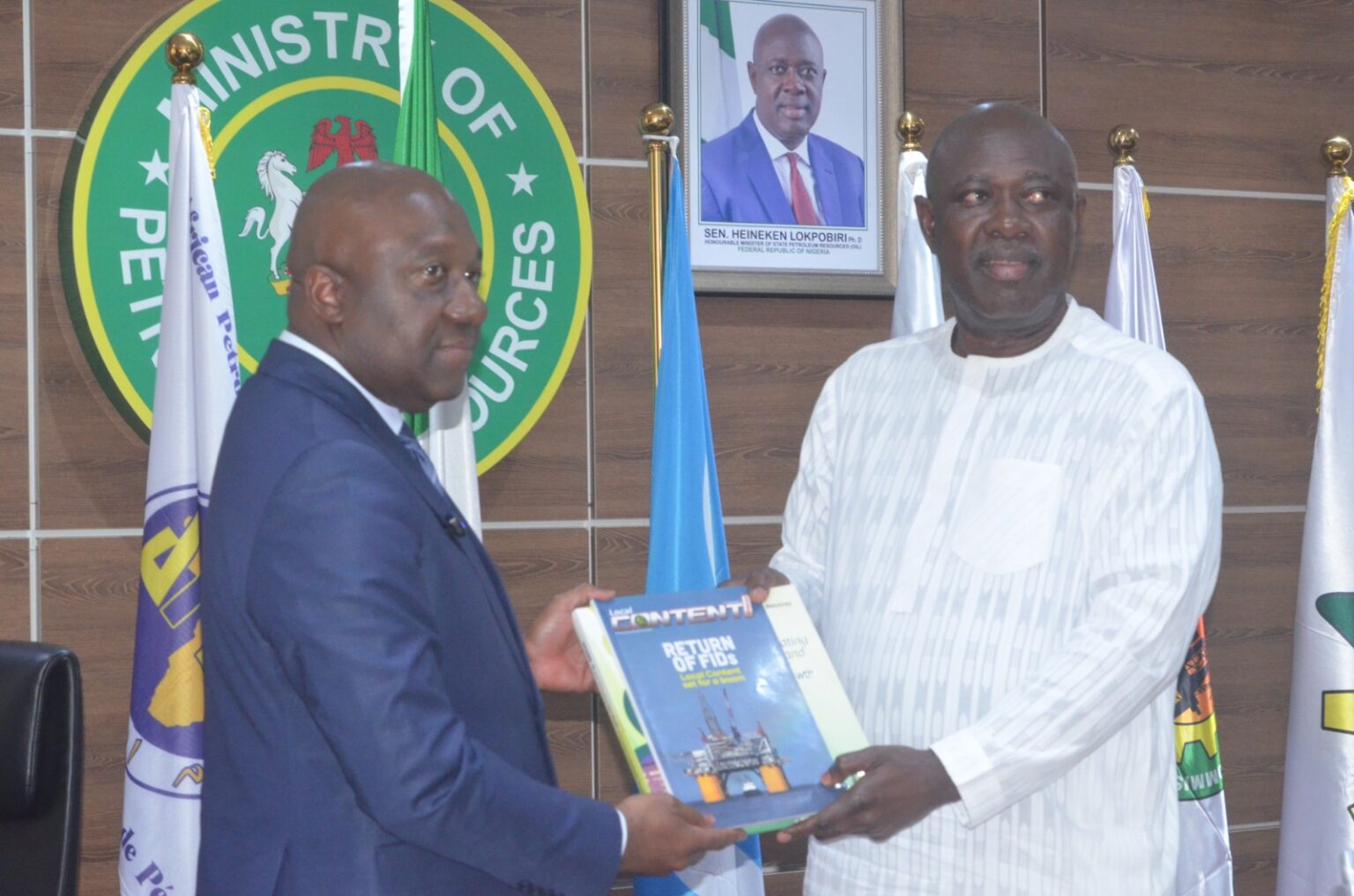
Lokpobiri said this on Monday in Abuja when he received a delegation from the Republic of Congo, led by its Minister of Hydrocarbons, Mr Steve Onanga, on a working visit focused on local content development.
The minister said the development represented significant progress in Nigeria’s more than 15-year local content journey, which began with the enactment of legislation to promote indigenous participation in the petroleum industry.
“Indigenous companies currently account for more than 60 per cent of Nigeria’s approximately 1.8 million barrels of oil equivalent daily production, including condensate.
“Some years ago, some of the International Oil Companies (IOCs) divested their onshore and shallow-water assets to indigenous operators,” he said.
Lokpobiri said the development had also strengthened the capacity of Nigerian companies to operate across the oil and gas value chain and retain more value within the country.
The minister said the divestment of some assets by IOCs to indigenous operators had created opportunities for Nigerian companies to grow their technical and operational capacity.
He said the IOCs had largely retained operations in the deep offshore sector, while indigenous companies had increasingly taken over operations in the land, swamp and shallow-water areas.
Lokpobiri said Nigeria’s experience demonstrated that African countries could strengthen their energy sectors by developing indigenous capacity and retaining greater value from their natural resources.
He said Nigeria was ready to share its experience in local content development with Congo to enable the country build indigenous capacity and increase value retention from its petroleum resources.
“If Nigeria can do it, I believe Congo can do it. Nigeria believes that the solution to Africa’s energy poverty largely rests with Africans developing their own capacity and resources,” he said.
He said Nigeria now had more than 20 to 30 competent indigenous service companies operating alongside international service companies in the industry.
According to him, the coexistence of local and international service companies has created opportunities for Nigerian firms to expand their technical capacity and provide services across the sector.
He said the Nigerian Content Development and Monitoring Board (NCDMB) was funded by contributions from industry operators rather than direct government funding.
“The industry is expected to contribute one per cent of contracts to support the administration of local content development,” he said.
Earlier, Onanga told the minister that the Republic of Congo was seeking to strengthen its local content framework by learning from Nigeria’s experience in developing indigenous participation in the oil and gas industry.
He said the delegation’s main objective was to understand how Nigeria had developed its local content policy and apply relevant lessons to improve the sector in Congo.
“Our wish is to improve local content in the Republic of Congo, and that is why we are here in Nigeria.
“We came here to learn from what Nigeria has done, share experiences and see how we can improve our own sector in Congo,” he said.
He said the delegation comprised officials responsible for upstream and downstream petroleum, local content, gas, energy and engineering, as well as representatives of the country’s national oil company and indigenous companies.
Onanga said the visit was an opportunity for Congo to learn from Nigeria’s achievements in local content development and strengthen cooperation between the two African oil-producing countries.
