

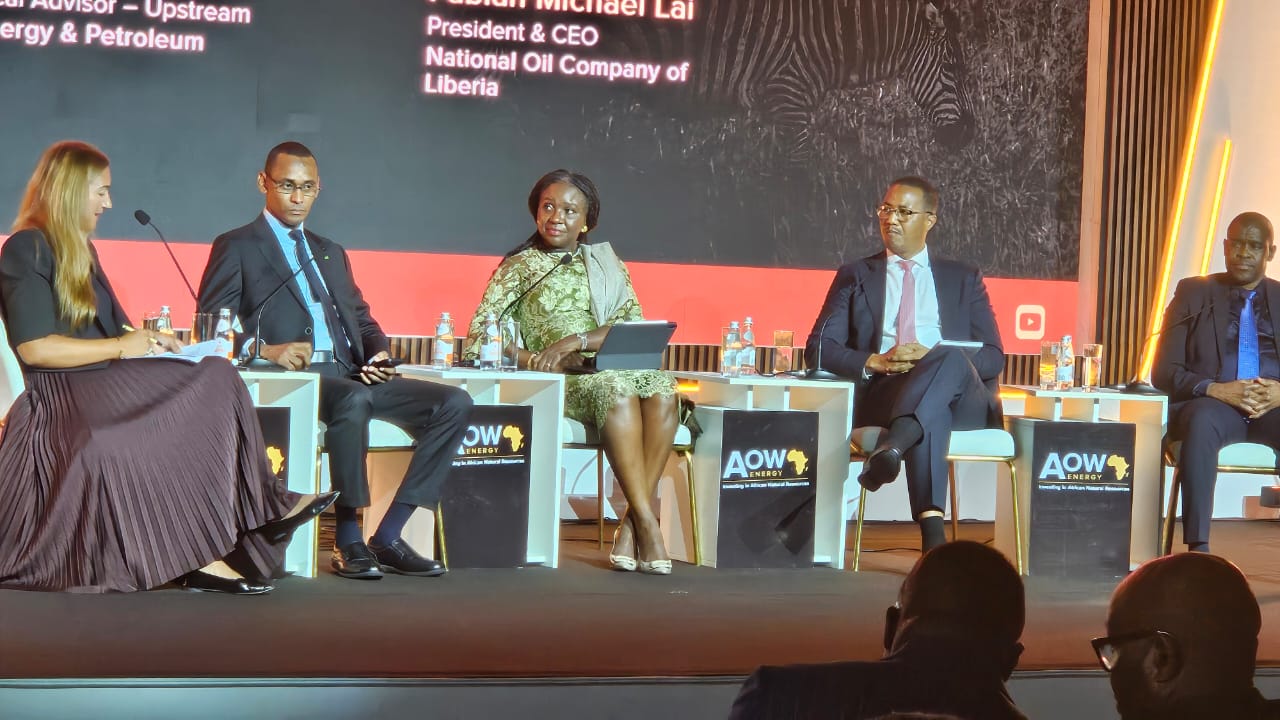
From policy to projects: PIA unlocking fresh capital in Nigeria’s oil, gas sector — NUPRC boss
Eyesan says regulatory clarity is restoring investor confidence and driving upstream investment
The Petroleum Industry Act (PIA) has moved Nigeria’s oil and gas industry “from policy to projects”, unlocking fresh capital into the country’s upstream sector, the Chief Executive of the Nigerian Upstream Petroleum Regulatory Commission (NUPRC), Mrs Oritsemeyiwa Eyesan, has said.
Eyesan stated this during an executive panel session at AOW: Energy Week 2026 in Accra, Ghana, where she joined other African regulators and national oil company executives to discuss the continent’s investment outlook.
Speaking on the theme, “Africa Regulators and NOC Leadership Debate,” Eyesan reaffirmed Nigeria’s commitment to strengthening the oil and gas sector and restoring investor confidence.
“The passage of the Petroleum Industry Act has given a new sense of direction for Nigeria’s oil and gas sector,” Eyesan said. “That clarity is what is driving investments into the sector today.”
The theme of AOW: Energy 2026 is “Investing in African Natural Resources,” with discussions focused on accelerating exploration, unlocking upstream partnerships and aligning policy, infrastructure and markets.
PIA provides policy clarity
Eyesan acknowledged that the implementation of the PIA initially faced challenges, including disruptions caused by the COVID-19 pandemic, which affected investment across the oil and gas industry.
However, she said the regulatory clarity created by the legislation has increasingly influenced business decisions and restored confidence in Nigeria’s petroleum sector.
“The PIA was a turning point for us in Nigeria. The Petroleum Industry Act is where we consolidated our regulations for the oil and gas industry to ensure that the institutions that we created were fit for purpose,” she said.
Eyesan noted that Nigeria’s oil and gas investment portfolio declined sharply from about $26 billion between 2014 and 2020/21 to roughly $2 billion.
She said government reforms and interventions have since helped restore stability, improve regulatory clarity and strengthen investor confidence.
According to her, increased investment activity in Nigeria’s upstream sector is further evidence of the government’s deliberate approach to reforming the industry.
Host communities key to investment stability
Eyesan also highlighted Nigeria’s experience with host-community engagement as an important lesson for other African oil-producing countries.
She urged partner countries to develop policy frameworks that promote stability in host communities, noting that one of the key provisions of the PIA was the establishment of Host Communities Development Trusts to support development in oil-producing areas.
Before the PIA, she said, community agitations, pipeline vandalism and other disruptions were common across several oil-producing communities, particularly in the Niger Delta.
Eyesan said the implementation of the PIA has contributed to a significant reduction in such challenges while strengthening relationships between operators and host communities.
African countries seek investment lessons
Also speaking during the panel, Moustapha Bechir, Senior Technical Adviser, Upstream, Ministry of Energy and Petroleum, Mauritania, said his country has implemented policies aimed at attracting investment and remains focused on reforms that can strengthen investor confidence.
He said creating a stable and predictable investment environment remains a priority for Mauritania.
Similarly, Fabian Michael, President and CEO of the National Oil Company of Liberia, said Liberia would continue to engage with Nigeria’s regulatory institutions and learn from the country’s experience.
Michael described Nigeria’s oil and gas industry as a shining example for other African countries, noting that the country’s long history in petroleum development provides valuable lessons for emerging producers across the continent.
The discussions underscored a common message from African regulators and national oil companies: policy certainty, regulatory stability, community engagement and bankable projects are critical to attracting the capital needed to develop Africa’s vast oil and gas resources.
