

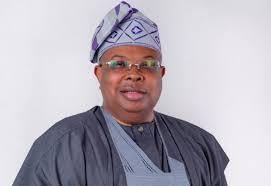
FG to decentralise renewable energy solutions to improve living standards of Nigerians
Lagos, June 2026 – The federal government is committed to decentralising renewable energy solutions to improve livelihoods, create jobs, and support economic development.
Joseph Tegbe, the Minister of Power, made the commitment on Wednesday, while unveiling ua 505-kilowatt interconnected solar mini-grid in Epe, Lagos State.
He also flagged off the development of an additional five-megawatt mini-grid project as part of efforts to expand electricity access and stimulate economic activities in the area.
The projects are located within Majoda communities in Eredo, Epe Local Government Area of Lagos State.
The minister said the federal government remained committed to creating an enabling environment that would encourage investment in decentralised renewable energy solutions.
“We’ll continue to work closely with development partners, investors, state governments, communities, and the private sector to scale up successful models such as this mini-grid across the country,” he said.
The minister said about 1,000 mini-grids were currently under active development across the ncountry, while solar home systems deployed under various programmes have expanded electricity access to millions of Nigerians.
“Over 1,000 mini-grids are currently under active development across the country. Under the World Bank-supported DARES initiative, IMAS solar home systems have now reached more than 3.9 million Nigerians,” he said.
Tegbe commended the Rural Electrification Agency and Abba Aliyu, its Managing Director, for driving rural electrification and renewable energy deployment across the country.
The minister described the transformation of the REA as remarkable.
“I think you should commend him, who has undergone a remarkable transformation from a body of admirable mandates, but modest delivery into an institution that is genuinely, visibly, and measurably changing the lives of Nigerians.
The minister said the Epe mini-grid would do more than provide electricity to households.
“Today’s commissioning is not merely about energising the community. This is transforming lives. It’s unlocking economic opportunities. It’s supporting local businesses and also improving education and health care services, in addition to creating jobs,” he said.
Tegbe also said the Epe project goes beyond rural electrification, describing it as a fully integrated energy system linking generation, storage and end-user delivery.
“What we’ve done here is not just electricity. We have a solar mini-grid generating power, battery storage systems, transmission lines, and we are connecting households directly with meters. It is taking power from generation to the end-user,” he said.
The minister expressed appreciation to the European Union, the Government of Germany, and the Nigerian Energy Support Programme for supporting the project.
Tegbe assured investors and development partners that the federal government would continue to support renewable energy projects and decentralised power infrastructure across the country.
