

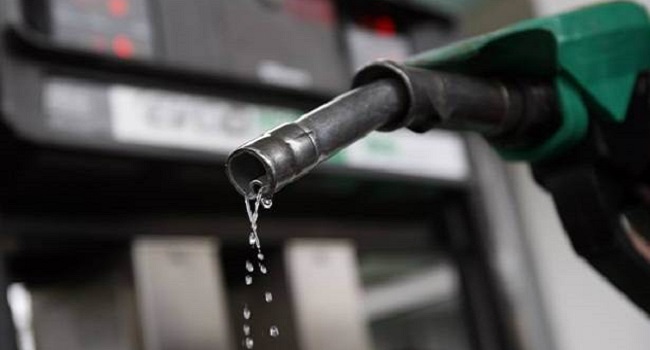
Experts explain why petrol prices do not fall immediately with crude oil prices
Two petroleum industry experts have explained why declining global crude oil prices do not automatically lead to immediate reductions in petrol pump prices in Nigeria.
A former Managing Director of 11 Plc, Mr. Tunji Oyebanji, said the delay was largely due to the time required for lower-priced crude oil to move through the refining and distribution process.
According to him, crude oil currently being processed by refineries was purchased when prices were higher.
He said cheaper crude must first be bought, transported, refined and distributed before consumers can benefit from lower pump prices.
Oyebanji explained that pump prices often rise faster when crude prices increase because refiners need to generate sufficient funds to purchase their next cargo of crude at higher prices.
“When crude prices decline, refiners and marketers still have inventories purchased at higher costs. They need time to clear those stocks before lower-cost products begin to reflect at the pumps,” he said.
He acknowledged that there could be instances of sharp practices but maintained that market competition would eventually drive prices down as more lower-cost products entered the market.
Oyebanji added that under Nigeria’s deregulated downstream petroleum market, the government’s role is limited to ensuring fair competition through regulatory agencies such as the Nigerian Midstream and Downstream Petroleum Regulatory Authority (NMDPRA) and the Federal Competition and Consumer Protection Commission (FCCPC).
He also supported limited fuel importation to encourage competition and keep local refineries efficient.
Also speaking, Prof. Wumi Iledare, Professor Emeritus of Petroleum Economics and Policy Research at the Centre for Energy Studies, Louisiana State University, said crude oil prices were only one factor determining the retail price of petroleum products.
He said refining costs, freight, insurance, storage, distribution, exchange rate movements, financing costs, taxes, regulatory charges and marketers’ operating expenses also influence pump prices.
According to Iledare, petroleum prices typically exhibit what economists describe as asymmetric price transmission, where prices rise more quickly than they fall.
He explained that marketers often continue selling products purchased at higher prices before passing on the benefits of lower crude costs to consumers.
The professor noted that exchange rate fluctuations remain a major factor in Nigeria, as petroleum products and many production inputs are priced in U.S. dollars.
He added that crude oil prices and refined petroleum product prices do not always move in the same direction because refining margins, seasonal demand, global supply disruptions and product availability also affect prices.
Iledare said the Petroleum Industry Act (PIA) provides for a deregulated market in which competition, rather than government directives, determines petroleum product prices.
He stressed that sustainable price reductions should reflect market realities and not undermine supply or investment in the downstream sector.
According to him, affordable energy for Nigerians will require exchange rate stability, increased domestic refining capacity, efficient logistics, stronger competition and consistent government policies.
On the economy, Iledare said a decline in Nigeria’s monthly oil export earnings from about $5.4 billion to $3.5 billion could reduce foreign exchange inflows, weaken the naira, lower government revenue and increase borrowing if sustained.
He, however, noted that the Petroleum Industry Act has strengthened Nigeria’s fiscal framework through a value-based royalty system, while emphasising that improving oil production and operational efficiency remains critical to increasing national revenue.
