

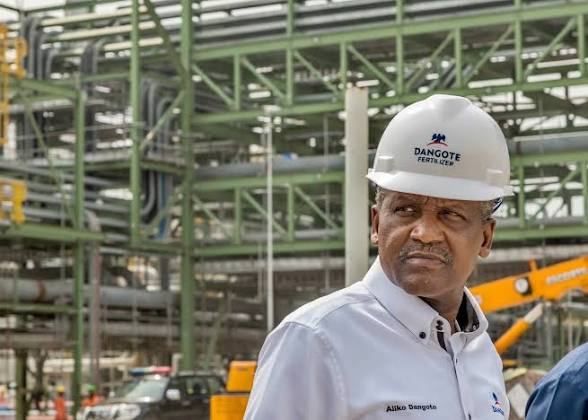
Dangote warns of global oil shocks, lauds Tinubu’s UK visit gains
Lagos, March 2026 (TBL Africa ) A foremost industrialist, Alhaji Aliko Dangote, has warned that Middle-East tensions driving global oil volatility could have far-reaching consequences for Nigeria and African economies.
Dangote spoke on Monday in Lagos after a courtesy visit and Eid-el-Fitr homage to President Bola Tinubu.
He said the visit was to extend Sallah greetings, reconnect with the president after some time, and reaffirm respect and continued support for the administration’s policies.
Dangote noted Nigeria had no direct role in the crisis but would still feel the impact because of deep global economic interdependence.
“We are part of a global village, and unfortunately, developments like this will affect us even if we are not directly involved,” he said.
He warned that prolonged tensions could trigger higher fuel prices, rising transport costs, inflationary pressures, and widespread hardship across African economies.
“If the situation does not de-escalate, we will end up paying a heavy price, especially given existing economic challenges,” Dangote said.
He explained that governments could face mounting fiscal strain as subsidies rise and revenues fluctuate under unstable global oil market conditions.
Dangote added that Africa’s rising debt burden could worsen under prolonged instability, further limiting fiscal space and weakening economic resilience.
“Africa is already grappling with debt, and additional shocks will only compound hardship for governments and the people,” he said.
He said escalating energy costs would disrupt nearly every sector, including small enterprises, manufacturing chains, logistics operations and household consumption patterns.
“Energy affects everything. From small businesses like barbers to industries running generators, everyone will feel the impact if costs continue to rise,” he said.
Dangote noted that some countries were already adopting coping strategies such as reduced workdays, energy rationing and remote working arrangements.
He said such measures, while necessary, could reduce productivity, slow economic output and affect livelihoods, particularly among vulnerable populations.
Dangote urged global leaders to prioritise de-escalation, stressing that many Africans rely on daily earnings and remain highly exposed to economic shocks.
“In Africa, in Nigeria many people depend on daily earnings. If they don’t work, they don’t eat. So we must pray this situation comes down quickly,” he said.
On Tinubu’s recent visit to the United Kingdom, Dangote said the trip had opened new economic opportunities and strengthened Nigeria’s investment outlook.
“I believe the visit has opened many doors. Diplomacy without economic outcomes is incomplete, and this has created opportunities for Nigeria,” he said.
He said agreements reached during the visit, especially in infrastructure and financing, signalled growing international confidence in Nigeria’s reform agenda.
“It is not just about the money committed, but the confidence it shows in Nigeria and the reforms being implemented,” he said.
Dangote said planned investments in critical sectors such as ports would significantly improve trade efficiency and support medium-term economic expansion.
“These investments will help improve our infrastructure, especially in key areas like ports, and complement ongoing government efforts,” Dangote said.
He expressed optimism that other countries, including Germany, would follow with investments as confidence in Nigeria’s economy strengthens.
“Once confidence is established, other countries will come in. It is a signal that Nigeria is ready for business,” he said.
Dangote said the agreements would enable Nigerian private sector players to access international financing and technical support for large-scale projects.
“For Nigerian investors, this shows we can approach these agencies to access funding. It means they are now open to supporting our projects,” Dangote said.
He described the development as a breakthrough, noting that such credit facilities had historically remained underutilised by Nigerian businesses.
“We have not really utilised these resources before, but now there is clear capacity and willingness to fund viable Nigerian projects,” he said.
Dangote reaffirmed his support for the administration, expressing confidence that reforms, partnerships and investor confidence would drive sustainable economic growth in Nigeria.
