

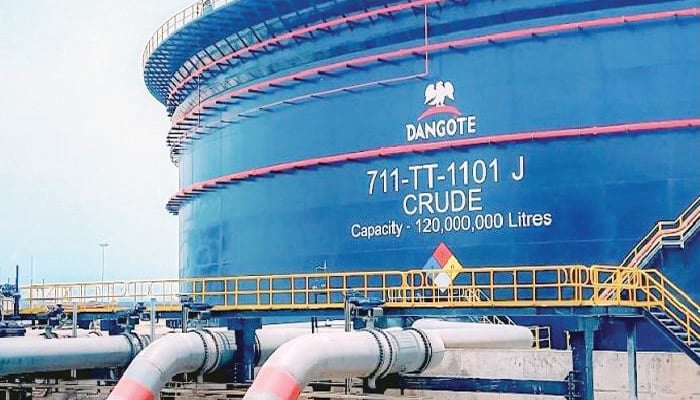
Dangote expands petroleum product facilities projects in Cameroon
Dangote group is planning to build a major petroleum products storage facility in Cameroon linked to a pipeline network, opening a strategic new distribution channel for its massive Nigerian refinery and deepening its footprint in Central Africa.
The proposed infrastructure project was discussed on Tuesday in Yaounde during a high-level meeting between Devakumar Edwin, Dangote Group’s vice president for oil, gas and fertilisers, and Cameroon Prime Minister Joseph Dion Ngute.
While the initiative remains in the preliminary discussion stage, corporate officials have not yet disclosed a financial investment value or a projected construction timeline.
According to Edwin, the planned terminal and pipeline network would significantly bolster fuel supply security across Cameroon, buffering the nation against recurring shortages and international supply chain disruptions.
“Our objective is also to distribute the products through a pipeline so that the cost of transportation is reduced and the impact on the environment minimised,” Edwin said following the discussions.
If finalised, the project would create a vital export market for refined petroleum products originating from Dangote’s 650,000-barrel-per-day refinery located in Lekki, just outside Lagos, Nigeria.
It would simultaneously position the African industrial conglomerate to efficiently serve Cameroon and key commercial trade corridors throughout Central Africa.
The latest energy push follows previous efforts by the multinational giant to broaden its economic engagement in the Central African nation.
In 2021, following a meeting with Cameroonian President Paul Biya, Dangote Group President and CEO Aliko Dangote publicly announced intentions to diversify the company’s local investments beyond its established cement operations.
Company executives believe the pipeline proposal could serve as a regional blueprint for cross-border energy cooperation, lowering logistical overhead and driving sustainable fuel distribution in the sub-region.
The developments come at a time when African nations are ramping up efforts to boost the continent’s energy security through major pipeline projects, including the Nigerian-Morocco pipeline and the East African Crude Oil Pipeline (EACOP).
