

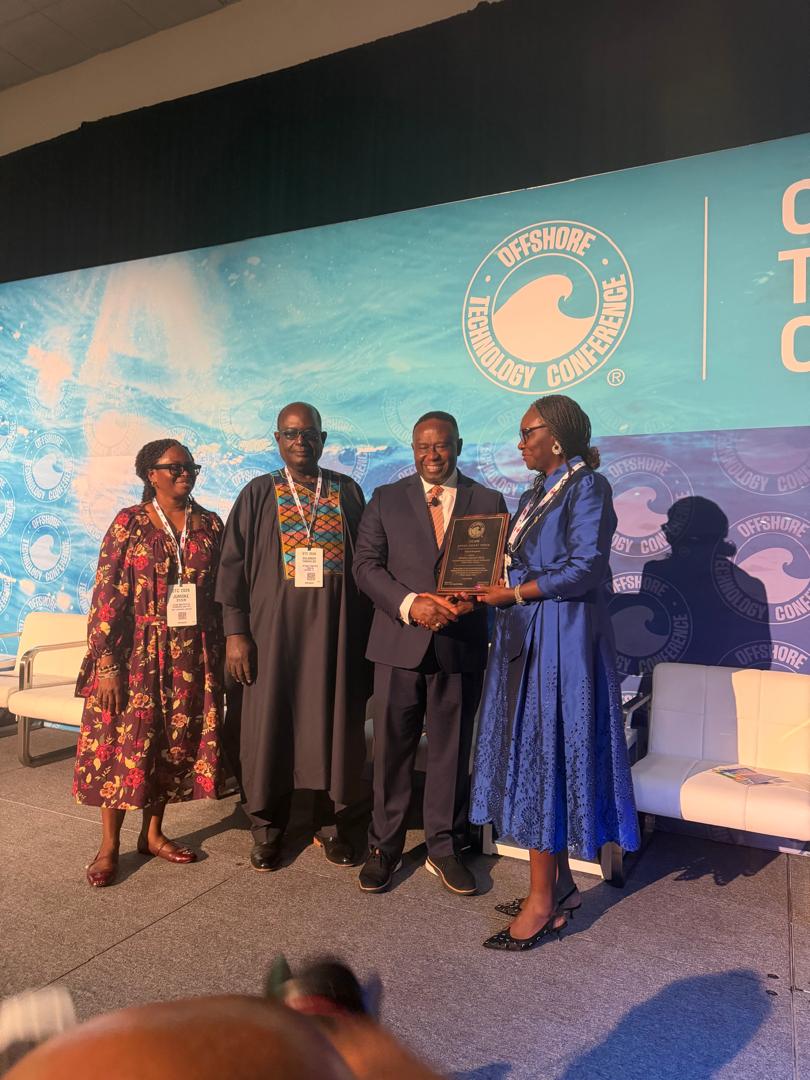
Africa at forefront of global energy scene, says Eyesan
Houston, (U.S.) May 2026 (TBL Africa )Africa is currently at the forefront of the global energy scene, as supply shortages and geopolitical tensions continue to reshape the oil and gas industry.
Mrs Oritsemeyiwa Eyesan, the Commission Chief Executive (CCE) of the Nigerian Upstream Petroleum Regulatory Commission (NUPRC), made this known at the 2026 Offshore Technology Conference (OTC) World series African Energy Forum organised by the Petroleum Technology Association of Nigeria (PETAN)on Tuesday in Houston, Texas, U.S,.
The African Energy Forum is tittled:”Africa’s Energy Potential: Expanding Oil and Gas Exploration and Investment,”
Speaking at a high-level industry forum, Eyesan declared that the continent now represents the most promising frontier for energy investment and supply, as traditional producing regions continue to decline.
“Today, Africa is the action centre of the global energy industry.
“There is no doubt about it,” she stated, emphasising that energy security has become the dominant concern for major economies worldwide.
Eyesan explained that ongoing geopolitical tensions in the Middle East have significantly disrupted global supply chains, removing an estimated 10 billion barrels of oil from the market and creating a widening deficit.
“The pressing question is no longer whether there is a gap, but who will fill it,” she said.
She noted that historically dominant regions such as the North Sea, North America, and parts of Asia are experiencing declining output, leaving Africa as the only continent with substantial untapped potential.
“Africa stands alone today as the region offering new opportunities, new frontiers, and significant reserves capable of stabilizing global supply,” Eyesan added.
According to her, the continent holds approximately 125 billion barrels of oil reserves and 625 trillion cubic feet (TCF) of gas, representing about 10 per cent of global reserves.
Highlighting Nigeria’s transformation, Eyesan credited the enactment of the Petroleum Industry Act (PIA) in 2021 as a turning point that revitalised the country’s oil and gas sector.
“The PIA was not just a reform; it was a rebirth,” she said. “It introduced fiscal clarity, regulatory efficiency, contract certainty, and transparency — all critical to restoring investor confidence.”
She revealed that prior to the PIA, Nigeria experienced a steep decline in upstream investments, dropping from about 15 billion dollars annually to less than seven billion dollars.
“However, recent developments signal a strong recovery, with major Final Investment Decisions (FIDs) recorded across key projects.
“In a further boost to the sector, NUPRC approved 48 Field Development Plans (FDPs) in the past year alone, indicating renewed industry activity and investor interest.
Eyesan also disclosed that Nigeria’s ongoing bid rounds have attracted significant global attention, with nearly 300 companies expressing interest in just 50 available oil blocks.
“This level of participation clearly demonstrates that the value within our assets is about to be unlocked,” she said, adding that additional bid rounds are already planned for 2026.
Inspite of the optimism, she acknowledged that infrastructure gaps remain a critical challenge, particularly in gas development.
“Our constraints are not in resources but in infrastructure and investment,” Eyesan noted.
“However, we are addressing this through strategic projects and regional collaborations.”
She highlighted ongoing efforts to expand gas infrastructure, including major pipeline developments aimed at transporting gas from the Niger Delta across Nigeria and into neighbouring countries.
Looking ahead, Eyesan stressed the importance of collaboration across Africa, noting her role as Chair of the African Regulatory Forum, a platform established to harmonise regulatory frameworks and foster cross-border cooperation.
“Our goal is to break down barriers and create a unified, investor-friendly environment across the continent,” she said.
With Africa’s population rising and demand for energy increasing, Eyesan underscored the continent’s readiness to power both domestic growth and global needs.
“Africa is open for business. We have the resources, the reforms, and the regulatory frameworks in place,” she declared.
Inviting global investors to seize the moment, she concluded: “The opportunities are immense. The time to act is now.”
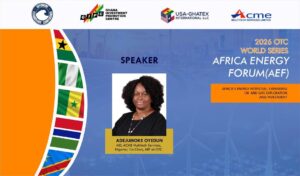
In her remarks, Mrs Adejumoke Oyedun Managing Director, Acme Multitech Services Ltd., and Co-Chair of Africa Energy Forum at OTC extend her heartfelt appreciation to all distinguished participants, industry leaders, stakeholders, and partners who contributed to the success of the 2026 Africa Energy Forum at OTC.
According to her, this year’s theme, “Africa’s Energy Potential: Expanding Oil and Gas Exploration and Investment,” has been thoughtfully examined through rich dialogue, insightful presentations, and forward-looking engagements.
“Your intellectual contributions, professional insights, and shared experiences have not only enriched discussions but have also helped shape practical pathways for unlocking Africa’s vast energy resources.
“I would like to specially commend our esteemed panelists for their diligence, depth of knowledge, and clarity of thought.
“Your intelligent and impactful contributions have elevated the quality of discourse and provided valuable perspectives that will undoubtedly influence policy direction, investment decisions, and strategic partnerships across the continent,” she said.
Oyedun said: to our partners, sponsors, and organisers, your commitment and support have been instrumental in delivering a successful and impactful forum.
“Your dedication to advancing Africa’s energy agenda is truly commendable.
“As we conclude, it is my hope that the conversations and connections fostered here will translate into tangible actions that drive sustainable growth.
“Strengthen collaboration, and unlock new opportunities within Africa’s energy sector,” she
