

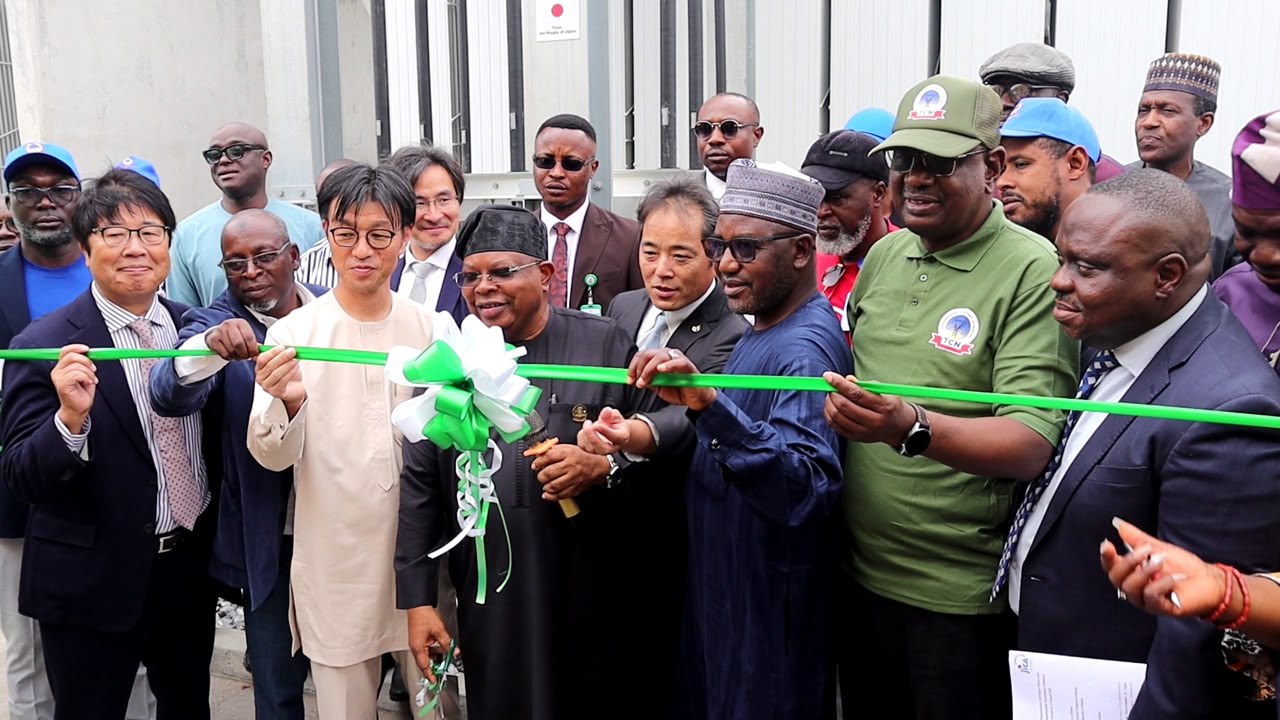
FG commissions upgraded Ijora, Apapa substations, adds 208MW to Lagos grid
In line with President Bola Ahmed Tinubu’s resolve to address the structural challenges that have long constrained Nigeria’s power sector, the Federal Government on Monday commissioned two upgraded transmission substations in Lagos, adding 208 megawatts of bulk transmission capacity to one of the country’s most economically active corridors.
At Ijora, two new 100MVA transformers increased the substation’s capacity from 90MVA to 230MVA, representing an additional 140MVA of capacity. At Apapa Road, a new Gas Insulated Substation (GIS) added 96MW, replacing an outdoor transformer that had served as a stopgap since the original facility, commissioned in 1985, was decommissioned.
Speaking at the commissioning, the Minister of Power, Joseph Tegbe, said the upgrades were part of the administration’s response to years of transmission constraints and infrastructure decay. He described President Tinubu as demonstrating “fearless commitment to addressing the structural constraints that have held our economy back,” linking the projects to the administration’s stated goal of building a $1 trillion economy.
Tegbe commended Lagos State Governor Babajide Sanwo-Olu for his support for the projects and said the Ministry would continue to reinforce transmission infrastructure nationwide to close the gap between available generation and the capacity to deliver power to consumers. Officials have repeatedly identified this gap as a major cause of stranded generation that the national grid has been unable to evacuate.
In his welcome address at the Apapa transmission facility, the Managing Director/CEO of the Transmission Company of Nigeria (TCN), Sule Ahmed Abdulaziz, said the works had tripled the station’s capacity from 60MVA to 180MVA, increasing the bulk power available for onward distribution by Eko Electricity Distribution Company (EKEDC) to Apapa Causeway, Ijora, Amukoko, Ajegunle, Apapa Wharf and Tin Can Island.
The ceremonies were attended by senior government officials and development partners, including Japan’s Ambassador to Nigeria, Hideo Suzuki, who was represented by his Deputy; JICA Nigeria’s Chief Representative, Ishigame Keiji; the Permanent Secretary of the Ministry of Power; the CEO of the Nigerian Independent System Operator (NISO); directors and ministerial aides from the Federal Ministry of Power; representatives of the Lagos State Government; and representatives of the Eko and Ikeja electricity distribution companies.
