

NACCIMA urges disciplined policy execution, accountability to unlock Nigeria’s potentials
Lagos, March 2026 (NAN) The Nigerian Association of Chambers of Commerce, Industry, Mines and Agriculture (NACCIMA) has called for disciplined policy execution and stronger accountability frameworks to unlock Nigeria’s economic potential.
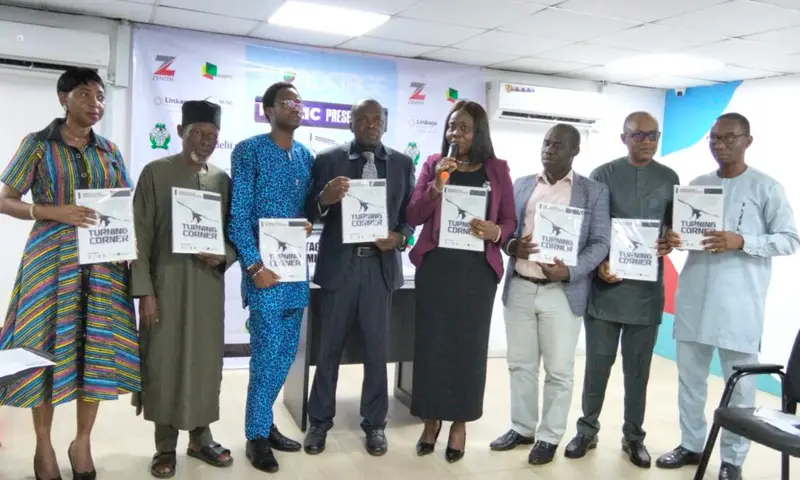
Its President, Dr Jani Ibrahim made the call during the Worldstage Nigeria Macroeconomic Outlook 2026 presentation, held in Lagos on Thursday.
The theme of the programme was “Nigeria’s Economy: Getting it Right”.
Ibrahim, who spoke as a Guest Speaker at the event, was represented by Dr Praise Abina, Research Manager at NACCIMA.
He said Nigeria must embrace a new economic approach anchored on discipline, diversification, digital transformation and decentralisation.
He noted that the success of the ongoing reforms depended largely on effective implementation.
According to him, policies must be executed with precision, while strategies translate into measurable outcomes, with institutions held accountable for delivery.
“Although Nigeria’s Gross Domestic Product (GDP) is approaching 350 billion dollars, and growth projections remain positive, the country’s potential alone is insufficient to guarantee development.
“Potential does not build nations. It is execution, consistency and collective commitment that transform promise into performance,” he said.
Ibrahim described the current period as a defining moment for the country, warning that failure to effectively implement reforms could result in a cycle of “reforms without results.”
He, however, expressed optimism that with the right approach, Nigeria could emerge as a hub of industrial strength, economic resilience and inclusive prosperity.
The NACCIMA president urged stakeholders to move beyond policy formulation to performance-driven governance, stressing that achieving sustainable growth required collective commitment.
“Getting it right is not an option, it is an obligation,” he said.
Earlier, Mr Segun Adeleye, President of WorldStage Ltd., called for urgent measures to strengthen Nigeria’s media sector, adding that it remained critical to economic growth and societal development.
Adeleye noted that although President Bola Tinubu recently offered to reduce tariffs on key inputs used in media operations like newsprint, plates, chemicals, and broadcast equipment, “but the impact of the policy might be limited.”
He said with many media organisations transitioning to digital platforms and online services, the extent to which they would benefit from such tariff reductions could be minimal.
He observed that advertising, which remained the most viable revenue source for media organisations, had continued to decline over the years.
Adeleye, therefore, urged stakeholders to examine practical ways of implementing the Federal Government’s “Nigeria First” policy within the media space.
He suggested that the policy could be leveraged to encourage local businesses to prioritise advertising in Nigerian media outlets.
The WorldStage president expressed concern that many Nigerian blue-chip companies spend significant amounts on foreign media platforms while neglecting local media, in spite of generating their profits within the country.
He proposed that President Tinubu should consider issuing an Executive Order mandating companies to allocate at least 80 per cent of their advertising budgets to local media organisations.
Adeleye commended organisations such as Zenith Bank, NLNG, the Central Bank of Nigeria (CBN), NNPC Ltd., Linkage Assurance, and Fidelity Bank for their support and partnership in making the macroeconomic outlook project successful.
