

Nigeria among West Africa’s lowest-priced fuel markets as MEMAN rejects arbitrary price caps
Association advocates market-driven pricing, lower distribution costs and competitive supply arrangements amid global energy volatility
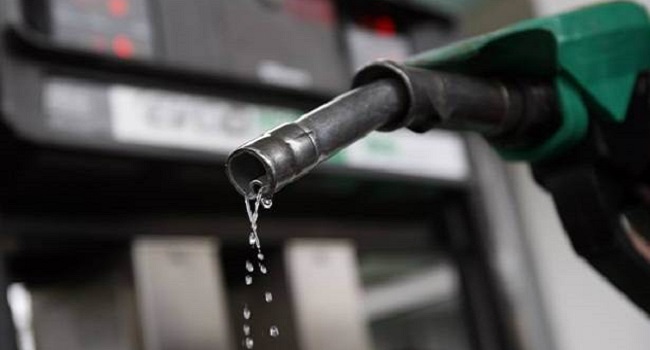
Nigeria’s petrol prices remain among the lowest in West Africa despite rising global energy costs, according to a regional price comparison presented by the Major Energies Marketers Association of Nigeria (MEMAN).
The association said arbitrary government-imposed price caps would not resolve the structural challenges facing the downstream petroleum sector, urging policymakers to prioritise transparent, market-driven pricing, efficient distribution and measures to reduce supply-chain costs.
MEMAN’s Executive Secretary and Chief Executive Officer, Clement Isong, made the remarks during a third-quarter press engagement organised by the association in partnership with S&P Global Energy on Thursday, October 15, 2026.
The virtual webinar, which examined pricing, market structure and petroleum distribution, featured presentations by Gary Clark, Associate Editorial Director, EMEA Clean Refined Products, S&P Global Energy; Matthew Tracey-Cook, Lead Specialist, Africa Refined Products Pricing, S&P Global Energy; and Isong.
According to the regional price comparison presented at the engagement, Nigeria’s Premium Motor Spirit (PMS), commonly known as petrol, sold at N1,378 per litre, compared with N2,065 in Côte d’Ivoire, N2,218 in Senegal, N2,365 in Ghana and N2,382 in Mali.
Burkina Faso and Benin also recorded higher prices of N1,533 and N1,535 per litre, respectively.
The figures were presented as naira equivalents of retail prices across selected West African markets.
Isong said petrol prices were influenced by several factors across the supply chain, including international product benchmarks, foreign exchange movements, shipping freight, financing costs, regulatory charges and regional transportation and distribution expenses.
He added that Nigeria’s comparatively lower prices were partly attributable to differences in fuel taxation, noting that many neighbouring countries imposed substantial excise taxes on petroleum products, while Nigeria currently had no fuel excise tax.
The presentation also indicated that between January and October 2026, petrol prices in Nigeria increased by 33 per cent, while diesel prices rose by 36 per cent.
Despite the increases, the country continued to maintain a relatively low petrol price level compared with several regional markets, according to the figures presented.
MEMAN rejects arbitrary price controls
The MEMAN chief executive maintained that government-imposed price caps were not a sustainable solution to the challenges confronting the downstream petroleum market.
He argued that policy interventions should instead focus on addressing the underlying factors driving costs, improving market transparency and strengthening competition.
“Rather than distorting market prices, the focus should be on transparent, market-driven pricing, efficient distribution, and measures that address supply bottlenecks and reduce operating costs,” Isong said.
He explained that higher diesel prices also increased the cost of transporting petroleum products, including petrol, thereby creating additional pressure across domestic supply chains and the wider economy.
To mitigate these pressures, Isong advocated investment in automation and greater adoption of alternative energy options, including compressed natural gas (CNG) and electric vehicles, to reduce transportation costs and improve distribution efficiency.
He said a more efficient supply chain would help minimise avoidable expenses while supporting a competitive market.
Domestic refineries, imports must complement each other
Isong also called for a coordinated supply framework that clearly defined the respective roles of domestic refineries and imported petroleum products.
He said domestic refineries should serve as a major source of supply as their products became commercially available, while imports should be used to bridge domestic supply deficits and address disruptions where necessary.
According to him, competitive procurement processes could improve transparency and cost efficiency when imports were required.
He advocated a tendering system based on the lowest evaluated price, taking relevant commercial and supply considerations into account, to promote competitive sourcing.
“Supply planning should account for refinery output, product specifications, storage availability, and evacuation capacity,” he said.
“Coordination between supply sources and distribution infrastructure should minimise avoidable delays and logistics costs.”
He added that better alignment between refinery production, import requirements, storage capacity and transportation infrastructure would improve supply reliability and help prevent unnecessary distribution expenses.
S&P Global Energy calls for credible regional benchmarks
The S&P Global Energy representatives examined developments in international and West African refined petroleum markets, including the effects of geopolitical tensions, refinery disruptions and changing global supply conditions on product prices.
The presentations highlighted volatility in international markets, particularly for middle distillates such as diesel and aviation fuel.
Against this backdrop, the speakers emphasised the importance of credible regional pricing benchmarks that accurately reflected prevailing market conditions in West Africa.
They highlighted the Free On Board West Africa (FOB WAF) and Ship-to-Ship (STS) Lomé assessments as reference points for different refined petroleum product supply arrangements.
The FOB WAF assessment provides a reference for products supplied on a free-on-board basis in West Africa, while the STS Lomé assessment relates to products supplied through ship-to-ship transactions around Lomé, Togo.
The speakers said transparent market information, reliable price assessments and wider industry participation were essential to strengthening price discovery and improving confidence in commercial transactions.
A credible regional reference market, they noted, would provide marketers, suppliers and other industry participants with a more dependable basis for pricing decisions and contract negotiations.
MEMAN commends NMDPRA
Isong commended the Nigerian Midstream and Downstream Petroleum Regulatory Authority (NMDPRA) for progress in promoting product quality, digitising licensing processes, publishing market data and advancing measures aimed at fostering fair competition.
He said effective regulation, transparent information and predictable processes were important to building a well-structured petroleum market.
The MEMAN chief executive stressed that a competitive market should improve supply security, encourage efficiency and deliver better outcomes for consumers without relying on arbitrary price controls or broad-based fuel subsidies.
He added that fair access to petroleum products, accurate measurement, quality assurance and reliable customer service were equally important to protecting consumers and strengthening confidence in the downstream sector.
The engagement concluded with a call for stronger collaboration among regulators, marketers, suppliers and other industry stakeholders to improve pricing transparency, coordinate supply and strengthen distribution infrastructure.
For Nigeria, MEMAN said, the priority should be to develop a resilient petroleum market in which prices reflect prevailing market conditions, competition is fair and operational improvements help reduce avoidable costs across the supply chain.
