

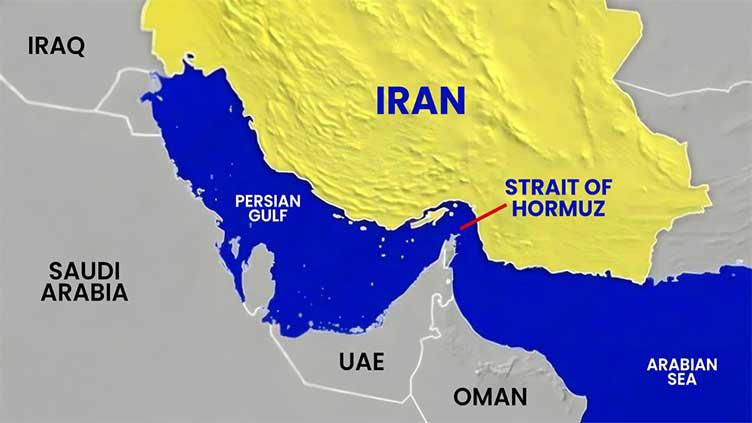
Trump declares other countries need to ‘take the lead’ on the Strait of Hormuz
Washington, April 2026 – President Trump declared Wednesday night that other countries should “take the lead” on the Strait of Hormuz in yet another signal that the US may aim to depart Iran with that economically vital issue unresolved.
The latest message on the crucial waterway came during Trump’s address to the nation from the White House that was billed as “an important update on Iran.” The president reiterated plans to leave Iran in two to three weeks but offered little sense of how he will end the war.
“We will be helpful, but they should take the lead,” Trump said of reopening the strait, and added that other nations “must take care of that passage, they must cherish it, they must grab it,” claiming that it can be done easily.
He also said the crucial 21-mile-wide waterway, through which one-fifth of the world’s oil passes, may also “open up naturally.”
It was the latest example of the president weighing in on a central question for the global economy this week about the war in Iran: Would he be willing to leave without reopening the strait?
Trump has now essentially laid out that scenario multiple times in recent days, telling reporters Tuesday, “what happens in the strait, we’re not going to have anything to do with,” and other nations may need to “fend for themselves.”
The president has claimed for weeks that the US has no interest in what passes through the critical shipping channel. Trump followed up Wednesday morning with another wrinkle, claiming that Iran is asking for a ceasefire but that he will consider it only when the strait “is open, free, and clear.”
Trump didn’t offer more details about a possible ceasefire in Wednesday night’s address. He said the bombing attacks could increase in the coming weeks as the US reserves the right to “bring them back to the stone age.”
The problem for the White House is that global energy markets would undoubtedly be further rattled by any scenario in which Iran is able to indefinitely control traffic (and even charge fees) through the waterway.
On Yahoo Finance Tuesday morning, Bianco Research president Jim Bianco called the economic effects of that scenario “incalculable.”
“Basically, you would be elevating Iran to a superpower … only their oil would get out, and they would probably try and use it to crush the West,” Bianco said.
It’s all evidence of the conundrum facing the White House, torn between those dire economic projections and an equally strong desire to wrap up US engagement.
Trump again on Wednesday night seemed to be promising to end the war but is also keeping escalation on the table with US ground forces now in the region.
Skepticism that the president can leave — and steep economic costs if he tries
Some close market watchers in recent days have expressed skepticism that Trump — no matter what he says publicly — would really be willing to walk away from the Strait, given fears that energy prices could then shoot even higher if he does.
Signum Global Advisors, in a note to clients on Tuesday morning, said it was “extremely unlikely” that Trump would end the war without first at least trying to reopen the Strait.
The group offered three reasons: damage to the US economy, adverse impacts on Trump’s Persian Gulf allies, and how leaving the Strait in Iranian control “would put the US at a comparative global disadvantage.”
Tobin Marcus of Wolfe Research wrote in his own note Tuesday that he thinks the president “might be willing to withdraw without militarily reopening the Strait eventually if the cost of the war becomes intolerable, not that he’s planning to do so imminently, “given the immediate economic pain that would likely follow such a move.
Indeed, a flurry of economic observers have warned that the effects on the global economy could be dramatic if shipping isn’t open at the end of the conflict.
BlackRock CEO Larry Fink said last week during an interview with the BBC that oil prices could reach $150 per barrel and cause a global recession if Iran remains “a threat to the Strait of Hormuz” after the end of hostilities.
Patrick De Haan, GasBuddy’s head of petroleum analysis, added on X Tuesday that “ending a war while leaving Hormuz closed isn’t ‘peace’, it’s surrendering the world’s most critical oil chokepoint, guaranteeing higher energy prices, economic shock, and long-term instability.”
A yo-yoing message from Trump
Another factor fueling uncertainty is that Trump’s public pronouncements often veer wildly.
On Monday, he issued an ultimatum to Iran, posting that “if the Hormuz Strait is not immediately ‘Open for Business,’” the US would retaliate by “obliterating” things like electricity infrastructure, Kharg Island, and even desalination plants.
But roughly 24 hours later, Trump had pivoted and declared that the Strait is not his problem, telling other nations to “go get your own oil!”
That was before his additional commentary on Tuesday and Wednesday added further confusion — a pattern that has persisted since the beginning of the war.
Some days, the president uses absolutist language on the need to reopen the Strait immediately. In fact, Monday’s message was at least Trump’s fifth ultimatum demanding Iran fully open the area for shipping or face violence.
But other days, he has downplayed the importance of the waterway and falsely claimed the US doesn’t rely on it, including at one point predicting the Strait would “open itself”
