


REA: Nationwide energy mapping gives Nigeria clear roadmap to electrify very community
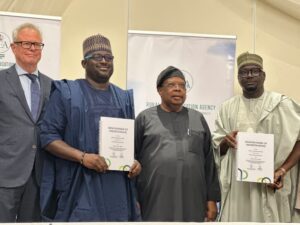
The Managing Director of the Rural Electrification Agency (REA), Dr. Abba Aliyu, says the agency has completed Nigeria’s first comprehensive nationwide energy mapping, providing reliable data that will accelerate electricity access to underserved communities.
Aliyu said the exercise identified more than 750,000 communities across the country, detailing the number of households in each location, their electricity status and the most suitable and cost-effective technology for electrification.
According to him, the database enables the agency to determine whether communities require standalone solar systems, isolated mini-grids, interconnected mini-grids or grid extension, making project planning and implementation more efficient.
On electricity reforms, Aliyu said the revised mini-grid regulation has significantly expanded REA’s capacity to deliver larger projects. While the previous regulation limited mini-grids to one megawatt, the new framework now permits isolated mini-grids of up to 5MW and interconnected mini-grids of up to 10MW.
He also highlighted the agency’s collaboration with state governments through its State-by-State Roundtable, which aligns state electricity plans with REA programmes.
The agency engaged 27 states last year and is extending the initiative to the remaining states and the Federal Capital Territory.
Aliyu said REA’s rural electrification projects are designed to be financially sustainable. Every mini-grid is equipped with 100 per cent metering and remote monitoring systems, while the agency has adopted a Result-Based Financing (RBF) model that encourages private investors to finance and deliver renewable energy projects instead of relying solely on government contracts.
To strengthen local manufacturing, he disclosed that REA has signed agreements to establish 3.7 gigawatts of solar panel manufacturing capacity across Nigeria, with several production facilities already operating in Lagos, Kano, Akwa Ibom and Bayelsa. He noted that the initiative will reduce dependence on imports, create jobs and position Nigeria as a renewable energy manufacturing hub.
Aliyu stressed that reliable electricity remains critical to Nigeria’s economic transformation, saying sectors such as healthcare, agriculture, education, manufacturing and Artificial Intelligence depend on stable power supply.
He explained that the Tinubu administration’s strategy focuses on supporting electricity production through grants that encourage private-sector investment while helping to reduce deployment costs and electricity tariffs.
Speaking on agriculture, Aliyu said REA is deploying productive-use energy solutions to farming and agro-processing clusters to reduce post-harvest losses and improve competitiveness.
He cited the agency’s intervention in Namu, Quan’pan Local Government Area of Plateau State, where a 50-kilowatt solar mini-grid enabled rice processors to switch from expensive diesel power to clean energy, making their products more competitive. The project is now being expanded to five megawatts, which will supply electricity to 37 rice-processing factories and neighbouring communities.
