

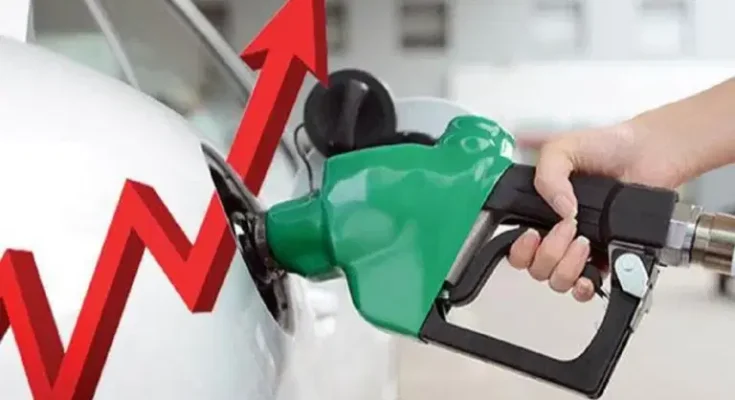
Petrol hits N1,430 as Dangote hike drives transport, food price fears
Petrol prices have risen sharply across Lagos, Ogun State and Abuja, with pump prices hitting N1,430 per litre in some locations following an increase in the wholesale price of Premium Motor Spirit (PMS) by the Dangote Petroleum Refinery.
The refinery raised its gantry price from N1,265 to N1,350 per litre, an N85, or 6.7 per cent, increase, amid a surge in global crude oil prices and heightened tensions around the Strait of Hormuz.
The latest increase has already triggered higher transport fares, particularly on Lagos-Ogun routes, raising fears of another round of increases in food, logistics and other essential goods.
Transport fares surge
Commuters travelling between Lagos and Ogun faced steep fare increases on Sunday, with some fares reportedly doubling.
Routes that previously cost between N200 and N500 rose to between N500 and N1,200 in some areas.
On the Mowe-Oshodi and Mowe-Mile 2 routes, fares reportedly jumped from about N400-N500 to as much as N1,000.
One commuter said the situation could worsen when commercial activities resume fully.
«“What the price would be tomorrow morning, Monday, only God can tell.”»
Transport operators are particularly vulnerable to fuel-price increases because petrol represents a significant portion of their operating costs. Higher fares could, in turn, increase the cost of commuting and moving goods across the country.
Food prices face fresh pressure
Economists warn that the impact will not be limited to transport.
Much of Nigeria’s food supply is moved by road from farms and rural production centres to urban markets. Higher fuel prices therefore raise the cost of transporting agricultural produce, raw materials and finished goods.
Dr Aliyu Ilias, an economist and development expert, said the latest increase could feed directly into inflation.
«“There should be a way of absorbing these costs. If you do not absorb them, they will show up in our next inflation figures and economic analysis,” Ilias said.»
He said rising transportation costs have a multiplier effect because virtually every sector depends on logistics.
«“The more prices increase, the more the cost of producing goods, especially food, will rise because everything is affected by transportation costs,” he said.»
Pump prices climb
Checks in major markets showed that several filling stations had adjusted their prices.
In Abuja, MRS outlets reportedly increased their pump price from about N1,350 to N1,395 per litre, while NIPCO outlets moved to about N1,430. Some Mobil outlets were selling at approximately N1,400 per litre.
A petrol attendant at an MRS outlet said motorists could face another increase when stations replenish their stocks.
«“We are currently selling our old stock at N1,395 per litre, but from tomorrow, once the new stock arrives, the price will be higher,” she said.»
The Dangote increase also puts its wholesale price above the reported petrol landing cost of about N1,311 per litre, adding pressure on downstream operators.
Global oil prices add to pressure
The domestic increase comes as Brent crude, the global oil benchmark, trades above $100 per barrel, with prices recently approaching $108.
The surge has been driven by growing concerns over supply disruptions arising from escalating tensions in the Middle East.
Particular attention has centred on the Strait of Hormuz, a critical route for global oil and liquefied natural gas shipments. Any prolonged disruption could send further shockwaves through international energy markets.
Reports of attacks involving vessels and energy infrastructure, as well as uncertainty surrounding diplomatic efforts involving Iran and Gulf states, have heightened market volatility.
Calls for regulatory intervention
Former Secretary-General of the Organisation of African Trade Union Unity, Owei Lakemfa, called for stronger economic planning and regulatory measures to protect consumers from international oil-price shocks.
Lakemfa said Nigeria’s status as a major crude oil producer should provide some insulation from global fuel-market volatility, particularly now that domestic refining capacity has expanded.
«“If we produce oil in Nigeria, refining in Nigeria cannot be the same as importing fuel,” he said.»
He also raised concerns about market concentration in the downstream sector, urging regulators to prevent arbitrary price increases and protect consumers.
Meanwhile, the National Publicity Secretary of the Independent Petroleum Marketers Association of Nigeria, Chinedu Ukadike, said marketers had adjusted pump prices in response to successive changes in Dangote Refinery’s pricing.
He said frequent price changes were creating uncertainty for marketers and consumers, particularly because replacement costs could change rapidly.
Fresh inflation threat
The latest petrol increase underscores the continued vulnerability of the Nigerian economy to global oil-price movements despite increased domestic refining.
While local refining reduces exposure to shipping, insurance and some foreign-exchange costs associated with imported products, refiners remain exposed to international crude prices.
With Brent crude above $100 per barrel and tensions around the Strait of Hormuz unresolved, further increases in domestic fuel prices remain possible.
For households already facing high living costs, the immediate consequence could be higher transport fares, while businesses may pass increased logistics and production costs on to consumers.
The result could be renewed pressure on food prices, inflation and household purchasing power unless global oil prices stabilise or domestic fuel supply conditions improve.
