

NMDPRA targets $30bn investment in midstream, downstream sectors by 2030


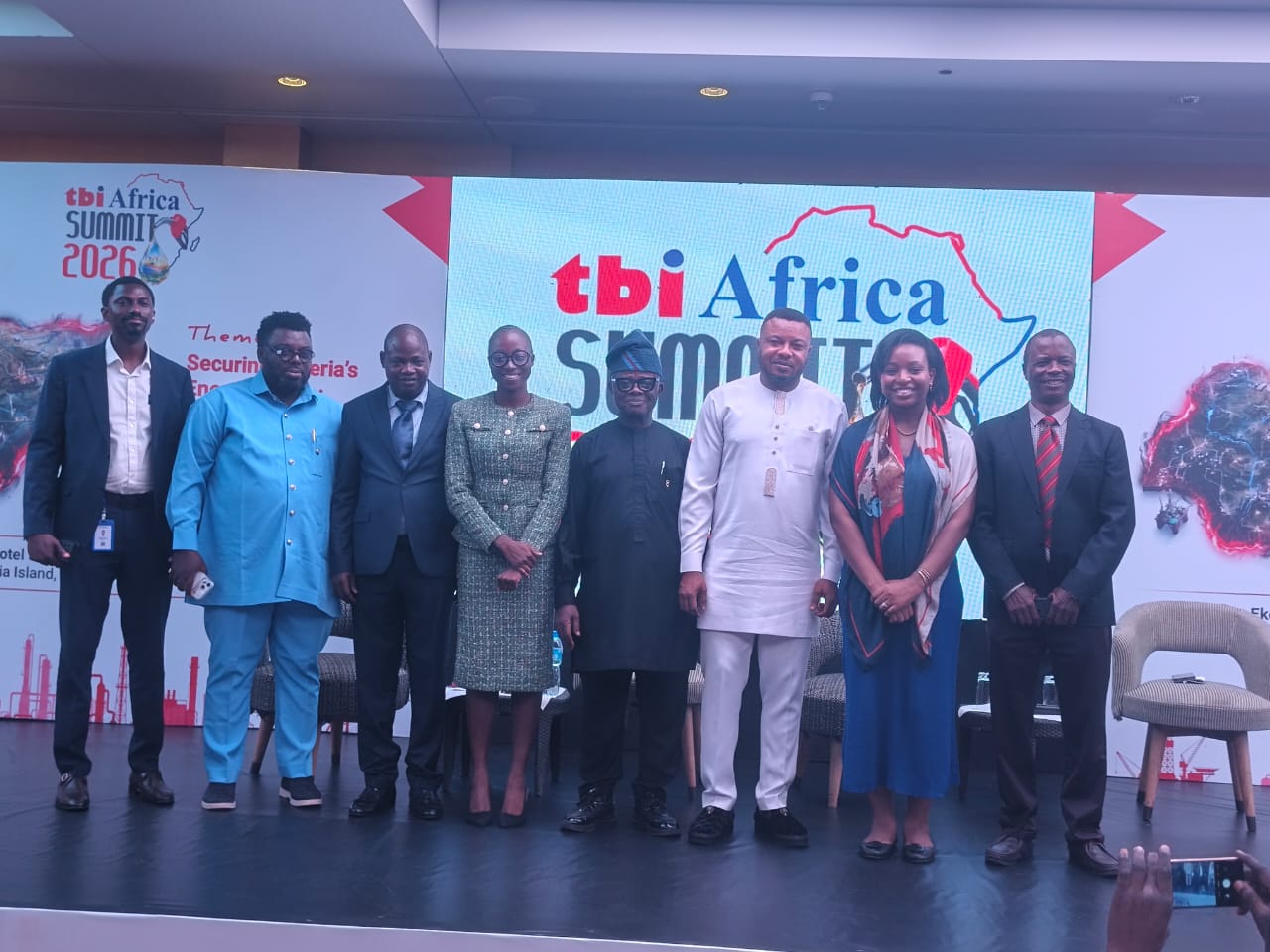
 L-R: Head, Corporate Communications, Ikeja Electric, Mr Kingsley Okotie; Senior Associate, G Elias, Mrs Peace Adeleye; Publisher, The Business Intelligence Magazine, TBI Africa, Mr Emeka Ugwuanyi; Deputy Director, DSSRI, NMDPRA, Lagos Regional Office, Mr Victor Ojiakor and Head, Strategy and Fundraising, Africa Minigrid Developers Association, Mrs Chinyere Olatunji at The 2026 Business Intelligence Magazine Africa Summit 2026 on Thursday in Lagos.

The Nigerian Midstream and Downstream Petroleum Regulatory Authority (NMDPRA) says Nigeria requires $30 billion investment by 2030 to expand infrastructure and strengthen energy security.
Malam Rabiu Umar, the Authority Chief Executive, disclosed this at the 2026 Business Intelligence Africa (TBI Africa) Summit on Thursday in Lagos.
The summit was organised by The Business Intelligence Africa with the theme: “Securing Nigeria’s Energy Future: Balancing Energy Security, Sustainability and Economic Growth”.
Umar, represented by Mr Victor Ojiakor, Deputy Director, Distribution, Storage Systems and Retailing Infrastructure, said the investment would support critical infrastructure across the midstream and downstream petroleum sectors.
He said the authority was also developing a national strategic petroleum stock programme to cushion supply disruptions and strengthen energy security.
According to him, the programme, which will initially cover selected depots, is expected to expand nationwide, with a target of achieving strategic stock sufficiency of between 30 and 45 days.
Umar identified gas processing, storage, transportation and distribution as critical areas requiring investment to improve domestic energy supply.
He also highlighted opportunities to expand gas utilisation and develop infrastructure to connect available resources to consumers.
Speaking at the event, Mrs Sarah Eugene, Business Research Analyst, International Energy Services Ltd., said Nigeria’s abundant oil and gas resources did not automatically translate into attractive investment opportunities.
“There is a difference between potential and opportunity. They are not the same thing,” Eugene said.
She said investors considered commercial viability, reliable off-takers, infrastructure and payment arrangements before committing funds to energy projects.
Eugene identified unreliable pipelines and evacuation infrastructure as major risks capable of undermining project delivery and expected returns.
She called for a targeted national programme to develop critical infrastructure and transport gas to power plants and manufacturing facilities.
Similarly, Mr Olufemi Rufai, General Manager, Commercial, Falcon Corporation Ltd., identified inadequate gas transportation and distribution infrastructure as a major constraint to industrial development.
Rufai said expanding trunk pipelines alone would not guarantee gas supply to businesses without distribution networks linking industrial clusters and other consumers.
He stressed the need for last-mile distribution infrastructure to connect gas resources with potential markets.
Also speaking, Mrs Oritsemeyiwa Eyesan, Chief Executive, Nigerian Upstream Petroleum Regulatory Commission (NUPRC), represented by Mr Ayodele Ajanaku, Senior Manager, said Nigeria must sustain growth in oil and condensate production.
Eyesan said average production had increased from about 1.3 million barrels daily in 2020 to approximately 1.7 million barrels daily.
She said the immediate priority was to sustain production above 1.8 million barrels daily, while the commission targeted two million barrels daily by 2027.
The NUPRC representative identified deepwater projects, infrastructure development and host community engagement as important to the growth of the sector.
In his remarks, Mr Wole Ogunsanya, Chairman, Petroleum Technology Association of Nigeria (PETAN), called for increased investment in existing oilfields.
Ogunsanya, represented by Mr Akeem Raji, Vice President, Business Development, Geoplex Drillteq Ltd., said brownfield optimisation and well intervention could improve production from underperforming assets without necessarily requiring huge new investments.
He also advocated local manufacturing, technology transfer and integrated oilfield services to strengthen indigenous participation in the industry.
Mrs Laura Omang, Managing Consultant and Founder, Bukie Timothy Ltd., urged indigenous companies to develop specialised technical capabilities rather than operate mainly as general suppliers.
She advised smaller firms to establish genuine joint ventures and partnerships to access technical expertise, equipment and technology.
Omang also identified the decommissioning and abandonment of ageing petroleum facilities as an emerging business opportunity for indigenous companies.
“There is a massive market in how we close out facilities that we are retiring and abandoning,” she said.
She listed fabrication, waste management and other specialised services as areas where Nigerian companies could participate.
Mr Emeka Ugwuanyi, Convener and Publisher of The Business Intelligence Africa, said Nigeria needed sustained investment, predictable policies and collaboration to realise its energy potential.
He said the country’s energy resources should drive industrialisation, job creation and national development.
Also, Mr Kingsley Okotie, Head, Corporate Communications, Ikeja Electric, who delivered a goodwill message on behalf of Sahara Group, emphasised the importance of private-sector investment, technology and collaboration.
Okotie said partnerships between government and industry were essential to addressing infrastructure gaps and building a reliable, accessible and sustainable energy sector.
