

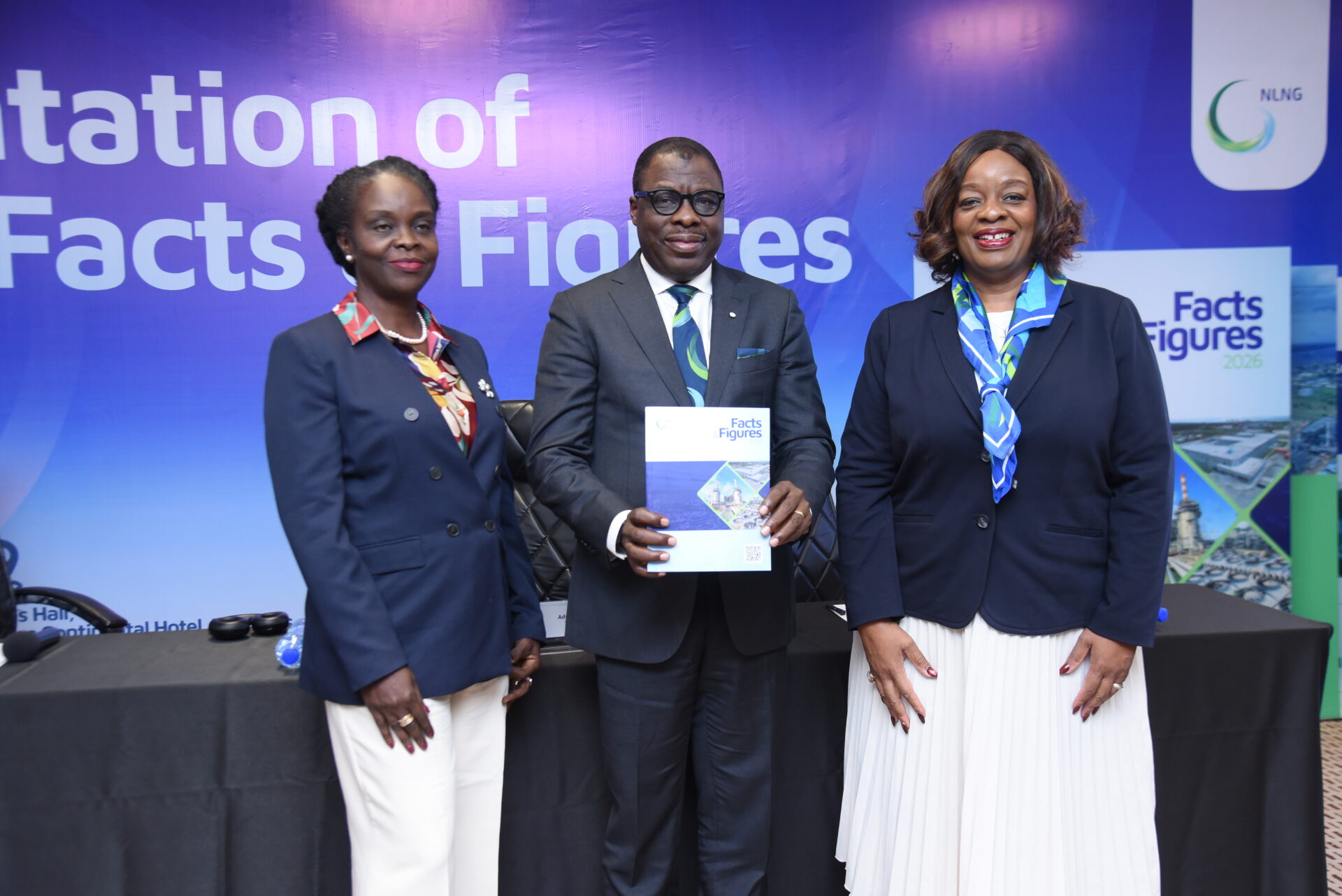
NLNG reaffirms growth strategy, energy security, sustainability at media engagement
NLNG has reaffirmed its commitment to driving sustainable growth, enhancing Nigeria’s energy security and delivering long-term value through operational excellence, expansion of production capacity and strategic infrastructure developmeht.
Speaking during the interactive session, Mr Adeleye Falade the Managing Director and Chief Executive Officer, highlighted the significant progress made in improving plant performance.
He noted that the Company’s operational utilisation has recovered considerably, with sustained efforts underway to achieve and maintain world-class levels of operational efficiency.
Falade said NLNG remains focused on safely delivering Train 7, strengthening domestic gas availability, supporting Nigeria’s industrialisation agenda and creating sustainable value for shareholders and the country, with the project expected to increase NLNG’s production capacity by approximately 35 per cent, from 22 million tonnes per annum (mtpa) to 30 mtpa, while significantly increasing Liquefied Petroleum Gas (LPG) production for the domestic market.
Describing Train 7 as one of Africa’s largest LNG expansion projects, Falade said the investment demonstrates NLNG’s confidence in Nigeria’s gas future and its commitment to supporting the country’s long-term economic growth.
“Train 7 represents much more than additional production capacity. It reflects our confidence in Nigeria’s gas potential and our commitment to creating long-term value through increased exports, stronger domestic gas supply, Nigerian Content development and economic growth,” he said.
Presenting highlights of the Company’s performance since commencement of operations, Falade noted that NLNG has generated over US$149.6 billion in revenue, paid more than US$47.2 billion in dividends to shareholders, and remitted over US$10.8 billion in taxes to the Federal Government since becoming tax compliant.
The Company has also built an asset base exceeding US$22.9 billion, loaded more than 6,285 LNG cargoes, and continues to supply over 500,000 tonnes of LPG annually to the Nigerian market.
He noted that these milestones underscore NLNG’s enduring contribution to Nigeria’s economy, energy security and global competitiveness.
Reaffirming NLNG’s support for the Federal Government’s Decade of Gas initiative, Falade emphasised that natural gas remains critical to industrialisation, economic diversification, energy security and Nigeria’s transition to a lower-carbon future.
According to him, the company’s growth strategy is currently centred on the successful delivery of the Train 7 Project, which will increase NLNG’s production capacity by approximately 35 per cent—from 22 million tonnes per annum (MTPA) to 30 MTPA—and increase LPG production by about 50 per cent, adding an estimated 250,000 tonnes annually to the domestic market.
“Train 7 represents more than additional production capacity. It is an investment in Nigeria’s future—creating jobs, strengthening our competitiveness and unlocking greater value from our vast gas resources.
Our priority remains the safe delivery of the project while positioning NLNG for sustained growth.”
On sustainability, Falade reaffirmed NLNG’s commitment to responsible nvironmental stewardship.
He highlighted ongoing investments in emissions monitoring and reduction, conservation initiatives, including the protection of the Finima Nature Park, and continued collaboration with regulators on carbon capture and storage initiatives as part of the Company’s broader decarbonisation journey.
He highlighted the Bonny–Bodo Road Project as one of Nigeria’s most significant corporate infrastructure investments, noting that the project has provided the first road connection between Bonny Island and mainland Rivers State while unlocking new economic opportunities for surrounding communities.
Addressing industry challenges, Falade acknowledged that feedgas availability remains a priority for the Nigerian gas sector but expressed confidence that ongoing collaboration with government, regulators and upstream partners, supported by recent reforms, will strengthen long-term gas supply and underpin future growth.
He added that despite increasing competition from emerging LNG producers, NLNG remains well positioned through operational excellence, reliable delivery, disciplined execution and continuous investment in its people and assets.
Calling for greater focus on commercialising Nigeria’s vast gas resources, Falade stressed that the country’s competitive advantage would depend not only on the size of its reserves but on its ability to convert those resources into lasting economic value.
“Nigeria possesses one of the world’s largest gas reserves. Our collective responsibility is to monetise that resource responsibly and sustainably, creating jobs, expanding energy access, driving industrialisation and improving lives for generations to come.”
Earlier, the General Manager, External Relations and Sustainable Development, Sophia Horsfall, said the annual Facts & Figures presentation reflects NLNG’s commitment to transparency, openness and constructive engagement with the media.
She noted that providing timely access to credible information and business insights enables informed reporting and strengthens public understanding of the role natural gas plays in Nigeria’s economic development and energy future.
“Today’s engagement is not simply about sharing statistics. It is about providing context that enables better understanding of NLNG’s business, our contribution to Nigeria’s economy, and the strategic role natural gas continues to play in supporting sustainable development,” Horsfall said.
She added that NLNG remains committed to deepening engagement with the media through timely information sharing, greater access to subject matter experts, and opportunities for journalists to gain first-hand insight into the Company’s operations.
The interactive session featured robust discussions on global LNG market dynamics, domestic gas utilisation, energy transition, sustainability, Train 7, Nigerian Content and the future of Nigeria’s gas industry, reinforcing NLNG’s commitment to openness, collaboration and informed public discourse.
