

NISO Urges Collaboration, Compliance to Optimise Hydropower
The Nigerian Independent System Operator (NISO) has stressed the importance the hydropower component of the Nigerian energy mix, calling for stronger collaboration among stakeholders to optimise the country’s hydropower resources and improve the reliability and security of the national grid.
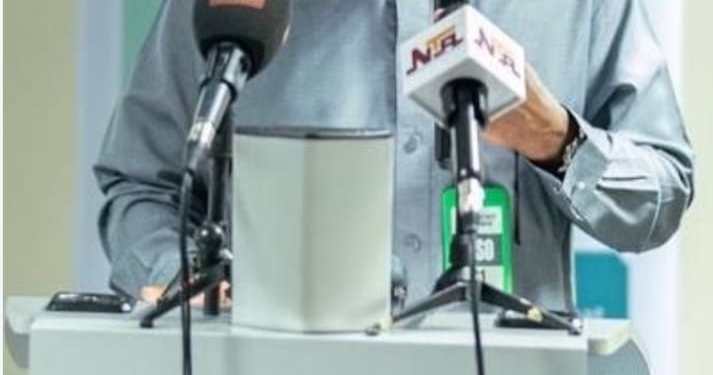
This was the submission of the the Managing Director/Chief Executive Officer (MD/CEO) of NISO, Engr. Abdu Bello Mohammed,at the opening ceremony of the 2026 Hydro Generation Planning Meeting held at the Jebba Hydro Power Station, Niger State, from August 17 to 21, 2026.
The meeting brought together representatives of the Federal Ministry of Power, Nigerian Electricity Regulatory Commission (NERC), hydropower generating companies, Transmission Company of Nigeria (TCN), Distribution Companies (DisCos), water resources and dam management authorities, development partners and industry experts.
According to Mohammed, hydropower occupies a strategic position in Nigeria’s electricity supply industry, not only because of the energy it contributes to the national grid but also because of its ability to provide critical system-support services.
RelatedPosts
Suspect with 64 Bottles of ‘Suck and Die’ in Bauchi Police Net
Terrorists Killed as Troops Engage Bandits Near Sokoto
Load More
He specifically highlighted frequency regulation, reserve provision, voltage support and system restoration as key capabilities that make hydropower increasingly important to the stability of the electricity grid.
Discover more
News
Take Journalism Courses
Hire Grant Writers
Read Political News
He recalled that NISO had intensified enforcement of compliance with Free Governor Control across the generation fleet, including field inspections, conditional derogations with fixed expiry dates and penalties linked to Monthly Penalisable Capacity under NERC’s regulatory directives.
He said the objective was to ensure that generating stations’ claimed flexibility translates into demonstrated and reliable operational capability.
“Every hydro unit in your various plants has a governor-response profile that NISO can see. That visibility should inform how we plan together, not just how we enforce afterward,” he said.
Discover more
Join Poker Tournaments
Stream Live News
Politics
Follow Federal Policy
The NISO boss explained that hydro generation planning goes beyond determining the megawatts that would be available at a particular period, stressing that it must take into account reservoir levels, water inflows and releases, seasonal hydrological conditions, dam-management requirements, generating-unit availability, maintenance schedules, transmission capacity and system demand.
He called for improved coordination and transparency among stakeholders to ensure that hydro generation plans are technically realistic and operationally implementable.
On NISO’s mandate, he noted that the Electricity Act 2023 assigns the System Operator responsibilities including generation scheduling, commitment and dispatch, transmission scheduling, generation-outage coordination, congestion management, ancillary services and long-term system planning.
He said effective discharge of these responsibilities required close cooperation among GenCos, TCN, DisCos, water-resource authorities, regulators and other market participants.
The NISO chief executive also stressed the need to strengthen the connection between generation planning and operational implementation.
He identified timely hydrological forecasts, generation availability declarations, maintenance and outage schedules, unit capability information, reservoir and dam-management data, transmission outage information, generation forecasts and real-time communication as critical inputs to effective system planning.
He further said Nigeria’s evolving energy mix, including increasing interest in renewable and distributed energy resources, would require greater flexibility from the System Operator (SO).
According to him, hydropower could provide the flexibility needed to manage increasing variable renewable generation, particularly where hydro units are technically capable and compliant with governor-performance requirements.
He therefore called for the preservation, rehabilitation, modernisation and optimisation of existing hydropower assets, alongside the development of viable new hydro resources.
On ageing infrastructure, he said rehabilitation and refurbishment should be treated as investments in national generation adequacy and grid reliability rather than merely individual station projects.
He also disclosed that NISO’s ongoing modern control centre and operational intelligence systems programme would enhance operational visibility and the use of Energy Management Systems, SCADA, Internet of Things (IoT), state estimation and contingency analysis across the generation fleet.
The initiative, he said, would support a shift from generation planning based predominantly on historical patterns to predictive, scenario-based and risk-informed planning.
The NISO boss urged participants to use the meeting to honestly examine historical performance, identify constraints affecting hydro generation and agree on practical solutions.
He said the meeting was expected to produce an implementable framework covering projected hydro generation, water-resource availability, maintenance and outage schedules, unit availability and governor-response compliance, coordination with thermal and renewable generation, reserve requirements and transmission constraints.
Other expected outcomes include strategies to improve hydro availability and reliability, mechanisms for timely information exchange and clearly assigned actions with specific timelines.
He stressed that the resolutions from the meeting must be tracked until implementation, rather than being filed away until the next planning meeting.
“The success of this meeting should be measured not by the quality of the presentations delivered here, but by the quality of the decisions taken and the extent to which those decisions translate into improved generation availability, enhanced grid security and greater electricity supply to Nigerians,” he said.
He reaffirmed NISO’s commitment to working with stakeholders to ensure that Nigeria’s hydropower resources are effectively integrated into the national generation mix and optimally utilised to support economic development.
