

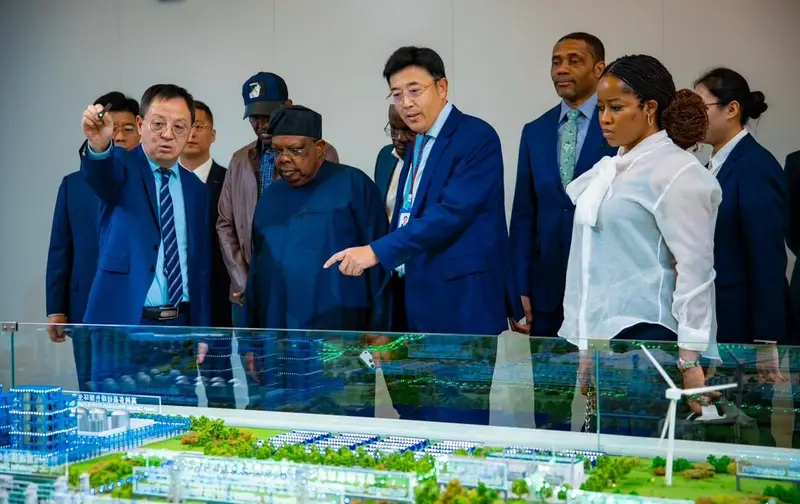
Nigeria moves to end power equipment import dependence
******* FG partners TBEA on industrial park as government targets local manufacturing, 2,000MW capacity recovery
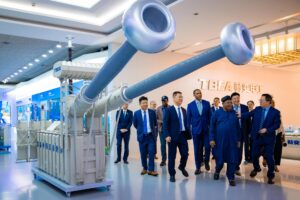
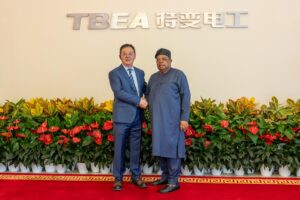
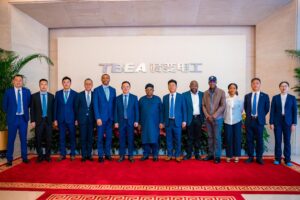
Nigeria is moving to reduce its dependence on imported power equipment as the Federal Government works with Chinese engineering firm TBEA to establish a power equipment industrial park in the country.
The proposed facility is expected to support the local production of transformers, cables and other critical power-sector equipment, with the longer-term ambition of positioning Nigeria as a manufacturing and export hub for the region.
The development followed a high-level meeting between the Honourable Minister of Power, Joseph Tegbe, and executives of TBEA at the company’s headquarters in Beijing. The meeting was part of the Federal Government’s ongoing engagements with global equipment manufacturers under the Presidential Power Initiative.
Tegbe said the industrial park would not only reduce Nigeria’s reliance on imported equipment but also lower costs, create jobs, deepen local supply chains and strengthen indigenous capacity in the power sector.
He described TBEA as a strategic, long-term development partner rather than merely a contractor, stressing that the Federal Government was seeking investments that combine capital with technology transfer, skills development and sustainable local capacity.
Over 2,000MW targeted for recovery
TBEA, in a statement following the meeting, reaffirmed its commitment to accelerating the delivery of ongoing transmission and distribution projects across the country.
Some of the projects are expected to help unlock more than 2,000MW of stranded generation capacity, allowing additional electricity to reach consumers while strengthening bulk power supply to the Federal Capital Territory.
Tegbe called for the faster completion of projects being implemented under the Presidential Power Initiative, stressing that Nigerians must begin to see tangible benefits from investments already made in the power sector.
He also urged the extension of planned grid infrastructure to the East-West corridor, insisting that projects that have been contracted and substantially developed should be completed rather than left unfinished.
New opportunities in electric mobility
The Beijing discussions also examined the feasibility of developing electric-vehicle charging infrastructure in Nigeria, signalling a potential new area of investment as the country’s electricity system evolves.
The initiative could complement Nigeria’s broader transition towards renewable energy, energy storage and cleaner transportation technologies, while creating opportunities for new businesses and infrastructure providers.
The government’s engagement with TBEA reflects a broader ambition to reshape Nigeria’s power sector—from one heavily dependent on imported equipment to one capable of manufacturing critical infrastructure locally; from stranded generation to reliable electricity for homes and industries; and from short-term project contracts to long-term partnerships that deliver technology, investment and lasting local value.
The proposed power equipment park could therefore represent more than a new industrial facility. It could become a cornerstone of Nigeria’s efforts to build a stronger domestic power industry and reduce the vulnerabilities associated with dependence on imported equipment.
