

Nigeria moves to deepen local content, revive automotive manufacturing – NADDC
Abuja, Aug. 2026 (TBL Africa)The National Automotive Design and Development Council (NADDC) says Nigeria is pursuing measures to deepen local content and revive automotive manufacturing through policy reforms, investment and stronger industry collaboration.
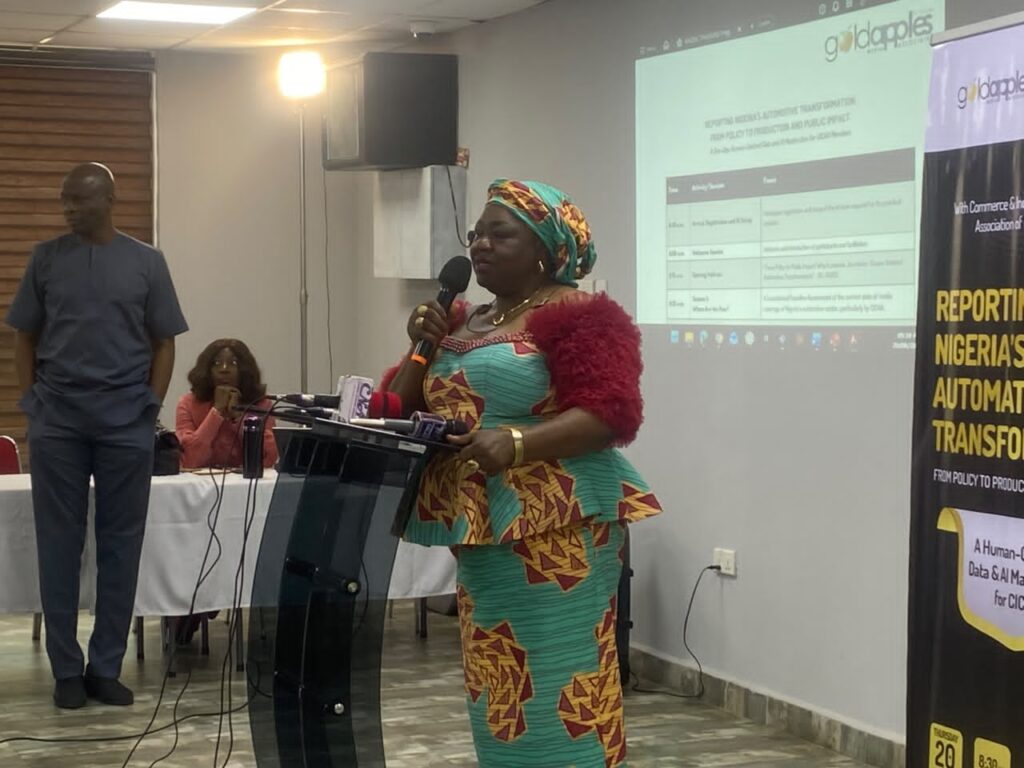
Mrs Susan Taiwo, Director of Media, NADDC, disclosed this at a one-day Human-Centered Data and AI Master Class in Abuja on Thursday.
The master class, with theme, “Reporting Nigeria’s Automotive Transformation, from Policy to Production and Public Impact” was organised for members of the Commerce and Industry Correspondents Association of Nigeria (CICAN).
Taiwo said Nigeria’s automotive market had an estimated annual demand of 800,000 vehicles, dominated by imported pre-owned vehicles.
She said imported used vehicles accounted for more than 85 per cent of the country’s estimated automotive demand.
According to her, the automotive ecosystem covers passenger and light-commercial vehicles, heavy-duty vehicles, two- and three-wheelers, spare parts and aftermarket services.
She said Nigeria had installed assembly capacity exceeding 600,000 vehicles annually across more than 30 licensed assembly plants.
She, however, said actual local production remained at about five per cent of installed capacity.
“The low capacity utilisation is linked to low patronage, grey imports, foreign exchange volatility and broader macroeconomic pressures.
“Nigeria is targeting 40 per cent local content by moving beyond basic assembly to deeper manufacturing and component production,” she said.
She listed stamping, welding, body building, engine and transmission integration and local component sourcing among areas requiring greater investment.
Taiwo identified batteries, tyres, glass, brake pads, exhaust systems and wiring harnesses as immediate opportunities for local component manufacturing.
She said limited access to vehicle financing was another major challenge affecting the growth of Nigeria’s automotive industry.
According to her, formal vehicle financing currently accounts for less than five per cent of vehicle purchases.
She said a proposed National Automotive Credit Guarantee Fund could help reduce lending risks and improve access to vehicle financing.
She also identified government procurement as a major potential source of demand for locally assembled vehicles.
“The NADDC-Bureau of Public Procurement (BPP) framework seeks to ensure that MDAs prioritise locally assembled vehicles before considering fully built imported vehicles,” she said.
She said that states were expected to support automotive development through infrastructure, industrial zones, technician training and procurement.
The NADDC media director also called for greater private-sector participation through capital investment, technology transfer, local sourcing and partnerships with original equipment manufacturers.
She said Nigeria’s transition to CNG and electric mobility presented opportunities to develop new automotive value chains and cleaner transportation.
She said that strengthening local production could also position Nigeria as a regional automotive hub under the African Continental Free Trade Area.
