

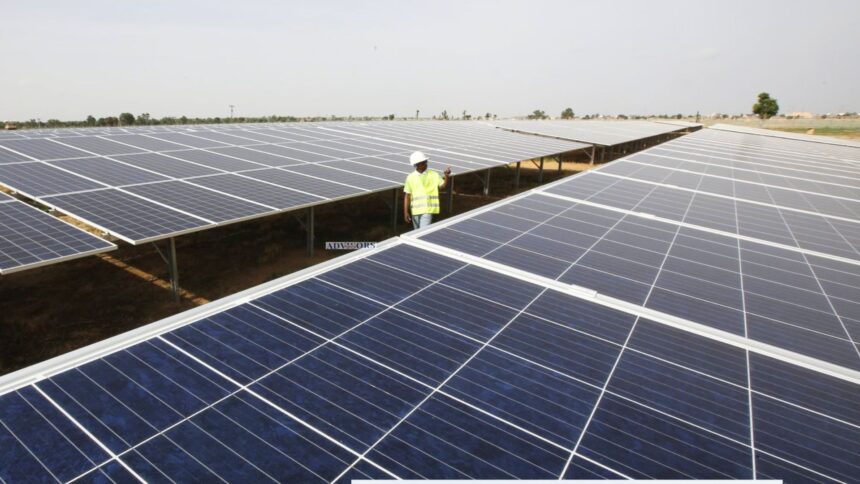
NERC issues 2026 mini-grid regulation, sets 5MW off-grid, 10MW grid-connected limits
The Nigerian Electricity Regulatory Commission (NERC) has issued the Mini-Grid Regulations 2026, increasing the allowable capacity for interconnected mini-grids to 10 megawatts (MW), up from the predominantly small-scale systems of about 1MW delivered under earlier frameworks such as the 2016 and 2023 Mini-Grid regulations.
This therefore marks the first legally enforceable and comprehensive framework to scale mini-grid deployment across Nigeria.
This was contained in a public notice numbered NERC-R-001-2026 and dated April 13, 2026, and obtained by Advisors Reports on Monday.
The Commission stated that the new regulation aims to expand electricity access, especially in unserved and underserved areas, while ensuring safety, fairness, and investment protection.
Some of the highlights of the Regulation applies to isolated mini-grids that operate independently of DisCo networks, up to 5 megawatts (MW); and Interconnected mini-grids which are connected to and coordinated with existing distribution networks, up to 10MW.
Unlike the 2025 commercial framework, which functioned primarily as a guideline, the 2026 Mini-Grid Regulations establish a legally binding regime with clearly defined rights and obligations for all stakeholders.
The new regulation applies broadly to Mini-grid developers, operators, distribution companies, and host communities.
The regulation according to NERC formally integrates mini grids into Nigeria’s restructured electricity market under the Electricity Act 2023, which enables subnational governments to participate in electricity regulation and market development.
The Commission has therefore introduced stricter and more transparent administrative processes emphasising that mini-grids below 100 kilowatts (kW) may be registered, mini-grids above 100kW require a permit from NERC.
It also stated that permit applications are to be processed within 30 business days
NERC has also subjected operators to structured reporting obligations including annual reports for systems below 1MW and quarterly reports for systems above 1MW.
NERC promised to also conduct continuous monitoring and may publish sector-wide performance data, improving transparency and planning across the industry.
The Commission said the regulation is designed to accelerate rural electrification, attract private sector investment, ensure cost-reflective and fair tariffs and further strengthen consumer protection mechanisms.
It added that the new regulation will promote better coordination between mini-grid operators and DisCos.
The 2026 regulation consolidates both isolated mini-grids (off-grid systems serving remote areas) and interconnected mini-grids (grid-linked systems supporting DisCo networks).
This dual approach is expected to improve grid stability, energy access and service reliability, particularly in areas with weak or inconsistent supply from the national grid.
The expansion from largely ≤1MW systems to interconnected projects of up to 10MW, showed that Nigeria has moved beyond pilot-scale mini-grid projects toward a commercially scalable distributed energy market.
