

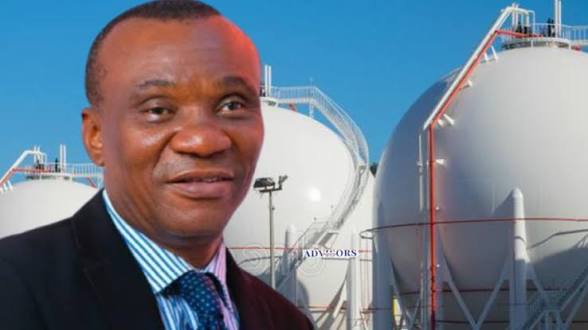
LPG price hike driven by supply constraints, global pressures – Marketers
The Nigerian Association of Liquefied Petroleum Gas Marketers (NALPGAM) says the recent rise in Liquefied Petroleum Gas (LPG) prices is driven by supply constraints and global market pressures.
The association said that the sharp rise in the retail price of Liquefied Petroleum Gas (LPG) across Nigeria has been traced to supply constraints and mounting global market pressures.
Mr Edu Inyang, NALPGAM President, disclosed this in an interview Sunday in Lagos.
Inyang explained that the sudden spike in prices reflects escalating depot costs, driven largely by dwindling local supply and rising international benchmarks.
According to him, reduced volumes from the Dangote Refinery, once a stabilising force in the domestic market, have significantly impacted pricing.
He noted that marketers who previously sourced LPG at relatively lower rates from the refinery are now grappling with limited access.
“Obtaining product from Dangote has become increasingly difficult,” he said.
“Allocations are no longer as frequent as before, with many off-takers unable to secure supplies for one to two months.
“The few who receive allocations are now leveraging the imbalance between demand and supply,” he said.
He added that deliveries from the Nigeria LNG (NLNG) have also come at higher costs, compounding the pressure on depot prices nationwide.
The NALPGAM president further linked the domestic price surge to international developments, revealing that global LPG prices have risen by over 50 per cent since the onset of the Iran crisis.
This, he said, has pushed depot prices from about N17 million per 20 metric tonnes to as high as N21 million in Apapa and other locations outside Lagos, while Dangote’s prices now hover between N17 million and N18 million.
“Nigeria is not insulated from global energy shocks,” lnyang said.
“Our crude oil is priced in international currency, and developments in the Middle East inevitably affect domestic LPG pricing.”
He also disclosed that the widely discussed plan for crude sales in local currency has yet to be fully implemented, forcing the Dangote Refinery to rely more on imported crude, an added cost factor that feeds into local LPG prices.
lnyang stressed that private depot operators, who depend heavily on imports, cannot sell below their landing and operational costs, meaning retailers ultimately pass the burden to consumers.
Despite the current hardship, he described the situation as temporary and called for urgent government intervention to stabilise the sector.
“We have experienced similar cycles before. What is needed now is strategic investment in gas infrastructure,” he said.
He urged the government to promote the establishment of more gas processing plants and incentivise private sector participation to boost supply.
He also highlighted the importance of reducing gas flaring, noting that captured flare gas could serve as valuable feedstock for LPG production.
Among existing facilities, lnyang identified Kwale Hydrocarbon and Panocean as active contributors, while lamenting the underperformance of the NPDC Ologbo plant, which he said is operating far below capacity.
He expressed optimism that upcoming projects such as the ANOH and Sapele gas plants would significantly improve supply when operational.
“With increased production from these plants, the market will stabilise, and prices will naturally decline,” he said.
