

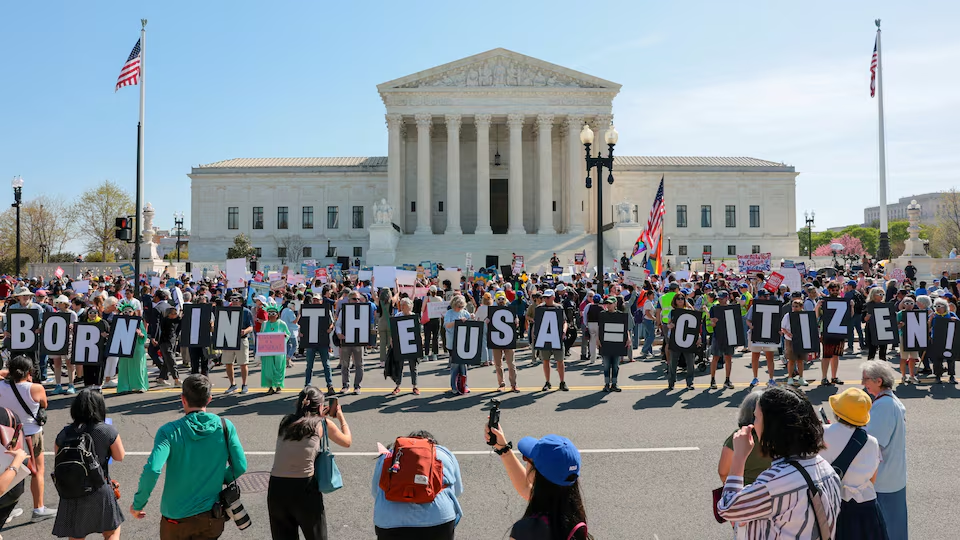
US Supreme Court rejects Trump’s bid to limit birthright citizenship
Trump: Unfrozen Iran funds will be held in US-controlled escrow account
US deports Nigerian over domestic violence, other criminal convictions
Man jailed five years for sexually abusing corpse
The United States Supreme Court has rejected President Donald Trump’s attempt to restrict birthright citizenship, dealing a major blow to one of his administration’s key immigration policies.
In a 6-3 ruling delivered on Tuesday, the court upheld a lower court’s decision blocking Trump’s executive order, which sought to deny automatic US citizenship to children born in the country if neither parent is an American citizen nor a lawful permanent resident.
The ruling marks the second time this year that the Supreme Court has struck down a major Trump policy, following its February decision invalidating his sweeping global tariffs.
Trump signed the executive order on his first day back in office as part of a broader crackdown on both legal and illegal immigration. The administration argued that the Citizenship Clause of the 14th Amendment should apply only to children whose parents owe permanent allegiance to the United States.
However, the Supreme Court ruled that the order contradicts the long-established interpretation of the 14th Amendment, which guarantees citizenship to virtually everyone born on US soil, except in limited cases such as children of foreign diplomats or members of an occupying enemy force.
Writing for the majority, Chief Justice John Roberts relied on the court’s landmark 1898 decision in United States v. Wong Kim Ark, which affirmed that children born in the United States are citizens regardless of their parents’ nationality.
“Not surprisingly, then, in the 128 years since, we have repeatedly understood the rule of Wong Kim Ark to guarantee citizenship to all children born in the United States and subject to its power.
“We see no reason to depart from that view today,” Roberts wrote.
Roberts also dismissed the administration’s interpretation of the Constitution, describing it as a “dramatically revisionist view” of the 14th Amendment.
He added that if Congress had intended to limit citizenship only to children of permanent residents, “nothing in the succinct language of the Citizenship Clause conveyed that design.”
The legal challenge was brought by parents and children in a class-action lawsuit in New Hampshire, who argued that Trump’s directive violated the Constitution and decades of settled legal precedent.
Ahead of the ruling, legal experts estimated that the executive order could have affected the legal status of up to 250,000 babies born in the United States each year and forced millions of families to prove the citizenship status of their newborn children.
The decision comes just days before the United States celebrates the 250th anniversary of its founding on July 4.
Although the Supreme Court has backed several of Trump’s immigration policies since his return to office, including decisions on asylum restrictions and deportation measures, Tuesday’s ruling represents a significant setback for his efforts to overhaul US immigration law through executive action.
