

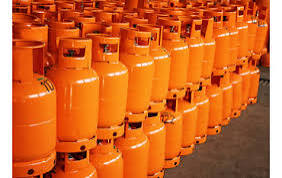
Rising LPG Prices: weak naira, supply cuts driving cooking gas crisis — LPGAR
The Liquefied Petroleum Gas Retailers Association of Nigeria (LPGAR), says the persistent rise in cooking gas prices across the country is being driven by foreign exchange instability, high depot prices, and mounting distribution costs.
Mr Ayobami Olarinoye, Chairman of LPGAR, under the Nigeria Union of Petroleum and Natural Gas Workers (NUPENG), disclosed this in aninterview on Tuesday in Lagos.
Olarinoye explained that Nigeria still imports a significant portion of its Liquefied Petroleum Gas (LPG), making the sector highly vulnerable to fluctuations in the exchange rate.
According to him, the weakening naira has continued to increase the cost of LPG imports at the ports, while reduced supply from the Dangote Refinery to local marketers has further tightened product availability.
“High depot prices remain a major challenge. Since Nigeria imports a huge chunk of LPG, a weak naira directly translates to more expensive gas at the ports,” he said.
He added that the high cost of transporting gas from Lagos ports to retail plants nationwide had also worsened the situation.
“Moving LPG across the country depends heavily on diesel-powered trucks, and rising diesel prices continue to inflate the final price retailers pay before selling to consumers,” Olarinoye stated.
The LPGAR chairman stressed that retailers were not responsible for arbitrary price increases, noting that operators at the retail end understand the hardship consumers are facing.
“LPGAR does not support arbitrary pricing. Our members operate at the last mile and are fully aware of consumer frustration.
“Competition in the market is very fierce. If any dealer inflates prices unnecessarily, customers will simply move to another gas plant,” he said.
He explained that retail margins remain very slim, adding that the prices consumers pay mainly reflect the high cost of product procurement from depots.
On safety and industry regulation, Olarinoye said the association regularly monitors members to ensure compliance with safety standards approved by the Nigerian Midstream and Downstream Petroleum Regulatory Authority (NMDPRA).
“We carry out regular safety and compliance checks to ensure only operators who meet the minimum standards are allowed to sell LPG.
” This is also aimed at discouraging quacks in the sector,” he added.
Speaking on government policies, Olarinoye described their impact as “mixed.”
According to him, the removal of Value Added Tax (VAT) on LPG imports initially provided some relief, but the gains were erased by the floating of the naira.
He also noted that the removal of petrol subsidy pushed millions of Nigerians to switch their generators and vehicles to gas, thereby increasing demand for LPG nationwide.
“The policies may help the sector in the long term, but in the short term, affordability has worsened for ordinary Nigerians,” he said.
To address the challenges, the LPGAR chairman called on the Federal Government to mandate the Nigeria LNG Limited (NLNG) and other local producers to sell LPG to domestic off-takers strictly in naira instead of U.S. dollars.
He also urged authorities to regulate depot owners to prevent product hoarding and arbitrary overnight price hikes.
Other recommendations include expanding retail access in a properly regulated manner and improving road and depot infrastructure to reduce transportation costs, transit delays, and demurrage.
Olarinoye further appealed to Nigerians not to abandon cooking gas for unsafe alternatives such as charcoal and firewood due to rising prices.
“People should not compromise safety because of the current hardship.
“Returning to firewood and charcoal poses serious health and environmental risks,” he warned.
He, however, cautioned Nigerians against expecting an immediate drop in LPG prices.
According to him, meaningful relief would only come when the exchange rate stabilises, domestic LPG supply improves significantly, logistics bottlenecks are resolved, and more local producers participate actively in the market.
“There is a strong need for more players in domestic LPG production, including increased participation by the Dangote Refinery,” he said.
