

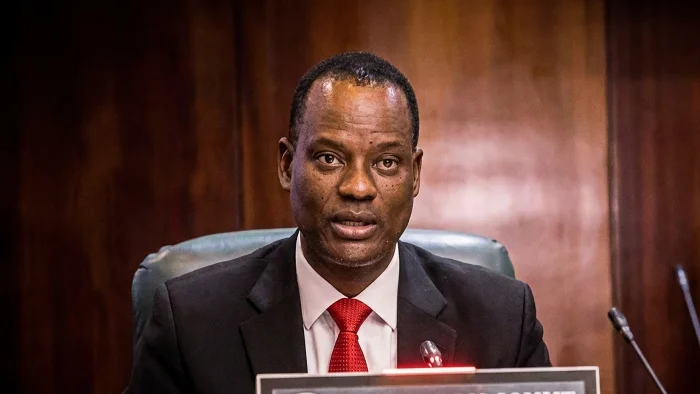
No return to fuel subsidy – Oyedele
The Federal Government has ruled out any plan to reintroduce fuel subsidy, insisting that the policy remains a thing of the past despite rising hardship across the country.
The Minister of Finance and Coordinating Minister of the Economy, Taiwo Oyedele, made this position clear on Tuesday during a meeting between Bola Tinubu and global investors in Paris.
Oyedele said the government would not reverse its decision, noting that fuel subsidy had created serious economic problems in the past. According to him, petrol pricing will also not be controlled by the government, as authorities now rely on market forces to determine prices.
“We will not bring back fuel subsidy because it creates distortions for the economy, and we won’t introduce price control because we believe in the market,” he said.
The statement comes at a time when many Nigerians are struggling with the rising cost of living, which has worsened since the removal of fuel subsidy in May 2023. The policy change, widely seen as one of the boldest economic decisions by the current administration, has had far-reaching effects on the economy.
Shortly after the subsidy was removed, petrol prices jumped sharply, leading to higher transport costs and an increase in the prices of goods and services. Inflation rose significantly, placing additional pressure on households.
Official data shows that Nigeria’s headline inflation increased from 22.41 per cent in May 2023 to 34.19 per cent by June 2024. Food inflation, which affects everyday items such as rice, bread, and vegetables, also surged, crossing 39 per cent by October 2024.
For many Nigerians, these figures reflect daily reality. Transport fares have gone up by nearly 300 per cent in some areas, while the cost of food and basic services continues to rise. The combined effect has deepened poverty levels and reduced purchasing power across the country.
Despite these challenges, the government insists that the subsidy removal was necessary to stabilise the economy and create room for growth.
President Tinubu told investors at the meeting that removing fuel subsidy has helped improve Nigeria’s foreign exchange situation. He described the subsidy as a heavy burden on the nation’s finances.
“Subsidy that was a burden to the entire country was removed, and ever since we have achieved FX stability,” Tinubu said.
According to him, the government is focused on maintaining policy stability and ensuring that economic reforms deliver long-term benefits.
In a follow-up statement, the President’s Adviser on Information and Strategy, Bayo Onanuga, said the administration is committed to strengthening the economy through transparency and fiscal discipline.
He explained that the reform agenda is designed to remove distortions in the economy and create a more stable environment for investment and growth.
“The focus is on eliminating economic distortions and strengthening macroeconomic stability to support long-term inclusive growth,” Onanuga said.
The meeting in Paris brought together top global investors from major financial institutions, including Citibank, Amundi, and Prudential Global Investment Management, among others.
Some of the investors reportedly expressed confidence in Nigeria’s economic direction, praising the government’s willingness to implement reforms, even when they are difficult.
Oyedele also highlighted what he described as positive economic indicators. He said Nigeria recorded 11.2 per cent growth in dollar terms in 2025, adding that the country remains on track to achieve a $1 trillion economy by 2030.
However, he acknowledged that the immediate priority is to ensure that these reforms translate into real improvements in the lives of ordinary Nigerians.
“Our focus now is to ensure that these policies deliver tangible benefits for citizens,” he said, while promising that the government would regularly publish financial reports to promote transparency.
Also speaking at the meeting, the Director-General of the Debt Management Office, Patience Oniha, assured investors that Nigeria remains committed to responsible borrowing and effective debt management.
She said the government is working to ensure that loans are used wisely and that debt levels remain sustainable.
President Tinubu, who is on a three-nation trip, used the opportunity to reaffirm his administration’s commitment to ongoing reforms. He said efforts are being made to improve transparency in the oil sector, strengthen security, and create a better environment for business.
He also mentioned plans to decentralise policing and tackle the financing of terrorism, noting that security remains a key part of economic development.
“The focus remains on policy stability and diligent execution to ensure these strategic shifts translate into concrete benefits for all Nigerians,” the President said.
The removal of fuel subsidy has been a long-standing issue in Nigeria. For years, successive governments struggled with the high cost of maintaining the subsidy, which often ran into trillions of naira annually.
While the subsidy helped keep petrol prices low, critics argued that it mainly benefited the wealthy and encouraged corruption and smuggling. It also placed a heavy burden on government finances, limiting funds available for infrastructure and social services.
By removing the subsidy, the current administration aimed to free up resources for development and reduce pressure on public finances. However, the policy has also brought significant short-term hardship.
Many Nigerians continue to call for measures to ease the impact, such as improved public transport, targeted support for vulnerable groups, and efforts to stabilise food prices.
As the debate continues, the government’s firm stance suggests that there will be no return to the old system. Instead, authorities appear determined to push ahead with market-driven policies, even as they promise to cushion the effects on citizens.
