

CERAWeek 2026: ADNOC CEO Calls Hormuz Disruption “Economic Terrorism,” Warns of Global Impact
A senior official of the Abu Dhabi National Oil Company (ADNOC) at CERAweek has warned that any attempt to disrupt shipping through the Strait of Hormuz would amount to “economic terrorism” with far-reaching consequences for the global economy.
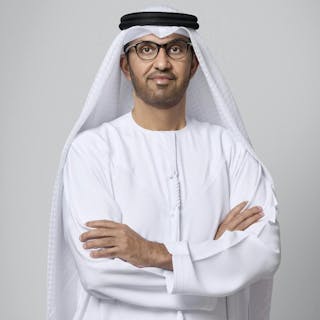
Sultan Ahmed Al Jaber, who serves as the United Arab Emirates’ Minister of Industry and Advanced Technology as well as ADNOC’s Managing Director and Group Chief Executive Officer, said threats to the vital maritime corridor extend well beyond energy markets to impact everyday life across the world.
“When the Strait is threatened, the human cost is exponential, and the consequences reach factories, farms and families around the world,” he said.
Describing the Strait as one of the world’s most critical economic arteries, Al Jaber highlighted its strategic importance, noting that it handles about 20 million barrels of oil per day—nearly a fifth of global supply—alongside significant volumes of gas, fertilizers, petrochemicals and industrial metals.
“In short, much of the oxygen of the global economy runs through a single throat,” he stated, warning that any attempt to “choke” the route would trigger immediate global repercussions.
According to him, recent tensions around the waterway have already driven sharp market reactions, with oil prices surging by as much as 50 per cent within three weeks. He cautioned that rising energy costs would disproportionately affect vulnerable populations while slowing economic growth worldwide.
Al Jaber stressed that the situation should not be viewed as a supply constraint but rather a security challenge requiring coordinated global action. “No country should be allowed to hold Hormuz hostage, not now, not ever,” he said, adding that market interventions alone would not resolve the crisis.
The ADNOC chief disclosed that the United Arab Emirates has taken extensive measures to avoid escalation but remains prepared to respond where necessary. He noted that the country’s resilience had been tested amid recent developments, including direct impacts on energy infrastructure.
“At ADNOC, we took hits no civilian enterprise should ever have to take,” he said, adding that the company has implemented extraordinary steps to safeguard personnel and maintain supply commitments to customers and stakeholders.
He reaffirmed the UAE’s commitment to strengthening international energy partnerships, particularly with the United States, revealing that ADNOC and its affiliates—including Masdar—have invested over $85 billion in U.S. energy assets spanning power generation, advanced chemicals and infrastructure across 19 states.
Al Jaber also indicated plans to expand investments across the energy value chain, including storage, liquefaction and regasification infrastructure, as part of efforts to enhance global energy security.
He concluded by urging industry stakeholders to deepen collaboration and prioritize stability over conflict, while inviting global energy leaders to participate in the upcoming ADIPEC scheduled for November.
“Stability does not happen on its own. It must be built deliberately and collectively,” he said.
