

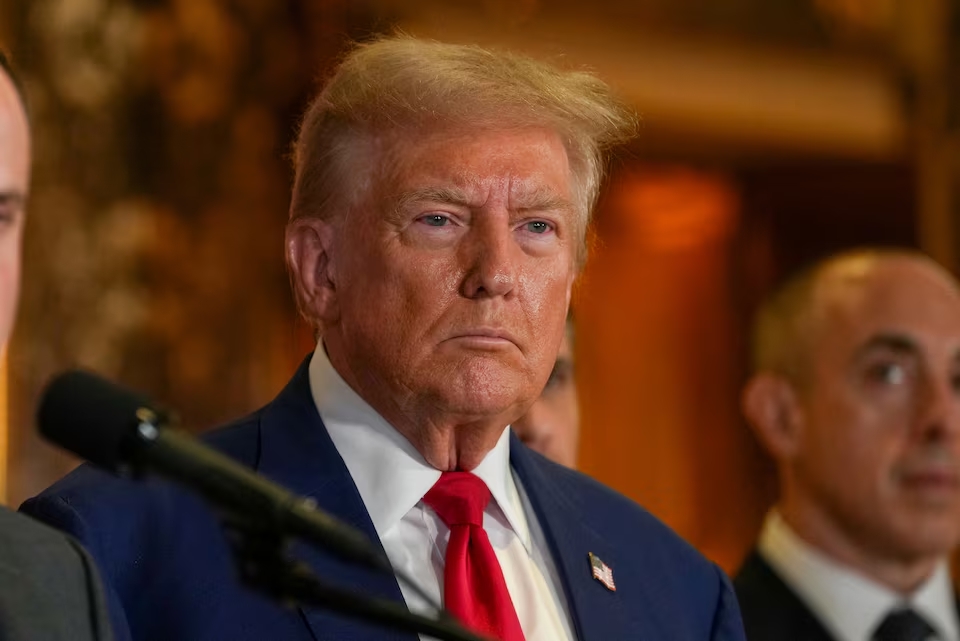
Trump demands Iran pay compensation following new conditions for reopening strait
Washington, Aug. 2026 – President Trump demanded Monday that Iran compensate victims’ families and Middle Eastern countries after Tehran said it wouldn’t reopen the Strait of Hormuz without being compensated for war damage, among other demands.
Mr. Trump told Axios the U.S. is only “semi-negotiating” with Iran and signaled he would allow economic pressure to pile on Tehran.
Meanwhile, Iranian-backed Houthi rebels in Yemen attacked the government-held port city of Mocha late Sunday night for the second time in 24 hours. Attacks like this threaten to expand the conflict into another strategic shipping route on the Red Sea.
“We control the strait 100%,” Trump says, but Iran “can make trouble”
President Trump told reporters Monday that the U.S. controlled the Strait of Hormuz but admitted that Iran “can make trouble” in the key waterway.
“We control the strait 100%,” Mr. Trump told reporters in the Oval Office after signing an executive order on childhood vaccine recommendations. .
“Now, can they make trouble? Yeah, they can make trouble, but they’re broke, they have no money.”
Trump called the U.S. Navy’s blockade on Iranian-bound ships a “steel wall” and “infallible,” and he described the situation in the strait with Iran as “a little bit complex.”
“They will, on occasion, drop a mine, and we find the mines,” the president said.
Trump extends waiver for foreign ships moving energy, fertilizers
President Trump on Monday extended a waiver for 90 days for foreign ships to transport goods, including oil, fertilizers and other fossil fuel products, among U.S. ports.
The president first waived the Jones Act on March 17 so that it would be easier to transport oil and refined fuels among ports, reducing price pressures after the start of the war.
The latest extension will take effect on Aug. 17 and suggests that the U.S. might be preparing for continued price pressures as the Strait of Hormuz, a primary waterway for shipping oil and natural gas, remains effectively closed because of the war.
Unlike previous extensions, the Pentagon will consult with the Maritime Administration to decide which voyages are exempt from the 1920 law containing the Jones Act. The new waiver will only apply to cargo that are sources of energy and commodities related to agriculture such as fertilizers and soybean oil.
Taylor Rogers, a White House spokeswoman, said the administration extended the waiver “to ensure our military and key industries maintain uninterrupted access to critical resources.” Rogers added that the waiver has increased domestic deliveries of gasoline, diesel and jet fuel.
Trump adds to demand that Iran pay compensation
President Trump added to his new demand that Iran must pay compensation in response to Tehran saying it wouldn’t reopen the Strait of Hormuz without being compensated for war damage.
“With respect to the Iran negotiations, Iran should be responsible for the damages and death caused to the people of Lebanon, Syria, Yemen, and Gaza!” Trump said on his Truth Social platform.
Trump responds to Iran’s demand for compensation with his own
After Iran made compensation for war damage one of its conditions for reopening the Strait of Hormuz, President Trump responded with his own demand for compensation Monday.
“I am likewise demanding compensation from Iran, for all of the people that they have killed and gravely wounded with their roadside bombs and many conflicts,” Mr. Trump said on his Truth Social platform.
The president said the families of the 17 U.S. sailors killed in the 2000 bombing of the USS Cole in Yemen as well as “thousands of others killed in combat” should be included.
He also said Iran should pay “the families of the hundreds of thousands of innocent protestors that Iran has killed over the last 50 years, not to mention the 52,000 that have been killed in the last five months.”
Trump said he’s instructed his representatives “to put this firmly into any, and all, future negotiations.”
Iran’s supreme leader replaces several key military figures
Iran’s Supreme Leader Mojtaba Khamenei has made six new military appointments to both the country’s army and paramilitary Revolutionary Guard Corps, according to Iran’s state-owned Press TV.
The moves include Maj. Gen. Ahmad Vahidi becoming the Guard’s chief commander and Maj. Gen. Ali Abdollahi being appointed the chief of staff of the army.
Khamenei has still not been seen since he replaced his father, Ali Khamenei, who was killed in a U.S.-Israeli airstrike in late February. The younger Khamenei was reportedly gravely wounded in the same strike.
Iran’s president says supreme leader urges “unity” amid U.S. sanctions
Iran’s president said Monday that the country’s supreme leader is calling for “unity and cohesion” as the Islamic Republic faces economic hardships and sanctions stemming from its war with the U.S.
President Masoud Pezeshkian described a nearly seven-hour meeting with Ayatollah Mojtaba Khamenei in an interview with Iranian state television that aired amid apparent tensions among the Islamic Republic’s leaders.
Pezeshkian told state broadcaster IRIB that he and Khamenei discussed “people’s livelihoods, the state of the market, employment, people’s housing,” as well as “problems that are now being created as a result of the [U.S.] sanctions.” He didn’t say when or where they met.
Most important, he said, was Khamenei’s emphasis on unity.
“All of the enemy’s plans are aimed at creating division,” Pezeshkian said. “What we have to do is prevent divisions from emerging.” (CBS News)
