

60 firms jostle for $700m CVFF fund
Nofewer than 60 applications have been entered on the Cabotage Vessel Financing Fund (CVFF), the Nigerian Maritime Administration and Safety Agency (NIMASA) has declared.
The CVFF has been estimated to have accumulated to over $700 million (approximately ₦1.1 trillion based on current estimates) over the 23 years since its establishment.
The fund, which is derived from a 2% contribution from contract values under the Cabotage Act, is being managed by NIMASA in collaboration with approved Primary Lending Institutions (PLIs).
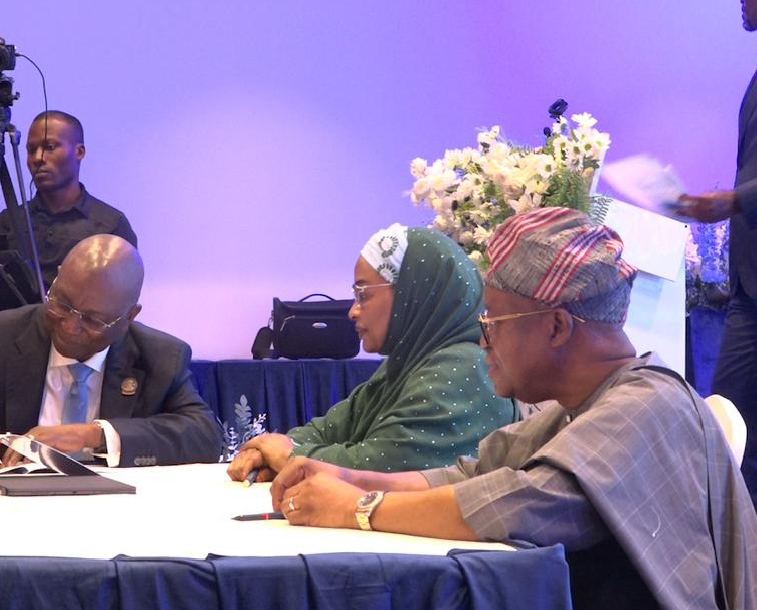
The Director-General of NIMASA, Dr Dayo Mobereola, who disclosed the status of the process while signing a Performance Bond with the Federal Ministry of Marine and Blue Economy, assured that the funds are intact and would be disbursed in a transparent manner.
NIMASA boss said more than 60 applications have been received since the portal was launched in January 2026, assuring that the disbursement process would be transparent and strictly monitored.
He reaffirmed his commitment to accountability, improved performance, and sustained growth in the maritime sector with the signing of its 2026 Sectoral Performance Bond.
The exercise was overseen by the Minister of Marine and Blue Economy, Dr Adegboyega Oyetola.
Mobereola described the performance bond as a key governance instrument for tracking deliverables, strengthening institutional accountability, and aligning the agency’s operations with national priorities.
He stated that NIMASA’s ongoing reforms are driven by purposeful leadership and strategic ministerial support, adding that the agency remains committed to delivering on its mandate in line with the Renewed Hope Agenda of President Bola Ahmed Tinubu’s administration.
On maritime security, Mobereola disclosed that Nigeria has recorded zero piracy incidents in its territorial waters over the past four years, attributing the milestone to enhanced surveillance systems and improved inter-agency collaboration.
He further revealed that the agency was at an advanced stage of automating its ship registry processes, a move expected to improve efficiency, reduce delays, and boost Nigeria’s competitiveness in global maritime business.
Mobereola also noted that Nigeria has deposited three conventions with the International Maritime Organization (IMO), while three others are awaiting Federal Executive Council approval, underscoring the country’s commitment to international maritime standards.
Speaking further, he noted that Nigeria’s election victory into category C at the IMO Council in November 2025 restored her voice in global maritime governance and strengthening its leadership role in Africa.
In his remarks, Oyetola reiterated the Federal Government’s commitment to using the maritime sector to drive economic diversification, job creation, and foreign exchange earnings. He stressed that the Performance Bonds are binding commitments that will be closely monitored, declaring that “accountability is not optional.”
