

Nigeria’s industrial sector raises alarm over poor welding standards




Nigeria’s industrial sector is sounding the alarm over substandard welding practices, warning that weak fabrication standards are quietly undermining public health, product integrity, and the nation’s export ambitions.
At the centre of the concern is the growing risk posed by poor welding integrity in processing equipment—an issue industry leaders say could trigger contamination, environmental hazards and costly reputational damage for Nigerian manufacturers.
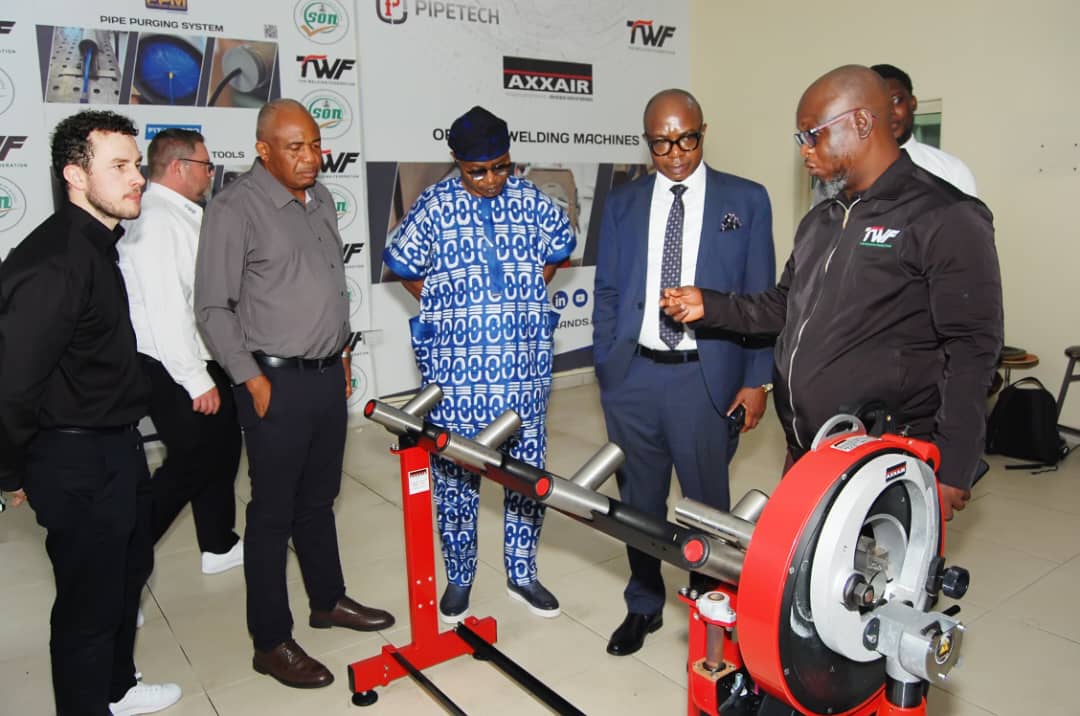
These concerns dominated an industry awareness session on contamination risks arising from deformed welded joints, convened by the The Welding Federation in collaboration with the Standards Organisation of Nigeria.
Speaking at the event, board member of The Welding Federation, Engr. Wole Ogunsanya, warned that defective welds across critical sectors—including oil and gas, food processing, pharmaceuticals and beverages—could create “dead zones” where harmful microorganisms thrive.

Ogunsanya, who also chairs the Petroleum Technology Association of Nigeria, said such defects heighten the risk of contamination, leakages and environmental damage, while exposing companies to severe financial and reputational losses.
“In today’s global marketplace, compliance with standards such as FSSC 22000 is no longer optional,” he said. “Attention to fabrication details like weld integrity is essential.”
He urged operators to prioritise quality assurance, strengthen inspection regimes and align with international best practices.
Also speaking, Executive Director of The Welding Federation, Ayo Adeniyi, stressed that the need for improved welding standards extends far beyond the oil and gas industry.
While acknowledging the sector’s historical focus on welding quality, Adeniyi noted that industries such as food processing and chemicals are equally dependent on precision fabrication systems to ensure safety and compliance.
He further observed that many industrial plants in Nigeria are imported and only assembled locally, making technical expertise and quality control even more critical.
“A contamination incident traced to Nigeria can result in product recalls, revenue losses and reputational damage across African markets,” he said. “Our focus is to ensure quality is delivered right the first time, every time.”
According to him, the federation is advancing initiatives across Africa aimed at strengthening welding capacity through certification programmes, policy advocacy, research and skills development.
Providing a regulatory perspective, Manji Lawan, Special Adviser on Strategy to the Director General of the Standards Organisation of Nigeria, said the agency’s intervention is rooted in its statutory mandate to set and enforce standards.
He highlighted the role of emerging technologies such as orbital welding—widely used in food and beverage production—in improving product safety by minimising defects associated with conventional welding methods.
“If weld joints are rough or poorly finished, they create spaces where moisture and microorganisms can accumulate, making it difficult for manufacturers to meet required safety standards,” he said.
Lawan warned that such lapses not only compromise product quality but also weaken Nigeria’s competitive edge under frameworks like the African Continental Free Trade Area, where standard harmonisation is critical.
He disclosed that the Standards Organisation of Nigeria is working with industry stakeholders to promote the adoption of orbital welding and is considering the development of a dedicated code of practice to guide its implementation.
“We already have general welding standards, but orbital welding is still emerging. The next step is to establish clear procedures and, eventually, specific standards for its application,” he added.


He also revealed that the agency has opened its laboratory facilities to support the initiative, describing the collaboration as vital to safeguarding lives and ensuring product integrity.
Stakeholders at the session agreed that strengthening welding practices—particularly in processing industries—will play a pivotal role in reducing contamination risks, enhancing Nigeria’s industrial reputation and improving the acceptance of its exports, while unlocking new opportunities for job creation.
