

Nigeria’s youth surge holds key to tourism boom, says Karl Hala
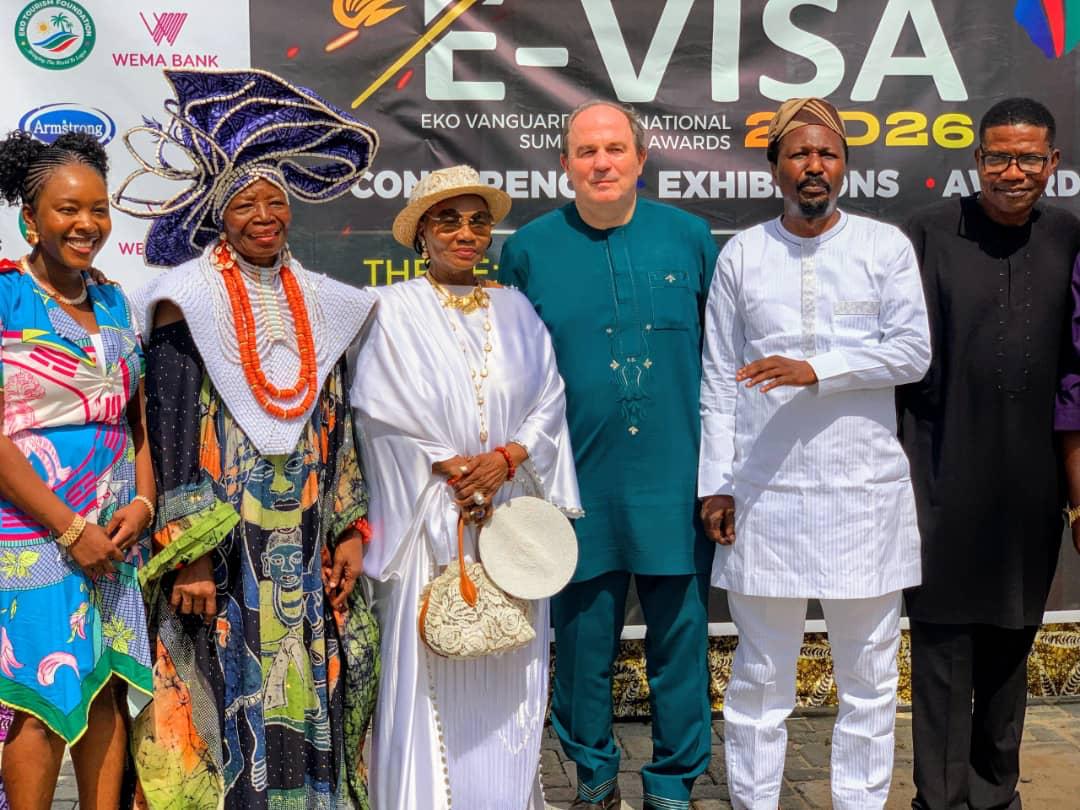
 L-R, Nollywood star, Kitan Bukola, Chief Dr. Oyenike Okundaye (Nike Arts Gallery); HRH Erelu Abiola Dosumu, Erelu Kuti IV, Yeye Odua (Host); Karl Hala, GGM, Continental Hotels Nigeria; Dr. Tunde Lawrenson, Secretary, Board of Trustees and Governing Council, Eko Tourism Foundation (convener); and Amb. Felix Duke, at the E-VISA 2026 Summit for a Sustainable Sociocultural Economy in Lagos
Nigeria’s demographic dividend could become its most powerful tourism asset if properly harnessed, according to Karl Hala, who delivered a keynote message that blended urgency with optimism at a major industry gathering in Lagos.
Speaking at the Eko Vanguard International Summit and Awards (E-VISA 2026), Hala—Group General Manager of Continental Hotel Group—argued that Nigeria’s youthful population is not a burden but a strategic advantage capable of transforming the country into a global tourism hub.
“Nigeria’s median age is under 19. This is not a challenge—this is an economic engine waiting to be structured,” he said, drawing applause from an audience of policymakers, investors, and cultural stakeholders.
The group, which manages the flagship Lagos Continental Hotel and Abuja Continental Hotel, has been at the forefront of positioning Nigeria’s hospitality sector for international competitiveness.
Hala stressed that unlocking this potential hinges on aggressive investment in skills development, vocational training, and industry-aligned education tailored to tourism and hospitality.
“Our youth are not just the future—they are the present,” he said.
“Empowering them with the right skills and resources is the fastest route to job creation and sustainable tourism growth.”
Beyond workforce readiness, Hala spotlighted Nigeria’s thriving creative economy—music, film, fashion, and cuisine—as a natural extension of its tourism value chain.
He urged stakeholders to channel this cultural energy into structured experiences that can attract global visitors.
The summit itself served as a vivid showcase of that potential, with curated exhibitions and performances reflecting Nigeria’s diverse cultural identity—from the pulse of Lagos to the tranquil landscapes of the Jos Plateau.
However, Hala noted that perception remains a critical barrier.
He called for coordinated branding efforts, including campaigns like “Good News Nigeria,” to reshape international narratives and highlight the country’s strengths.
As Nigeria intensifies efforts to diversify its economy beyond oil, tourism is increasingly seen as a viable growth frontier.
Industry leaders at the summit echoed Hala’s position, emphasizing that success will depend on sustained collaboration between government and private sector actors, as well as a commitment to sustainable practices.
In recognition of his contributions to Nigeria’s cultural and tourism ecosystem, Hala was honored with an award presented by Abiola Dosumu, a member of the Board of Trustees of the Eko Tourism Foundation.
By the close of the summit, participants signaled a shared resolve: to transform Nigeria’s youthful energy and cultural wealth into a globally competitive tourism industry—one capable of generating jobs, reshaping perceptions, and driving long-term economic growth.

1 comment
potential hinges on aggressive investment in skills development, vocational training, and industry-aligned education tailored to tourism and hospitality