

ECOWAS disburses $516,000 to support 1,100 human trafficking victims
Lagos, Nov. 2026 (TBL Africa ) The Economic Community of West African States (ECOWAS) Commission, on Monday in Lagos, says it disbursed $516,000 to support more than 1,100 victims of human trafficking.
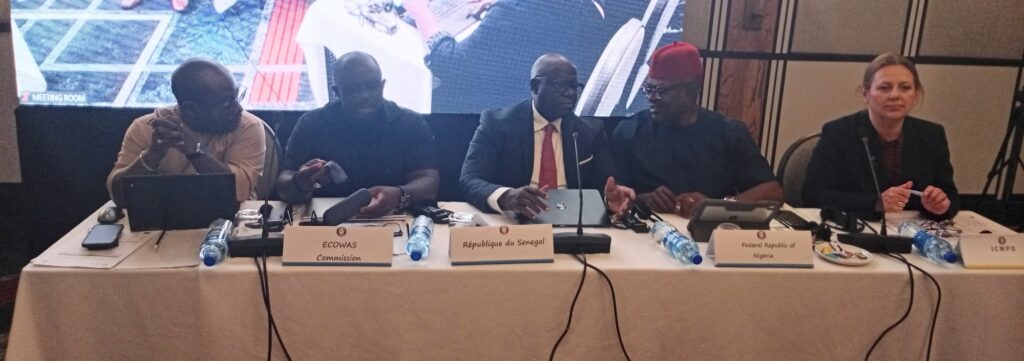
Dr Mohammed Ibrahim, Acting Director, Humanitarian and Social Affairs, ECOWAS Commission, disclosed this at the 18th Annual Review Meeting of Member States’ National Focal Institutions on Trafficking in Persons Plus (TIP+).
Ibrahim, represented by Mr Olatunde Olayemi, Acting Principal Programme Officer, Human Security and Civil Society Division, said a second phase involving equal funding was underway.
He said the first phase of the Victim Support Fund ran from Aug. 15, 2024, to Feb. 15, 2025, through the International Organisation for Migration (IOM).
The fund provided accommodation, psychosocial support, medical care, reintegration assistance and witness protection for trafficking victims.
Ibrahim said the second phase, involving another $516,000, was being implemented across the 12 ECOWAS member states.
According to him, ECOWAS has developed several regional anti-trafficking and child protection frameworks since 2007.
These include the Plan of Action Against Trafficking in Persons, extended to 2028, the TIP+ Strategy and the Regional Referral Mechanism.
He said the commission had also supported member states in strengthening national referral mechanisms, task forces and anti-trafficking strategies.
Ibrahim said ECOWAS had validated TIP+ national strategies in five member states: Nigeria, Sierra Leone, Côte d’Ivoire, Guinea and Cabo Verde.
He added that efforts were underway to extend the strategy to all 12 member states.
In Nigeria, ECOWAS supported NAPTIP in adopting the 2025-2027 National Strategy to Combat Trafficking in Persons and Violence Against Persons (TIPVAP).
Ibrahim added that the commission had assisted more than 10,000 children on the move through family tracing, reunification and psychosocial support.
Other interventions included legal assistance and reintegration, implemented with the International Social Service/West Africa Network and Regional Working Group on Child Protection.
He, however, identified significant protection gaps, including inadequate shelters, weak social service workforces and challenges with national victims’ trust funds.
“Social protection remains a most important priority for our region,” he said.
The acting director called for improved data management, stronger coordination among national task forces and enhanced referral mechanisms.
He urged member states to tackle trafficking linked to conflict and disaster-related displacement through better humanitarian coordination and law enforcement.
He also called for stronger criminal justice responses and community-based protection.
Also, Expertise France said it was implementing an €8 million regional project to strengthen anti-trafficking institutions and improve assistance for victims.
This was disclosed by Mr Benjamin Eneanya, National Coordinator of the Preventing Human Trafficking Through Enforcement, Cooperation and Training (PROTECT) Project, Expertise France in Nigeria.
Eneanya, speaking while delivering a goodwill message at the meeting, said the 48-month project, funded by the French Development Agency (AFD), covered Benin, Guinea, Nigeria, Sierra Leone and Togo.
Côte d’Ivoire, Ghana and Liberia were also included for regional cooperation.
The initiative would strengthen institutional coordination, gender-sensitive victim identification, protection and referral systems, he said.
It would also improve justice sector institutions’ capacity to investigate and prosecute trafficking offences.
“The project will also strengthen regional cooperation in tackling emerging threats associated with digital technologies and cyber-enabled trafficking,” Eneanya said.
He added that PROTECT would support asset recovery mechanisms and sustainable financing arrangements to improve assistance for victims and survivors.
Eneanya said human trafficking increasingly intersected with irregular migration, sexual and gender-based violence, violence against children and other forms of exploitation.
He stressed the need for coordinated, evidence-based and victim-centred responses.
He reaffirmed Expertise France’s commitment to working with ECOWAS, national governments, civil society organisations and development partners.
The partnership, he said, would translate regional commitments into concrete action.
Using the experience of a displaced girl, Grace, from Bokkos, Plateau, Eneanya illustrated how conflict, poverty and school closures exposed children to trafficking.
He said Grace was lured to Jos with promises of education and employment but subjected to domestic servitude, unpaid labour and sexual abuse.
Eneanya said her experience demonstrated the need for an integrated response to trafficking, displacement, child labour and sexual violence.
He also highlighted the importance of addressing inadequate social protection.
