

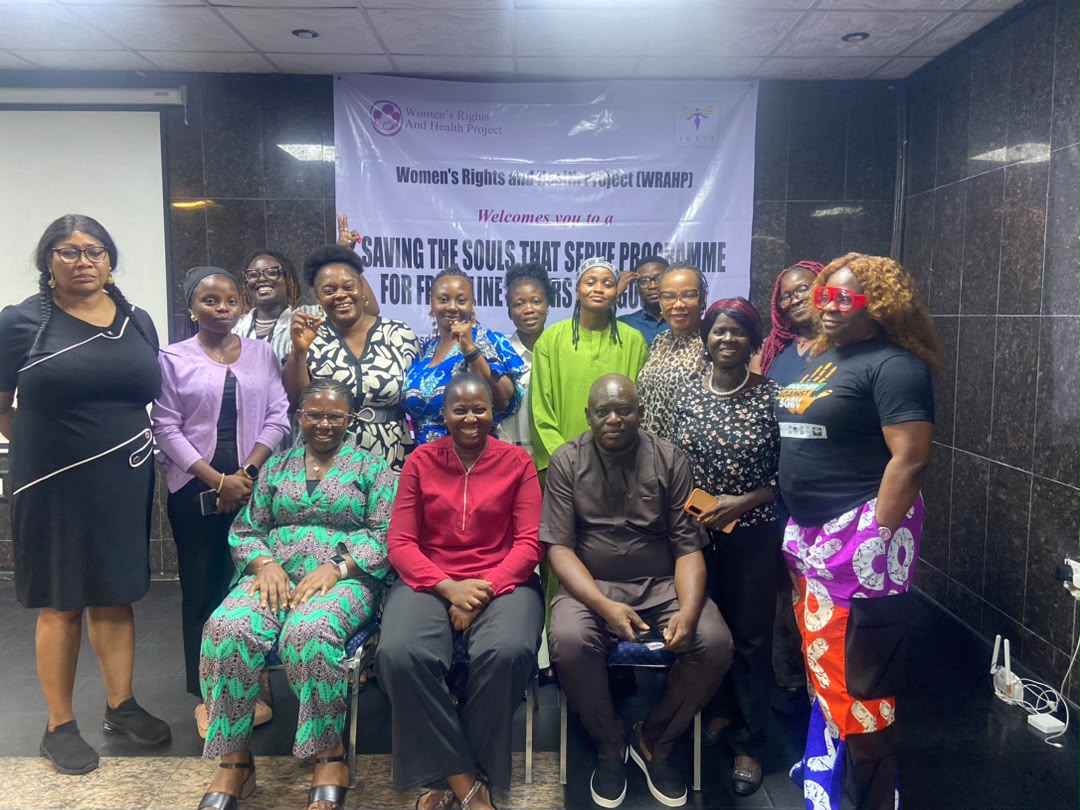
NGO sensitises frontline human rights defenders in Lagos
The Women’s Rights and Health Project (WRAHP), a Non-Governmental Organisation (NGO), has trained frontline human rights defenders in Lagos on mental resilience and psychological wellbeing.
The that the two-day training has the theme, “Saving the Souls That Serve” and was organised for human rights defenders in Lagos State.
Speaking at the end of the training, WRAHP’s Executive Director, Ms Bose Ironsi, emphasised the need to prioritise the wellbeing of people working to protect others.
“Human rights work requires commitment, courage and compassion, but those who dedicate themselves to protecting others also need care and support.
“We must recognise that the wellbeing of human rights defenders matters, not only for their personal lives but also for their ability to continue their work sustainably.
“Through ‘Saving the Souls That Serve’, we sought to create a space where defenders could pause, reflect and recognise that caring for themselves is also an important part of the work they do,” Ironsi said.
She said supporting human rights defenders required attention to their physical and digital safety, as well as their emotional and psychological wellbeing.
According to her, opportunities for reflection, connection and psychosocial support are essential to building resilience and promoting safer, healthier and more sustainable human rights practice.
Ironsi reaffirmed WRAHP’s commitment to supporting human rights defenders and strengthening the conditions that would enable them to continue their work while prioritising their wellbeing.
One of the facilitators, Dr Oluwakemi Akintoyese, highlighted the psychological toll of repeated exposure to distressing human rights cases, including gender-based violence and community traumatic.
Another facilitator, Mrs MaryJane Obiagwu, cautioned against stigmatising language and harmful internal narratives in human rights advocacy.
Obiagwu, a therapist, urged the defenders to adopt trauma-informed communication, use person-centred language instead of labels and establish peer-support networks to share the emotional burdens of their work.
Participants also learnt practical resilience techniques, including grounding exercises, deep-breathing techniques, the “riding the panic surge” framework and effective sleeping in routines.
A major highlight of the training was a workshop on professional boundary-setting, which introduced participants to the “Acknowledge, State and Offer” model.
