

MDGIF to back indigenous gas projects with secured supply, confirmed buyers
The Midstream and Downstream Gas Infrastructure Fund (MDGIF) says indigenous companies seeking equity investment must demonstrate secured gas supply and confirmed buyers to ensure project viability and attract private investment.
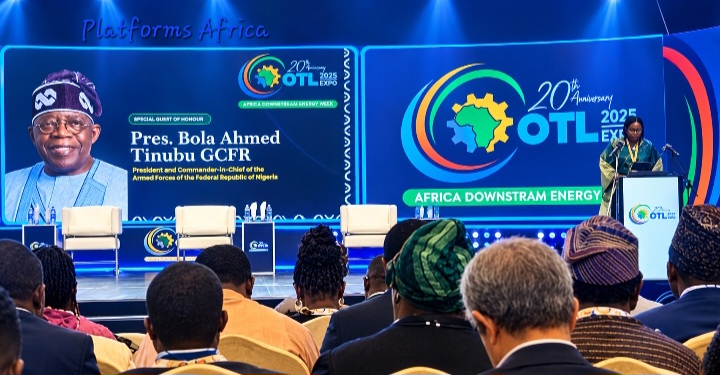
Engr. Elvis Duruji, Deputy Director at the Nigerian Midstream and Downstream Petroleum Regulatory Authority (NMDPRA), said this during a session on “Scaling Energy Options: Unlocking Gas and Renewables through Processing and Infrastructure” at the OTL Africa Downstream Energy Week in Lagos.
Duruji said reliable feedstock supply and confirmed offtake arrangements were critical considerations in determining whether the fund would take an equity stake in a project.
“The security of the gas feedstock is very important,” he said, adding that project developers must secure gas supply agreements with producers and establish the volumes and prices at which gas would be supplied.
He explained that such arrangements directly influenced project returns, internal rate of return and overall commercial viability.
Duruji also stressed the importance of locating projects close to gas processing plants or compressed natural gas (CNG) mother stations to facilitate reliable supply and reduce operational challenges.
“For CNG projects, proximity to the gas processing plant is very important,” he said.
On offtake, Duruji said the fund required project promoters to identify prospective buyers and the infrastructure needed to deliver gas to them.
He cited Greenville LNG’s development of the northern market as an example of the importance of creating demand and establishing effective distribution arrangements.
“We need to know the offtakers and the regasification facility,” he said, adding that CNG projects also required appropriate compression infrastructure.
Duruji said the fund was established to address financing gaps that often prevent indigenous companies from participating effectively in Nigeria’s capital-intensive midstream gas sector.
He observed that many Nigerian companies remained concentrated in trading and downstream operations because of the high cost of financing infrastructure projects.
According to him, domestic banks may charge interest rates of up to 30 per cent, while foreign investors could access single-digit financing in their home markets.
He said the MDGIF addressed the disparity through risk assessment, mitigation measures and catalytic equity investment, enabling indigenous investors to participate in gas infrastructure development.
“We bring in the catalytic equity, which is about 49 per cent, because we want to allow you to be the operator,” he said.
Duruji added that the fund would work alongside private investors throughout project development to improve bankability and attract additional financing.
Established under the Petroleum Industry Act (PIA), the MDGIF is designed to support gas processing, transportation, storage and last-mile distribution infrastructure.
He said the fund provided minority equity, due diligence and risk governance to strengthen project structures and build investor confidence.
Duruji identified inadequate processing facilities, transportation networks, storage infrastructure and last-mile distribution systems as major constraints to the development of Nigeria’s gas market.
He noted that developing non-associated gas resources required substantial technical expertise and capital, while pipeline networks were essential to move gas from reserves to end-users.
“The more gas infrastructure we roll out, the more we are helping the energy system where renewables cannot,” he said.
Duruji outlined three key mandates of the fund: increasing domestic gas consumption, aggregating flared gas for use in the domestic market, and mobilising private investment for midstream infrastructure.
He added that reducing gas flaring at exploration and production sites was another important objective of the fund.
Speaking on its performance, Duruji said the MDGIF had deployed N671 billion to catalyse N1.6 trillion in private-sector investment.
He said the fund had partnered on 31 projects covering 205 infrastructure assets at different stages of development.
Of the assets, 127 were at various stages of project execution, while 10 had been commissioned, he said.
Duruji cited Topline Ltd.’s mini-LNG plant in Delta as one of the fund’s success stories, noting that the indigenous company had struggled for three years to secure financing before approaching the MDGIF.
“For three years, a Nigerian company, Topline, was looking for a credit facility from InfraCredit, and no one was able to loan them money because they are Nigerian,” he said. “They came to the fund and we partnered with them.”
He said Topline was on course to become Nigeria’s first indigenous mini-LNG operator, with commissioning expected before December.
Duruji also disclosed that the fund was supporting a programme to convert 20 university campuses to CNG through daughter stations.
He said three stations were operational, while 14 others were expected to be commissioned before December.
The fund was also working with fuel-station partners, including Ibile Oil and Gas Corporation, which was developing 15 CNG stations across Lagos, he added.
“These are our success stories,” Duruji said.
