

Africa must make MICE a deal-making engine, says Lai Mohammed
Lagos, Oct. 2026 – Alhaji Lai Mohammed, a former Minister of Information and Culture in Nigeria, has called on African governments to reposition Meetings, Incentives, Conferences and Exhibitions (MICE) as an instrument for driving trade, investment, business partnerships and job creation, rather than treating it primarily as a tourism activity.
The global MICE industry is estimated at about US$1.3 trillion, yet Africa accounts for only about 4 percent of this enormous market, underscoring the vast opportunity available to the continent.
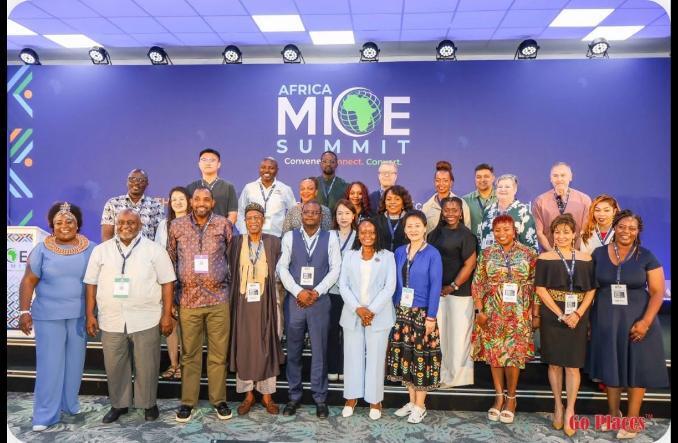
Speaking at the just-concluded ninth edition of the Africa MICE Summit in Mombasa, Kenya, Alhaji Mohammed said MICE could become a major economic engine for Africa by bringing investors, buyers, policymakers, experts and businesses together.
“MICE should not be seen simply as people coming to Africa, staying in hotels, eating in restaurants and flying home. MICE is an economic instrument. It can bring investors, buyers, policymakers, experts and businesses into our economies. In other words, MICE can become Africa’s deal-making engine,” he said.
The former Minister, who was a panellist at the event, with the theme “Building Africa’s MICE Economies”, urged African destinations to build their MICE strategies around their comparative advantages, rather than competing blindly for the same events.
Citing Nigeria’s globally-acclaimed entertainment industry, Kenya’s strength in athletics and tourism, South Africa’s conference industry and Rwanda’s position as a regional business gateway, Alhaji Mohammed advocated greater cooperation among African countries, including joint bids for major international events.
He proposed that Africa bid collectively for major global events and share hosting among countries, as Canada, Mexico and the United States did for the 2026 FIFA World Cup.
Referencing Lagos as a case study of how local cultural and economic assets can be transformed into major MICE opportunities, he recalled a study commissioned while he was Minister which indicated that about 20,000 events were held in Lagos every month, and pointed to the growth of “Detty December” as an example of an event ecosystem involving aviation, hospitality, transportation, entertainment, media, fashion, technology and retail.
“The opportunity is to turn events into ecosystems,” he said.
The former Minister, who chairs the Board of Trustees and the Governing Council of the Eko Tourism Foundation (ETF), however, identified infrastructure, intra-African connectivity and visa restrictions as major obstacles to the growth of the sector.
Hotels, convention centres, airports, transport systems, digital infrastructure and reliable utilities, he said, are essential to attracting major international events.
Alhaji Mohammed also called for easier movement across Africa through improved air connectivity, e-visas, visa-on-arrival arrangements where appropriate and fast-track processing for accredited conference delegates.
Saying MICE cannot be separated from the wider investment environment, Alhaji Mohammed warned that political uncertainty, policy reversals, weak institutions and corruption undermine investor confidence.
“Africa does not only have to sell its opportunities. It has to sell credibility,” he said.
He also argued that smaller countries can become significant MICE destinations by positioning themselves as platforms rather than simply markets, citing Rwanda as an example.
On the policy shift required, Alhaji Mohammed said African governments must change the way they measure the success of business events.
Instead of asking only how many delegates attended or how many hotel nights were generated, they should ask: How many investors attended? How many business meetings took place? How much investment and trade were generated? How many jobs were created?
He called for every African country to establish an empowered National Convention Bureau responsible for bidding for major events, coordinating public- and private-sector efforts, facilitating business visitors, gathering MICE intelligence and measuring economic impact.
Alhaji Mohammed said the true measure of a successful business event is not simply how many people attended, but what happened because they attended.
“Did an investment come? Did a trade relationship begin? Did a business partnership emerge? Did jobs get created?
“That is when MICE stops being merely an event, and becomes an engine of economic transformation,” he noted.
Delegates from 19 countries attended the two-day event, which was formally opened by the County Executive Council Member, Tourism, Culture and Trade, County of Mombasa, Mr. Mohamed Osman Ali.
